From Debridement Tool To Tissue Engineer: Technological Evolution And Clinical Role Reshaping Of Orthopedic Shaver Blades .
Apr 28, 2026
From Debridement Tool to Tissue Engineer: Technological Evolution and Clinical Role Reshaping of Orthopedic Shaver Blades
Popular science articles from Shanghai Seventh People's Hospital clearly illustrate the extensive application of arthroscopy as a minimally invasive surgery. However, behind this minimally invasive landscape of diagnosis and treatment through tiny incisions lies a critical, continuously operating terminal device-the orthopedic shaver blade. Its technical connotation and clinical role have undergone profound evolution. Transcending its early role as a simple cleaner for hyperplastic synovium and torn meniscal debris, it has developed into a precision instrument capable of microscale targeted tissue modulation, serving as the core determinant of the efficacy and operational boundaries of arthroscopic surgery.
I. Leap in Core Functions: From Resection to Refined Tissue Regulation
Early arthroscopic shaver systems featured relatively simplistic designs focused solely on effective resection of pathological soft tissues, with blades functioning as high-speed rotating miniature cutters. With the explosive expansion of arthroscopic indications-ranging from simple loose body removal to complex ligament reconstruction, rotator cuff repair and cartilage transplantation-clinical demands for shaving precision, selectivity and safety have reached unprecedented heights, driving multidimensional functional upgrades for shaver blades.
From Full-scale Resection to Selective Ablation
In synovial debridement and capsular release procedures, the clinical goal is not extensive tissue removal, but precise excision of inflamed hyperplastic and fibrotic pathological tissues while maximally preserving healthy synovial and capsular structures to maintain joint lubrication and stability. This requires exceptional tissue differentiation performance, realized via adjustable blade rotational speed (RPM), specialized cutting window designs with blunt-edge protection, and delicate tactile control by surgeons. Modern shaver systems support stepless speed regulation ranging from thousands to tens of thousands of revolutions per minute. Combined with specialized blade configurations, they enable differentiated management of tissues with varying textures.
From Simple Shaving to Contour Reshaping
In partial meniscectomy and contouring surgery, treatment goals extend beyond removing unstable torn fragments to trimming residual meniscal edges into smooth, stable inclined surfaces that restore stress dispersion function. This demands sculpting and contouring capabilities. Specialized meniscal shavers such as curved banana blades and left/right curved cutters feature optimized bending angles and cutting edge geometry, enabling surgeons to perform three-dimensional contouring within narrow joint spaces-an outcome far beyond basic tissue excision.
As a Working Space Creator
In shoulder arthroscopy, thickened subacromial bursa and adhesive joint capsules often obstruct surgical visualization and manipulation. Shaver blades act as pioneers, efficiently resecting obstructive tissues to create a clear, spacious operative field for subsequent critical procedures including rotator cuff suture and labral repair. Their operational efficiency directly determines overall surgical duration and procedural complexity.
Preconditioning for Biological Repair
During anterior cruciate ligament reconstruction, soft tissues within tibial and femoral tunnels require thorough debridement to establish a viable bone bed for tendon graft integration. Shaver blades, often used in conjunction with burrs, precisely resect tissue remnants, smooth tunnel openings, and induce microfracture of the bone bed to accelerate tissue healing. In this scenario, they prepare an optimal local microenvironment for biological tissue repair.
II. Engineering Essence: A Precision Engineered System for Intra-articular Minimally Invasive Surgery
To fulfill these complex clinical requirements, modern orthopedic shaver blades represent an integrated system combining materials science, fluid dynamics and high-precision manufacturing technology.
Material Upgrades and Long-term Sharpness Retention
Evolving from conventional stainless steel to high-strength medical-grade steel, specialty alloy materials such as tantalum-coated components, and single-use polymer composite materials, contemporary blades prioritize sustained sharpness, superior wear resistance and flexural rigidity. Single-use polymer blades manufactured via precision injection molding support complex internal flow channel and cutting window geometries, while completely eliminating cross-infection risks and performance degradation caused by repeated reprocessing.
Scenario-based Customized Cutting Window Design
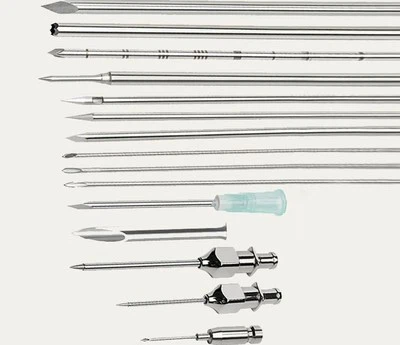
A diversified product portfolio has been developed for targeted clinical applications: full-radius shavers for extensive synovial resection; curved meniscal cutters for contouring procedures; fine debridement blades with miniature cutting windows for delicate anatomical regions; burrs for osteophyte removal and bone bed preparation; and radiofrequency ablation attachments for hemostasis and soft tissue tightening. Each design is optimized for specific tissue types (synovium, meniscus, cartilage, bone) and surgical modalities (shaving, burring, ablation).
Fluid Dynamics and Intraoperative Visualization Maintenance
Shaver systems are tightly coupled with intraoperative perfusion systems. Precision-engineered internal negative pressure suction channels efficiently evacuate tissue debris while preventing excessive intra-articular fluid aspiration that may cause capsular collapse and blurred vision. Optimized fluid dynamics sustain a stable, clear aqueous surgical environment essential for uninterrupted procedures. Strategic lateral port placement and ultra-smooth inner lumen surfaces minimize blockage and turbulent flow.
III. Enabler of Expanded Clinical Capabilities
Technological advancements in shaver blades have directly broadened the scope and clinical feasibility of arthroscopic surgery.
- They serve as the technical foundation for complex minimally invasive procedures, making advanced surgeries such as arthroscopic rotator cuff repair, acetabular labral reconstruction and ankle ligament repair feasible and avoiding conversion to highly traumatic open surgery.
- They accelerate day-case surgery and enhanced recovery pathways. Precise targeted shaving reduces iatrogenic tissue damage, ensures thorough lesion clearance and minimizes postoperative hemorrhage, facilitating early mobilization, pain relief and same-day discharge in line with Enhanced Recovery After Surgery (ERAS) protocols.
- They drive the philosophical shift from lesion resection to functional preservation and repair. Precision meniscal reshaping instead of radical excision and targeted subacromial decompression rather than structural destruction redefine minimally invasive treatment principles centered on restoring physiological joint function.
Conclusion
The evolution of orthopedic shaver blades epitomizes how medical devices respond to and drive paradigm shifts in clinical practice. Evolving from auxiliary functional accessories to the core executive unit of arthroscopic systems, their developmental history revolves around continuous innovation for greater precision, efficiency, safety and intelligence. Amid the pursuit of minimally invasive surgical refinement, blade performance defines the upper limit of surgical delicacy and procedural complexity. Moving forward, integrated energy platforms and embedded intelligent sensors will transform next-generation shavers into smart terminals capable of real-time tissue feedback and automatic parameter adjustment. Regardless of technological upgrades, their core mission remains unchanged: to serve as surgeons' precise extension for minimally invasive intra-articular tissue repair and reconstruction.