The Arena On The Needle Tip: The Innovation Landscape And Localization Path Of The Meniscal Repair Needle Industry
Apr 28, 2026
The Arena on the Needle Tip: The Innovation Landscape and Localization Path of the Meniscal Repair Needle Industry
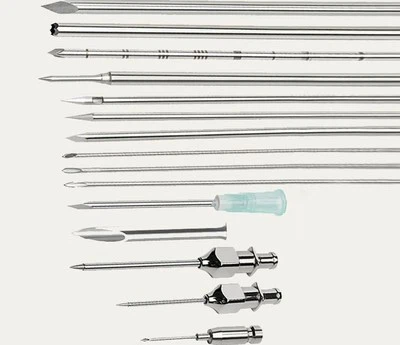
The described technique uses a specific brand of curved needle (e.g., ConMed Spectrum II), revealing a snapshot of the meniscal repair needle market: a niche segment dominated by international giants, technology-intensive, and tightly bound to clinical procedure innovation. Focusing on the meniscal repair needle, we can gain insights into the competitive nature, technological barriers, and breakthrough opportunities for domestic enterprises in the sports medicine device market.
I. Market Drivers: Procedure Evolution and Demand for Precision
Procedure Upgrade from "Suturing" to "Reconstruction": As understanding of meniscal biological function deepens, repair concepts have evolved from simple appositional suturing to biomechanical repairs emphasizing restoration of hoop tension and anatomical footprint reconstruction. This has spawned complex techniques like "all-inside suture," "transtibial fixation," and "double/triple root suturing." Each new procedure imposes new demands on the repair needle's puncture angle, suture passing method, and force, driving the rapid iteration and专业化细分 of repair needle product lines.
Single-Use and "Ready-to-Use" Procedure Kits: Driven by infection control and operational convenience, pre-loaded, sterile-packaged, single-use suture passers/repair needles have become mainstream. This establishes their business model as high-value consumables, with a continue and predictable market. Manufacturers often bundle specific angled curved needles with particular sutures, buttons, etc., into "surgical solution kits" for sale.
Brand Stickiness from Physician Education: International giants (e.g., Arthrex, Smith & Nephew, ConMed, DePuy Mitek) deeply bind their instruments to advanced procedures through extensive wet-lab training, workshops, and academic sponsorship. When a surgeon learns a new procedure (like triple cross-locking), they often use the specific brand of needle recommended by the inventor or promoter, forming strong usage habits and brand loyalty.
II. Competitive Landscape: The "Ecosystem" Moat of International Giants
Leading companies maintain their advantage by building multi-dimensional barriers:
"Patent Thickets" and Know-how: Extensive patents cover the curvature of curved needles, the microstructure of hook grooves, surface coatings, and compatibility with专用 sutures. Deeper barriers lie in material heat treatment processes, precision machining accuracy, and other difficult-to-replicate "technical诀窍" (Know-how), ensuring products are sharp, tough, and durable.
Complete Product Ecosystem: Large companies offer全套 solutions from arthroscopy towers and imaging equipment to various hand instruments, power systems, sutures, and anchors. Their repair needles are perfectly matched with their own sutures (e.g., Orthocord), aiming devices, and fixation implants, forming a closed loop that increases user switching costs.
Deep Binding with KOLs (Key Opinion Leaders): New procedures are often co-developed by top experts and device companies. Companies provide engineering realization support for the experts' ideas, and the experts become the best promoters for the products. This "medical-engineering integration" model keeps international giants at the forefront of procedural innovation and leading facility standards.
III. Challenges and Breakthrough Strategies for Domestic Enterprises
Domestic medical device companies face技术, market, and brand challenges in this field but opportunities coexist:
Entering from the Mid-to-Low-End Market, Accumulating Technology and Reputation: First,rely on cost advantages and rapid response, meet the needs of基层 hospitals and routine meniscal suturing in the relatively lower-tech difficulty markets of straight needles and common curved needles, establishing a market base and production/quality control systems.
Differentiated Innovation and Addressing Clinical Pain Points: Avoid the patent minefields of international brands, focusing on Micro-innovation tailored to Chinese surgeons' operating habits or the anatomical characteristics of Asian patients. Examples include developing curved needle angles better suited to narrow knee joint spaces or optimizing专用 needle types for specific tear patterns in the meniscal body.
攻克 Materials and Precision Manufacturing: Though small, the meniscal repair needle is a product of precision manufacturing. Breaking through the entire process chain-drawing, bending, heat treatment, tip grinding, and polishing of medical-grade stainless steel wire-to achieve stable high performance is the cornerstone for domestic products to win trust.
From "Imitation and Following" to "Collaborative Innovation": Actively collaborate with top domestic sports medicine centers, participating in or even co-leading the development of特色 procedures targeting the Chinese disease spectrum, and Complementary development for specific use tools. Establishing unique competitiveness through the "local procedure + local tool" model.
Embracing the "Double-Edged Sword" of Volume-Based Procurement (VBP): Although VBP pressures prices, it also provides a historic opportunity for domestic products to gain volume through price reduction and rapidly enter previously impenetrable hospital markets. The key is achieving cost leadership while guaranteeing basic performance and巩固 market position through economies of scale.
IV. Future Trends: Intelligence and Integration Outlook
Future evolution of repair needles may head towards:
Integrated Sensing: Needle tips integrating micro-force sensors, providing objective resistance feedback data during puncture to assist less experienced surgeons.
Robot-Compatible End Effectors: With the development of arthroscopic surgical robots, specialized disposable smart repair needles may become the robot's "hand," achieving more stable and precise automatic or semi-automatic suturing.
Conclusion
The meniscal repair needle market is a typicalexample of "technology-driven, procedure-led, ecosystem competition" in the sports medicine field. International giants have built wide moats with深厚 accumulation. The path to domestic substitution is destined to be a protracted battle,not rely solely on price. It must follow the path of "technological breakthrough + process refinement + clinical integration." Successful domestic enterprises need to be both excellent manufacturers and深度 clinical partners. The contest on this "needle tip" tests the ability to find and satidfy the deepest needs of a Divide the surgical field into subcategories.