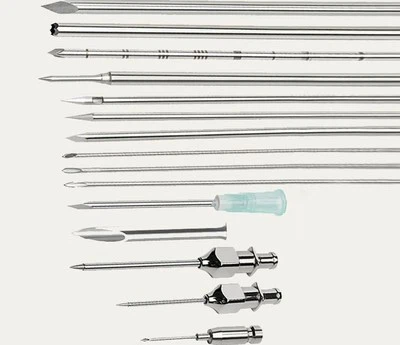
The Minimally Invasive Revolution Of Focal Radical Treatment: The Core Value Of Radiofrequency Needles in The Ablation Of Solid Tumors
Apr 23, 2026
The Minimally Invasive Revolution of Focal Radical Treatment: The Core Value of Radiofrequency Needles in the Ablation of Solid Tumors
In the field of tumor treatment, the radiofrequency needle has initiated a "thermal resection revolution" specifically targeting early solid tumors. It offers an alternative minimally invasive option for patients who cannot tolerate or do not wish to undergo traditional surgical procedures, aiming to achieve a curative effect. The principle is to insert the radiofrequency needle precisely into the tumor through percutaneous puncture, using the high temperature "thermal field" generated at the tip to cause coagulative necrosis of cancer cells, thereby achieving a local curative effect similar to surgical resection. This needle is a model of modern oncology's implementation of the concept of "maximally killing the tumor while minimizing damage to the body".
The fundamental significance of radiofrequency needles in tumor ablation lies in achieving "in-situ inactivation". When the active end of the needle tip is subjected to high-frequency current, it causes ion friction in the surrounding tissues, generating heat. The local temperature rises to above 60℃ within a few minutes, leading to irreversible coagulative necrosis of tumor cells. Above 100℃ can cause tissue carbonization and vaporization. The key point is that through parameter control and needle design, the entire target tumor area (including its peripheral safe margin of about 0.5-1.0 cm) can reach lethal temperature, achieving complete destruction of the tumor. After the operation, the necrotic foci are gradually absorbed and fibrotized by the human body.
In the clinical setting, where tumors vary in size and shape, the radiofrequency needle technology has continuously evolved. For small liver cancers (<3cm) and kidney cancers, a single bipolar needle can effectively ablate the tumor. However, when the tumor diameter increases, the limited ablation range of a single needle (typically a diameter of <2cm) becomes a bottleneck. Therefore, multi-needle expansion electrodes (such as umbrella-shaped bipolar needles) have emerged. Their tips can deploy multiple sub-electrodes, forming a spherical array, and generating a spherical ablation zone with a diameter of 3-5cm in one go. A more complex strategy is multi-needle combined ablation. Doctors, based on the three-dimensional shape of the tumor, conduct puncture and arraying of multiple single-pole needles under the guidance of imaging, and by simultaneously exciting to generate superimposed heat fields, they "carve" an irregular ablation zone covering the entire large tumor, expanding the indications to tumors with diameters of 5cm or even larger.
Cooling and perfusion electrodes are intelligent solutions for specific challenges. In organs with abundant blood supply such as the liver and kidneys, blood flow can carry away heat (the "heat sink effect"), affecting the efficacy of ablation. The internal cooling electrode circulates ice water inside the needle to prevent the needle tip from carbonizing, allowing for higher energy output and generating larger and more uniform necrotic foci. The perfusion electrode injects physiological saline at the needle tip to enhance local conductivity, expand the range of heat conduction, and show unique advantages in organs with air content such as the lungs or in bone tumors.
The therapeutic value of radiofrequency needles in treating tumors also lies in their remarkable minimally invasive nature and functional protection. Compared to traditional open abdominal or thoracic surgeries, percutaneous radiofrequency ablation leaves only a needle hole, causing minimal trauma, less bleeding, less pain, quick recovery for patients, shorter hospital stay, and the ability to treat different lesions or recurrent lesions of the same patient multiple times. This enables elderly patients, those with poor heart and lung function, or those with insufficient liver function reserves who cannot tolerate major surgeries to have the opportunity for radical treatment. For patients with renal cancer, it can maximize the preservation of normal renal units, which is of great significance for protecting renal function; for lung cancer patients, it avoids lung lobe resection and protects lung function.
Furthermore, the radiofrequency needle can serve as a core component of multi-modal therapy. For instance, in the treatment of liver cancer, radiofrequency ablation can be combined with transarterial chemoembolization (TACE). TACE first blocks the blood supply to the tumor and administers medication, while RFA then completely destroys the remaining tumor through thermal damage, achieving synergistic efficacy. For tumors adjacent to major blood vessels, vascular intervention can be combined for temporary blood flow obstruction to overcome the "heat sink effect".
Therefore, the significance of radiofrequency needles in tumor treatment lies in redefining the technical approach for local radical treatment. It transforms a physical energy into a precise, repeatable, and combinable anti-cancer tool through a slender puncture needle. It not only complements surgical knives but has also become one of the first-line radical treatment options for solid tumors such as early-stage liver cancer and kidney cancer. This needle, with its minimally invasive, efficient, and repeatable characteristics, has opened up hope for countless cancer patients and is an indispensable key link in the comprehensive tumor treatment system.