From Blind Puncture To Visualization: The Technical Principles, Design Evolution, And Clinical Revolution Of Echogenic Needles
Apr 18, 2026
From "Blind Puncture" to "Visualization": The Technical Principles, Design Evolution, and Clinical Revolution of Echogenic Needles
Core Product Terms: Echogenic Needle, Ultrasound-Guided Needle, Echogenic Coating
Representative Manufacturers: PAJUNK GmbH (Germany), SonoTec GmbH, B. Braun (Sonolong™), Cook Medical (EchoTip®)
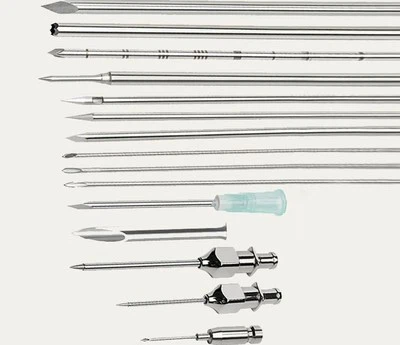
Before the widespread adoption of ultrasound-guided intervention, puncturing deep-seated tissues relied heavily on the physician's tactile sensation and anatomical experience-a practice akin to navigating in the dark, or "blind puncture." The advent of the echogenic needle has radically transformed this landscape. By converting a standard metal needle into a clearly visible "navigation cursor" on an ultrasound screen, this technology enables real-time visualization of the puncture process, marking a milestone innovation in the field of interventional sonography.
I. The Core Challenge: Why Do Standard Needles "Disappear" on Ultrasound?
To understand the innovation, we must first grasp the physics. Ultrasound waves travel linearly through a uniform medium and generate echoes when they encounter an interface with a different acoustic impedance. While the acoustic impedance difference between a smooth metal needle (e.g., stainless steel) and soft tissue is significant, a smooth metal surface acts like an acoustic mirror. It reflects the ultrasound waves specularly (like light off a mirror) rather than scattering them back to the probe. Consequently, only a minimal amount of energy returns to the transducer, causing the needle to appear as faint, flickering dots or a barely perceptible line on the screen. This signal is easily confused with background noise or lost entirely, especially when the needle shaft is not perfectly perpendicular to the ultrasound beam.
II. Technical Principles: How to Make the Needle "Light Up"?
The core principle of echogenic technology is to disrupt the specular reflective surface of the needle, transforming it into a strong scatterer. There are three main technical pathways to achieve this:
Surface Micro-structuring/Texturing: This is the most classic and reliable technology. Through laser etching, precision machining, or chemical processes, regular micro-pits, grooves, or rough textures are created on the needle surface. These microscopic structures, with dimensions similar to the wavelength of ultrasound (typically 0.1–0.5mm), effectively scatter the incident sound waves in all directions. A portion of this scattered wave returns to the probe, forming a continuous, bright hyperechoic line on the screen. PAJUNK GmbH of Germany is a pioneer and leader in this technology; their "SonoPlex" series features a patented honeycomb microstructure that delivers exceptional echogenicity.
Polymer Composite Coating: This method involves applying a polymer coating containing micro-bubbles of air or ceramic/metal powders to the needle shaft. The countless micro-interfaces within the coating act as powerful scattering sources. Cook Medical's "EchoTip®" series utilizes this technology. Its coating is robust and can be applied to needles with complex geometries, such as biopsy needles with sampling notches.
Overall Material Modification: This involves manufacturing the needle body from specialized materials with inherent acoustic properties or modifying the bulk material itself. Examples include porous metals or special composite materials designed for optimal scattering.
III. Design Evolution: From "Visible" to "Clear and Traceable"
The design of echogenic needles extends far beyond simply adding a coating; it involves optimizing the entire workflow of ultrasound guidance:
Tip Enhancement: During puncture, the location of the needle tip is the most critical factor. High-end products feature specially reinforced tips that appear as an exceptionally bright spot on the screen. This allows the operator to pinpoint the exact depth and location of the tip, avoiding the awkward situation of "seeing the shaft but missing the tip."
Omni-directional Visibility: Early textured needles might only reflect well at specific angles. Modern designs pursue 360-degree enhancement, ensuring the needle remains clearly visible regardless of the angle between the needle shaft and the ultrasound beam. This significantly lowers the technical difficulty of the procedure.
Integration with Needle Functionality: Echogenicity is no longer a standalone feature but is deeply integrated with the needle's core function. For instance, the sampling notch of a biopsy needle is enhanced to help the physician accurately position the notch within the target area. Similarly, the electrode section of a radiofrequency ablation needle is enhanced to ensure the ablation zone precisely covers the lesion.
IV. Clinical Value: A Comprehensive Leap in Safety, Precision, and Efficiency
Improved Success Rates and Precision: Real-time visualization allows physicians to adjust the needle trajectory on the fly, avoiding vital structures like blood vessels and nerves to reach the target (e.g., nerve bundles, cyst centers, tumor margins) in a single pass. This is particularly crucial for deep, small, or mobile targets.
Significant Reduction in Complications: By minimizing the number of passes required, echogenic needles reduce the risk of tissue trauma, hemorrhage, pneumothorax (in thoracic procedures), and nerve injury.
Shortened Procedure Time and Improved Efficiency: Less time is wasted searching for the needle on the screen, resulting in a smoother and faster intervention.
Lowering the Learning Curve: For less experienced clinicians, echogenic needles act as "training wheels," helping them master ultrasound-guided techniques more quickly and build confidence.
V. Conclusion: The "Eyes" of Interventional Ultrasound
Echogenic needle technology seamlessly bridges the gap between real-time ultrasound imaging and puncture manipulation, transforming "blind manipulation" into "direct vision." It represents not just a product upgrade but a revolution in clinical thinking and workflow. As ultrasound finds deeper applications in anesthesia, pain management, oncology, and vascular access, echogenic needles have become a standard configuration. The technology itself continues to evolve towards greater intelligence (e.g., integration with navigation systems) and specialization (tailored for specific procedures), further cementing its role as the indispensable "eyes" of the interventionalist.