Regional Anesthesia, Vascular Access, And Tumor Intervention: The Clinical Panorama And Procedural Innovation Of Echogenic Needles
Apr 18, 2026
Regional Anesthesia, Vascular Access, and Tumor Intervention: The Clinical Panorama and Procedural Innovation of Echogenic Needles
Core Product Terms: Ultrasound-Guided Regional Anesthesia, Vascular Access, Biopsy, Ablation Needle Placement
Representative Manufacturers: B. Braun (Stimuplex®, Sonolong™), Vygon (EchoStim), AngioDynamics (Solo™), Medtronic
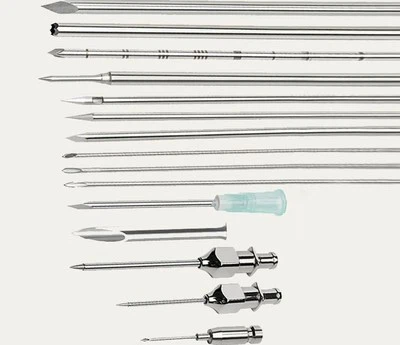
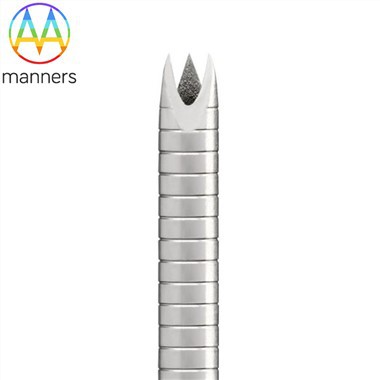
The emergence of the echogenic needle was never a pursuit of technology for technology's sake; its value lies entirely in solving tangible clinical pain points. What began as a "value-added" feature has evolved into the "standard configuration" and "safety baseline" for ultrasound-guided interventions across multiple medical specialties. It has profoundly altered the practice patterns in regional anesthesia, vascular access establishment, and tumor intervention.
I. Regional Anesthesia & Pain Management: From "Blind Exploration" to "Visual Precision Block"
Prior to the ubiquity of ultrasound, nerve blocks relied heavily on surface anatomical landmarks and the elicitation of a "paresthesia" (a tingling sensation indicating nerve contact) to locate the target. This resulted in variable success rates and inherent risks of nerve damage or inadvertent intravascular injection of local anesthetics.
Clinical Value: Echogenic needles empower anesthesiologists to visualize the needle's trajectory in real-time on the screen, clearly delineating the spatial relationship between the needle tip, target nerves, adjacent vessels, and critical structures like the pleura. Clinicians can proactively adjust the path to avoid vessels, depositing the needle tip at the optimal location (e.g., within the nerve sheath) before injecting medication. The subsequent spread of the anesthetic solution can be directly observed under ultrasound, ensuring complete nerve encapsulation.
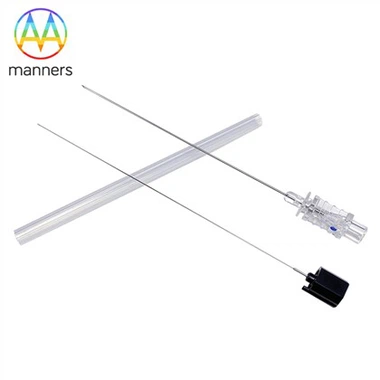
Representative Products & Techniques: B. Braun's "Stimuplex®" nerve block needles, often featuring Sonolong™ echogenic technology, are industry benchmarks. They are widely used in brachial plexus blocks, lumbar plexus blocks, femoral nerve blocks, and paravertebral blocks. The value is particularly pronounced in patients with obesity, anatomical variations, or a history of previous surgery.
II. Central Venous & Difficult Peripheral Access: Bidding Farewell to "Trial and Error"
Establishing reliable vascular access is foundational for critical care resuscitation and long-term therapies. Traditional landmark-based techniques for internal jugular or subclavian vein cannulation carried significant risks of pneumothorax, hemothorax, and arterial puncture, especially in children, hypovolemic patients, or those with distorted anatomy from prior procedures.
Clinical Value: Using an echogenic needle, the clinician can pre-scan to assess vessel location, diameter, patency, and anomalies before puncturing. During needle advancement, the indentation of the anterior vessel wall and the needle tip itself are clearly visible. This facilitates a "single-stick success," drastically improving first-pass success rates and minimizing the risk of hematoma formation and related infectious complications.
Representative Products: Vygon's "EchoStim" dual-function needles (combining nerve stimulation with echogenicity) are frequently employed for precise punctures. Companies like BD and Teleflex also offer specialized ultrasound-guided central venous access kits.
III. Percutaneous Tumor Intervention: The "Eyes" of Biopsy and Ablation
In tumor diagnosis and treatment, precision is paramount.
Puncture Biopsy: Whether targeting hepatic, pancreatic, prostate, or breast lesions, obtaining a diagnostically viable tissue sample is critical. Echogenic biopsy needles (e.g., Cook Medical's "EchoTip®") allow the physician to:
Confirm the needle tip is within the most representative area of the tumor (e.g., the solid portion, avoiding necrotic zones).
Predict and track the movement of mobile targets (such as liver tumors affected by respiratory motion) for precise needle placement.
Guide the outer cannula accurately into place when using coaxial techniques.
Ablation Needle Placement: In radiofrequency, microwave, or cryoablation therapies for solid tumors like hepatocellular carcinoma or lung cancer, the placement scheme of the ablation needles directly determines whether the ablation zone completely covers the tumor with an adequate safety margin. Echogenic ablation needles (such as AngioDynamics' "Solo™" microwave ablation needle) enable real-time adjustment of multiple needles' positions and depths, ensuring an ideal thermal field is established while avoiding damage to adjacent critical structures like the bowel or major bile ducts.
IV. Applications Across Other Specialties
Pain Clinics: Utilized for precise intra-articular injections, treatment of tenosynovitis, pulsed radiofrequency of nerves, or discography.
Urology: Essential for the initial puncture in percutaneous nephrostomy, visualizing the passage through the renal parenchyma into the target calyx.
Breast Surgery: Used for preoperative tumor localization using hookwires.
V. Procedural Innovation and Future Outlook
Echogenic needles have not only enhanced the safety of existing procedures but have also catalyzed new therapeutic possibilities. For instance, more precise nerve blocks have facilitated the implementation of Enhanced Recovery After Surgery (ERAS) protocols, while safer vascular access has made point-of-care ultrasound a routine practice in ICUs and emergency departments. Looking ahead, echogenic needles will likely converge with augmented reality navigation and artificial intelligence-powered recognition systems. This integration aims to achieve "semi-automated" or "intelligent" punctures, further lowering the technical barrier and translating the "hand-feel" and "visual acuity" of expert clinicians into replicable, standardized surgical workflows.