Core Clinical Perspective | The Clinical Significance Of Biopsy Needles
Apr 10, 2026
Core Clinical Perspective | The Clinical Significance of Biopsy Needles: Evolution from a "Tool" to a "Diagnostic Bridge"
In clinical medicine, the "needle" has long surpassed the simple definition of its physical form. For physicians, the clinical value of a needle lies in how it bridges the chasm between radiological "suspicion" and pathological "confirmation." When a doctor recommends a biopsy, patients often wonder: "What does this needle really mean? Is it just a test?"
This article will analyze, from the perspective of clinical application, how different types of biopsy needles (using the Chiba needle as an example) play a crucial role in the diagnostic and therapeutic process, becoming an indispensable "diagnostic bridge."
Defining the Clinical Role of the Chiba Needle: The "Precision Track" to Deep-Seated Lesions
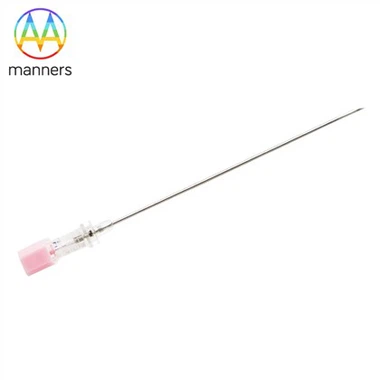
Clinically, the Chiba needle is not a simple "hollow tube." It is a slender cannula specifically designed for percutaneous access to deep or anatomically complex structures. Its core clinical function is to establish a precise, stable, and minimally traumatic channel for subsequent biopsy, drainage, injection, or guidewire introduction. This means that through the "track" created by this "needle," physicians can achieve three primary objectives: diagnosis, sampling, and therapy.
The Clinical Significance of Dimensions: Balancing "Precision" and "Stability"
Length (15-30 cm):
Clinical Significance: Its length is designed to safely penetrate the skin, subcutaneous tissue, muscle, or organ capsule, and reach the center of deep-seated lesions (e.g., in the liver, pancreas, lung, or retroperitoneum). The choice between 15 cm and 30 cm depends entirely on the pre-procedural measurement of puncture depth and pathway planning using imaging (such as CT or ultrasound). This ensures the needle tip accurately reaches the target while avoiding injury to critical structures behind it. The length of this needle directly defines the anatomic territory it can access.
Diameter (0.7-1.5 mm):
Clinical Significance: Its fine gauge (typically 20G-22G) serves a dual purpose:
Minimizing Trauma: The small diameter significantly reduces tissue damage, bleeding risk, and patient pain during the puncture, embodying the principle of "minimally invasive."
Maximizing Maneuverability: Under CT or ultrasound guidance, a fine needle allows for easier minor angle adjustments to avoid blood vessels, bile ducts, etc., achieving millimeter-level "precision targeting."
However, the diameter also presents clinical challenges: an overly fine needle may bend (deviate from the planned trajectory) when passing through dense tissue, or have reduced aspiration efficiency due to its limited inner lumen. Therefore, the needle's diameter represents the core trade-off in clinical practice between "trauma control" and "procedural stability/sampling efficiency."
Clinical Implications of Material and Design: Why is Stainless Steel the Mainstream?
The clinical rationale for choosing stainless steel (e.g., 304/316L) lies in:
Sufficient Rigidity: Ensures maintenance of trajectory stability during long-distance punctures, preventing "drift" within tissues.
Excellent Ultrasound/CT Visibility: The metallic material produces clear echogenicity or artifacts under imaging, serving as a beacon for the physician to track the needle tip in real-time.
Safe Biocompatibility: Ensures safety during prolonged contact with human tissues (e.g., for indwelling drainage).
Conclusion: The Anchor Point of the Needle's Clinical Value
The clinical significance of a Chiba needle lies in its transformation of a three-dimensional coordinate on an imaging scan into a physical channel through which material (tissue samples, medication, drainage fluid) or instruments (guidewires, microwave antennas) can pass. The selection of its dimensions (length and diameter) is a precise pre-procedural tactical plan that directly determines the accuracy, safety, and efficacy of the intervention. From diagnostic biopsy to therapeutic drainage, this slender needle is the core vehicle enabling modern interventional medicine to realize the philosophy of "making medical procedures more surgical in precision, and surgical procedures more minimally invasive."
If you're seeking a reliable SKD&CKD cooperation partner, choose Manners Technology. We offer a wide range of Jaws for Laparoscopy Instruments and Surgical Robots to meet diverse surgical needs. Customization options are available for unique size and appearance requirements. With decades of production experience, we provide comprehensive production solutions beyond equipment supply. As an inclusive provider, we integrate design, manufacturing, sales, and service to offer one-stop solutions globally.