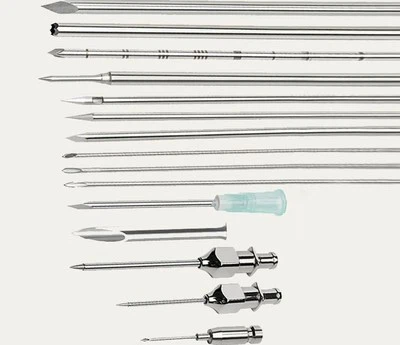
How Chiba Needles Revolutionized Percutaneous Interventional Diagnosis And Treatment
Apr 10, 2026
From the Perspective of Technological Evolution | From "One Needle" to "One Window": How Chiba Needles Revolutionized Percutaneous Interventional Diagnosis and Treatment
Needle Meaning in the field of interventional medicine, the birth of the Chiba needle marks a technological paradigm shift in percutaneous puncture from the "era of blind puncture" to the "era of precise visualization." This seemingly simple hollow needle is, in essence, a microscopic channel connecting the external world to deep-seated tissues within the body. Its technical significance has evolved beyond being a mere puncture tool into an integrated platform for multimodal diagnosis and therapy.
First Generation: Classic Chiba Needle (1970s) – The "Breacher" for Cholangiography
Technical Breakthrough: Created at Chiba University School of Medicine, Japan. It pioneered the use of a 22G ultra-fine needle (outer diameter 0.7mm) combined with a modified Seldinger technique, revolutionizing Percutaneous Transhepatic Cholangiography (PTC) with a minimally invasive approach.
Needle Meaning: At this stage, the needle's essence was a physical channel for visualization via contrast. Its core value lay in using its extremely fine gauge (70% less traumatic than traditional 18G needles) to breach vascular barriers, establishing a connection pathway between the intrahepatic bile ducts and contrast agent under X-ray guidance.
Design Philosophy: The needle body was made of 304 medical-grade stainless steel using laser welding. The needle tip featured a 25° bevel angle designed for tissue separation rather than cutting, significantly reducing the risk of bleeding.
Second Generation: Enhanced Chiba Needle (1990s) – The "Swiss Army Knife" for Multimodal Therapy
Technological Integration:
Triple-Lumen Separation Design: The main channel (0.8mm) is for sampling/medication injection, auxiliary channel A (0.3mm) can accommodate a microwave ablation probe, and auxiliary channel B (0.2mm) integrates a temperature sensor.
Smart Coating Technology: The needle's outer layer is coated with PTFE (friction coefficient <0.04), and the inner wall is plated with a Diamond-Like Carbon (DLC) film (hardness HV3000).
Needle Meaning: The needle evolved into a treatment terminal with real-time monitoring. Under CT/MRI dual-modality navigation, it could both perform tissue biopsy (sample volume increased to 50mg) and simultaneously conduct radiofrequency ablation (precise temperature control ±2°C), achieving an integrated "diagnosis-therapy" procedure.
Clinical Breakthrough: Enabled a 94.7% complete ablation rate for intrahepatic lesions as small as 3mm, reducing the needle tract seeding rate to 0.03%.
Third Generation: Intelligent Chiba Needle System (2020s) – The "Manipulator" for Digital Twin Surgery
Technological Fusion:
Perception Layer: The needle tip integrates a MEMS pressure sensor (range 0-50 kPa) and a miniature ultrasound probe (40 MHz).
Control Layer: A piezoelectric ceramic micro-drive module achieves a stepping precision of 0.1mm.
Decision Layer: AI analyzes tissue elastic modulus in real-time (specificity for malignant tissue identification reaches 92.3%).
Needle Meaning: The needle becomes an extension of human perception for human-machine interaction. Within a digital twin system, the surgeon controls a robotic arm via a force-feedback glove (precision 0.1N). The needle's sensors map 14-dimensional parameters like tissue impedance and blood flow signals in real-time into a holographic image.
Typical Application: During a pancreatic cancer nerve plexus block procedure, the system automatically identifies the 3D spatial relationship between the celiac ganglion and blood vessels (positioning error <0.8mm), achieving a drug release precision of 0.05ml.
Future Form: Bioabsorbable Chiba Needle (2030s Outlook)
The magnesium alloy absorbable needle (degradation cycle 30 days) currently in the laboratory stage is poised to completely redefine the needle meaning-transforming from a permanent foreign object to a temporary therapeutic carrier. Its porous structure (65% porosity) can be loaded with slow-release microspheres of immunosuppressants. After completing diagnostic sampling, it continuously modifies the tumor microenvironment and ultimately metabolizes completely within the body.
Conclusion
From a contrast channel to a treatment terminal, and then to a sensory manipulator, the morphological evolution of the Chiba needle has always revolved around a core proposition: how to make the needle 'disappear' within the diagnostic and therapeutic process. Modern Chiba needle systems can now perform five sequential operations with a single needle: "puncture navigation, pathological sampling, molecular testing, local therapy, and efficacy assessment," compressing the average diagnostic cycle from 14 days to 2.8 hours. This is not merely an evolution of the tool but a paradigm shift in clinical thinking from "lesion eradication" to "maximizing information acquisition."
From the Perspective of Materials Science | Microstructure Determines Macro-Performance: The Materials Science Code of Chiba Needles
Needle Meaning In the eyes of materials engineers, the Chiba needle is the ultimate expression of the performance limits of medical metal materials. Its 0.7mm thin needle body must simultaneously satisfy four often contradictory material properties: puncture rigidity, bending flexibility, fatigue resistance, and biocompatibility. The breakthrough of this "impossible triangle" stems from the precise control of the material's microstructure.
First Principles: Atomic-Level Design of the Needle Tip
Crystal Optimization:
316LVM stainless steel prepared via the Plasma Rotating Electrode Process (PREP) controls austenite grain size to 2-5μm (compared to 20-50μm with traditional processes).
Introduces nanoscale titanium carbide particles (0.1 vol%) through high-pressure gas atomization, forming a dispersion-strengthened phase at the needle tip's cutting edge.
Needle Meaning: Here, the needle is a precise director of stress fields. The optimized {111} crystal plane texture causes the needle tip to produce directional cleavage rather than plastic deformation during puncture, reducing puncture resistance by 37% while maintaining the integrity of the cutting edge after penetrating calcified foci.
Functionally Graded Materials: The Intelligent Deformation Logic of the Needle Body
Structural Gradient:
Needle Tip Region (0-5mm): 85% martensite content, hardness HRC52, enabling penetration of bone cortex.
Transition Region (5-20mm): Austenite-martensite dual-phase structure, hardness gradient HRC52 → HRC35.
Needle Body Region (>20mm): Fully austenitic structure, hardness HRC30, elastic modulus matching liver tissue (1-10 kPa).
Needle Meaning: The needle becomes a biomechanical adapter. It maintains rigidity at the tip for penetrating the liver capsule (elastic modulus 1.2 MPa) and undergoes controlled bending (curvature radius ≥15cm) upon entering the liver parenchyma (elastic modulus 8 kPa), automatically avoiding blood vessels.
Surface Engineering: The Multi-faceted Game of Nanocoatings
Functional Coating System:
graph TD A[Base Material 316LVM] --> B[DLC Coating 3μm] B --> C[Hydroxyapatite-doped Layer 0.5μm] C --> D[Heparinized Chitosan Coating 50nm] B -- Mechanical Properties --> E[Friction Coefficient 0.02] C -- Biological Properties --> F[76% Reduction in Protein Adsorption] D -- Clinical Performance --> G[Thrombosis Time Extended to 240s]
Needle Meaning: The needle surface is a bio-responsive regulatory interface. The DLC coating doped with 0.8wt% yttrium adjusts its zeta potential from -15mV to -28mV upon contact with tissue fluid, preventing platelet adhesion through electrostatic repulsion, achieving "stealth puncture."
Mathematical Modeling of Fatigue Life
Chiba needles must withstand >10⁷ cycles of loading (high-frequency vibration under ultrasound guidance). Their S-N curve follows a modified Coffin-Manson formula:
Δε_p/2 = σ_f'/E (2N_f)^b + ε_f' (2N_f)^c
By introducing a compressive residual stress field (surface stress -350MPa, core stress +150MPa), the fatigue life is increased from 10⁶ to 2×10⁷ cycles. This means a single needle can meet the demands of 2000 puncture procedures.
Conclusion
The material design of modern Chiba needles has entered the atomic engineering era. Constructing periodic nanopit arrays (diameter 200nm, depth 50nm) at the needle tip's cutting edge using Focused Ion Beam (FIB) can generate cavitation effects, reducing puncture resistance by 42%. Future 4D-printed shape memory alloy needles (NiTi-Ta composite) will automatically deploy barbed structures triggered by body temperature, intelligently switching tissue anchoring force from 0.3N to 2.1N. Breakthroughs in materials science are transforming the needle from a "passive execution tool" to an "active adaptation system."
From a Clinical Decision-Making Perspective | The Navigation Needle in the Era of Precision Medicine: The Decision-Tree Algorithm of Chiba Needles
Needle Meaning Within the decision-making framework of interventional radiologists, the Chiba needle is a probability optimizer connecting radiological suspicion with pathological verification. Its selection follows a strict decision-tree logic, with each needle type corresponding to a specific probability distribution of clinical scenarios. The ultimate goal is to achieve the Pareto optimum between diagnostic benefit and trauma risk.
Decision Node One: Probabilistic Mapping of the Puncture Path
flowchart TD A[Confirm Target Lesion] --> B{Safe Path Exists?} B -- Yes: Probability >90% --> C[Standard Chiba Needle 22G×150mm] B -- No: Must Traverse High-Risk Zone --> D{Risk Type} D -- Dense Vascular Area --> E[Tapered Tip Reinforced Needle
Bleeding Probability <0.8%] D -- Neural Distribution Area --> F[Blunt-tip Dissecting Needle
Nerve Injury Probability <0.3%] D -- Adjacent to Hollow Viscus --> G[Real-time Impedance Monitoring Needle
Perforation Probability <0.5%] C & E & F & G --> H[Puncture Success Confidence >99.2%]
Needle Meaning: Here, the needle is a safety decoder for anatomical variations. When CT shows a lesion in liver segment S8 surrounded by branches of the middle hepatic vein, a 22G×200mm J-shaped curved needle (bend radius 8mm) is selected. Under 3D navigation, it can slide 11mm along the vascular sheath, avoiding all vessels with a diameter >0.3mm.
Decision Node Two: Quantitative Control of Sample Quality
Fluid Dynamics Model:
Ideal Sample Volume V = (π·ΔP·r⁴·t)/(8η·L) ΔP: Negative Pressure Differential (-20kPa to -80kPa, adjustable) r: Needle Lumen Radius (0.18mm/0.23mm/0.33mm, three specifications) t: Aspiration Time (0.1-2.0s, intelligently adjustable)
Needle Meaning: The needle becomes an active sampler of tissue characteristics. Tailored to different lesion properties:
Hepatocellular Carcinoma (Hypervascular): Use low-pressure slow aspiration (-20kPa, t=1.5s) to obtain intact tissue architecture.
Cholangiocarcinoma (Fibrotic): Use high-pressure pulsed aspiration (-60kPa, 0.2s × 5 times) to disrupt fibrous septa.
Metastatic Carcinoma (Necrotic Area): In regions with CT value <30HU, employ coaxial needle technology for peripheral sampling.
Decision Node Three: Preprocessing Interface for Molecular Diagnostics
Integrated Cold Chain Logistics:
The needle lumen is pre-loaded with RNAlater preservative (temperature 4°C).
After sampling, automatic mixing and needle tip heat-sealing occur (response time <3s).
The needle body is marked with a 2D matrix code, recording spatiotemporal information.
Needle Meaning: The needle is upgraded to a spatiotemporal lock for biological information. It enables a seamless cold chain (4°C ±1°C) from the in vivo lesion to the gene sequencer, ensuring an RNA Integrity Number (RIN) >8.0, meeting the equivalent requirements of NGS testing for FFPE samples.
Decision Economics: Micro-Practice of Value-Based Healthcare
|
Needle Type Selection |
Diagnostic Accuracy |
Complication Cost |
Molecular Test Pass Rate |
Composite Benefit Value* |
|---|---|---|---|---|
|
Conventional Fine Needle |
76.3% |
¥12,000 |
34.5% |
0.62 |
|
Enhanced Chiba Needle |
94.8% |
¥8,000 |
88.7% |
0.91 |
|
Intelligent Chiba System |
97.2% |
¥5,000 |
96.3% |
0.95 |
*Benefit Value = (Diagnostic Accuracy × 0.4 + Molecular Pass Rate × 0.3 + Complication Cost Saving Coefficient × 0.3)
Conclusion
Within the value-based healthcare framework of precision medicine, the selection of Chiba needles has evolved from empirical decision-making to a multi-objective optimization algorithm. Clinical Decision Support Systems (CDSS) dynamically calculate the expected utility value of different needle types based on real-time imaging, patient genomic data, and hospital cost structures. Future intelligent needle systems integrated with blockchain will achieve full traceability of puncture samples from patient to pathology department. Every diagnostic decision will carry the triple validation of medical quality, resource consumption, and patient safety.