Engineering Perspective | The Engineering Definition Of Biopsy Needles: Integration Of Precision, Mechanics, And Systems
Apr 10, 2026
Engineering Perspective | The Engineering Definition of Biopsy Needles: Integration of Precision, Mechanics, and Systems
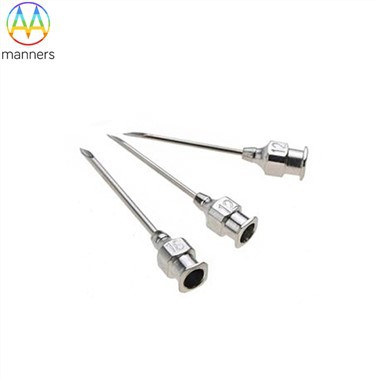
From an engineer's viewpoint, a medical biopsy needle is a micro-scale, high-precision system integrating materials science, precision machining, fluid dynamics, and ergonomics. Its "significance" transcends that of a medical instrument; it is a functional endpoint that must meet stringent performance specifications. This article will use the Chiba needle as an example to deconstruct the technical parameters and functional logic embedded in the "needle" from an engineering design perspective.
Deconstructing the Chiba Needle as an Engineering System: A Micro Interventional Platform
Engineers perceive it not as a single "needle" but as a delivery/sampling system composed of a cannula, hub, and stylet (if present). The core objective of its engineering design is to achieve, at an extremely small scale: reliable mechanical penetration, precise trajectory control, controlled fluid conductance, and stable human-machine interaction.
Engineering Logic Behind Core Dimensional Parameters
Length (15-30 cm):
Engineering Challenge: Extremely high aspect ratio. A needle with a 1mm diameter and 20cm length has an aspect ratio of 200:1. This poses a significant structural mechanics challenge: how to ensure sufficient axial compressive strength for tissue penetration while maintaining adequate flexural rigidity to prevent "deflection" in heterogeneous tissues at such a slender dimension?
Solution: Relies on the superior mechanical properties of high-grade stainless steel and stringent straightness machining tolerances. Straightness tolerance is typically required to be less than 0.5mm per 10cm, ensuring the needle's physical trajectory closely aligns with the virtual guidance line displayed on the imaging screen.
Diameter (0.7-1.5 mm, typically 20-22G):
Engineering Trade-off: This is a multi-objective optimization problem.
Fluid Dynamics Consideration: According to the Hagen–Poiseuille law, the resistance to flow through a cylindrical tube is inversely proportional to the fourth power of its radius. This means a minute increase in diameter (e.g., from 22G to 20G) can significantly improve aspiration or injection flow rates, reducing procedure time. The machining precision and surface roughness (Ra value) of the inner diameter directly impact flow efficiency.
Structural Mechanics Consideration: The outer diameter determines flexural rigidity (proportional to the fourth power of the diameter). A thicker needle provides exponentially greater resistance to bending, but also increases trauma linearly.
Manufacturing Precision: Machining a lumen with micron-level precision places extremely high demands on machine tools, cutting tools, and measurement technology. Control of the inner diameter (ID) tolerance is the lifeline for preventing biopsy needle "jamming" or injection needle "clogging."
Scientific Selection of Materials and Surface Engineering
AISI 304/316L Stainless Steel: The choice is not just for "biocompatibility." Its specific yield strength, elastic modulus, and work hardening rate enable the formation of a sharp, durable needle tip through precision grinding, while maintaining performance stability after repeated sterilization (e.g., autoclaving).
Surface Treatment:
Electropolishing: Removes microscopic burrs, reducing the surface roughness (Ra value) to below 0.2 µm. This not only reduces penetration resistance but, more importantly, minimizes tissue/cell adhesion, ensuring sample quality and smooth fluid passage.
Needle Tip Bevel Geometry: The grinding angle (typically 15°-30°) and bevel symmetry of the needle tip collectively determine the initial penetration force and the needle's "steering" characteristics. This is the physical basis for the tactile feedback, or "feel," during interventional procedures.
Conclusion: The Anchor Point of the Needle's Engineering Value
To the engineer, the meaning of a Chiba needle is a set of precisely quantified, repeatably manufacturable, and rigorously validated physical properties. Its design seeks the optimal solution within the "impossible triangle" of trauma (minimal diameter), function (sufficient ID/strength), and manufacturability (reasonable cost). Every dimensional adjustment is the result of complex calculations involving material mechanics, fluid performance, and clinical feedback data. This needle is the most tangible manifestation of precision manufacturing technology in the life sciences field.