Burst Pressure
Sep 17, 2026
High-pressure balloon catheters and delivery systems operate at the very edge of material capability, routinely generating internal pressures that exceed ten atmospheres to dilate calcified lesions or deploy stents. The reinforced shaft must not only survive these pressures but maintain its integrity through hundreds of pulsatile cycles while navigating tortuous vessels. The pain point is that many reinforced shafts fail not at the balloon itself but at the shaft-balloon interface, where pressure pulses, balloon fold memory, and shaft flexibility converge to create a perfect storm of stress concentration. A burst at this interface is not merely a device failure-it can embolize debris into the distal vasculature, dissect the vessel wall, or terminate the procedure abruptly, leaving the patient at severe risk. For manufacturers, burst failure leads to costly recalls, regulatory delays measured in years, and a catastrophic loss of credibility with both physicians and regulators. The challenge is to design a reinforcement architecture that maintains radial strength under extreme pressure while still allowing the flexibility needed for atraumatic navigation through delicate anatomy.
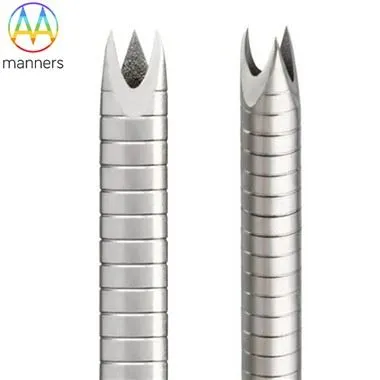
Burst resistance in reinforced shafts is fundamentally a function of hoop stress, which scales linearly with internal pressure and the radius of the shaft, and inversely with wall thickness. Reinforcement must provide robust radial support without creating stress risers that would initiate fracture. Braided structures improve hoop strength by distributing stress across hundreds of interwoven filaments, each carrying a small fraction of the load. Laser-cut hypotubes can be patterned with radial cuts or short transverse slots that allow local compliance for trackability, while uncut lands preserve the pressure boundary and prevent catastrophic rupture. The polymer jacket and inner liner must be fully compatible with the reinforcement, bonding securely to prevent delamination under pulsatile pressure that could otherwise allow the layers to separate and create a weak point. The governing principle is to create a true composite structure where each layer contributes to burst resistance without compromising other critical performance attributes such as flexibility, torque transmission, or trackability. This requires a systems-level approach that considers the interaction of metal, polymer, and bond under both static and cyclic pressure conditions.
The equipment and classification ecosystem for burst pressure reinforcement includes high-precision braiding machines capable of producing flat or tubular braids with controlled angles, laser cutting systems for creating radial patterns on hypotubes with micron accuracy, reflow ovens for jacket bonding, and high-pressure test chambers that can simulate physiological and supraphysiological conditions. Materials include high-strength stainless steels for general applications, Nitinol for its unique combination of flexibility and strength, and advanced polymers such as PEEK or PEBAX that offer excellent pressure resistance and biocompatibility. Classification of burst reinforcement strategies includes flat braid for high hoop strength in standard balloon catheters, laser-cut radial patterns for local compliance in specialized delivery systems, coil-plus-liner constructions for low-pressure atraumatic applications, and reinforced laminates that combine a metal spine with a polymer jacket for multi-functional performance. Each strategy has specific applications, from coronary balloons operating at moderate pressures to peripheral atherectomy devices that must withstand extreme forces.
Practical guidelines for designing burst-resistant reinforced shafts begin with a rigorous calculation of the required burst pressure based on clinical needs plus an appropriate safety factor, typically two to three times the maximum operating pressure. The reinforcement architecture should be matched to the pressure zone, with denser braid or thicker uncut lands in high-pressure areas. Laser-cut patterns near the balloon bond must avoid sharp corners or abrupt transitions that would concentrate stress and initiate failure. A gradual transition in cut density over a distance of several millimeters prevents stress risers and distributes load more evenly. Validation testing must include burst evaluation after bend cycling, as many shafts pass fresh-burst tests but fail after fatigue because the repeated flexing creates micro-cracks that propagate under pressure. The bond between the reinforcement and the jacket must be evaluated for delamination under both static and pulsatile pressure. Electropolishing of laser-cut edges removes micro-notches that could serve as initiation sites for crack growth under cyclic pressurization, and this step should never be omitted in high-pressure applications.
Real-world experience provides sobering lessons in burst pressure management. A coronary balloon shaft burst at the hypotube-to-polymer bond after 180 bend cycles in laboratory testing. The metal hypotube itself was undamaged; the failure occurred because the bond interface cycled open under repeated flexing, allowing pressure to reach the weakened interface. The solution involved lengthening the reflow zone and adding a 5 millimeter interrupted-land transition that distributed stress away from the bond line, eliminating the failure mode. In another case, a peripheral balloon catheter failed burst testing because the braid angle was set too steep at 65 degrees, causing the filaments to splay outward under pressure rather than containing it. Adjusting the braid angle to 45 degrees distributed hoop stress more evenly across the filaments, and the catheter passed all burst requirements. These examples highlight that burst resistance is a system-level property, not merely a material specification, and that every interface in the reinforcement architecture must be designed with pressure in mind.
Burst pressure capability is the silent guardian of patient safety during high-pressure interventions. A reinforced shaft that resists rupture under extreme conditions allows physicians to treat challenging lesions with confidence, knowing that the device will not fail catastrophically. It is a non-negotiable requirement for any high-pressure delivery system, and it demands the same level of engineering rigor as any other aspect of catheter design.
Future developments in burst reinforcement will leverage computational fluid dynamics to model pressure distribution within the shaft and optimize reinforcement patterns accordingly. Smart sensors embedded in the shaft wall may detect micro-delaminations before they propagate to failure, providing an early warning system. As balloon pressures continue to increase to treat heavily calcified lesions, reinforcement technology will evolve to meet these demands, ensuring that safety margins are maintained even at the extremes of clinical practice.