Bespoke Hypotube
Sep 20, 2026
Pain point
The human body is not a standardized machine; it presents an infinite variety of anatomical variations, pathologies, and patient‑specific challenges. Yet, the medical device industry has historically relied on a "one‑size‑fits‑all" approach, offering catalog hypotubes with fixed patterns and dimensions. This mismatch creates a host of problems: a device that is too stiff for a pediatric patient, too short for a tall adult, or ill‑suited for the unique curvature of a patient's coronary arteries. For device manufacturers, the pain is twofold: they must either maintain a vast inventory of slightly different standard parts, or they must invest in custom designs that are expensive and time‑consuming to develop. The rise of personalized medicine has only intensified this challenge, as surgeons increasingly demand instruments tailored to the specific anatomy and pathology of each patient. The traditional approach of catalog shopping for hypotubes is no longer sufficient; what is needed is a paradigm shift toward bespoke, made‑to‑order solutions that can be produced efficiently and at scale. Without this flexibility, the industry risks stifling innovation and limiting the potential of minimally invasive therapies.
Principle
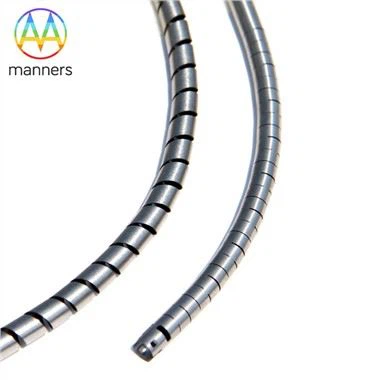
A bespoke hypotube is defined by its complete design freedom. By leveraging advanced laser cutting technology, manufacturers can create custom features based on a customer's 2D/3D drawings or physical samples. This allows for the precise tailoring of the hypotube's properties to match the exact clinical requirements. The principle is one of "mechanical programming": the pattern, length, diameter, wall thickness, and material can all be varied to achieve a specific performance profile. For example, a bespoke hypotube for a complex neurovascular intervention might feature a combination of continuous spiral cuts for flexibility, radial cuts for kink resistance, and interrupted spiral cuts for torque transmission, all within a single shaft. The minimum kerf width of 0.012 mm enables the creation of intricate, patient‑specific geometries that were once impossible. This level of customization ensures that the hypotube is not just a commodity component, but an integral part of a therapeutic solution that adapts to the patient's unique anatomy. The core principle is that the hypotube becomes an extension of the surgeon's intent, engineered to navigate the exact path required for a successful outcome.
Equipment classification
Producing bespoke hypotubes demands a flexible and agile manufacturing ecosystem. At the heart of this system is a high‑precision laser cutting platform capable of reading and executing complex CAD/CAM files. Five‑axis CNC machines provide the dexterity to cut intricate patterns from any angle, while femtosecond lasers handle sensitive materials like Nitinol without thermal damage. Rapid prototyping capabilities, including 3D printing of polymer models for validation, allow for quick iterations and design refinements. A comprehensive metrology lab, equipped with coordinate measuring machines (CMM), optical microscopes, and micro‑CT scanners, ensures that each custom part meets the exact specifications. Additionally, a robust quality management system compliant with ISO 13485 is essential to maintain traceability and consistency across small‑batch or single‑unit productions. The ability to seamlessly integrate customer‑provided digital models with the manufacturing process is the key differentiator for a bespoke hypotube supplier.
Practical guide
To successfully implement bespoke hypotube solutions, manufacturers should adopt a collaborative, engineering‑driven approach. Begin with a detailed design review, using the customer's input to create a 3D model of the desired hypotube. Utilize simulation software to predict mechanical behavior and identify potential stress concentrations before cutting. Select the appropriate alloy-304, 316L, 17‑7PH, Nitinol, or L605-based on the clinical environment and required properties. Establish a clear communication channel for feedback and revisions, ensuring that the final design is both functional and manufacturable. During production, employ in‑process inspection to catch any deviations early, and use locked laser recipes to guarantee repeatability. Post‑processing steps such as electropolishing and passivation must be tailored to the specific geometry to avoid damaging delicate features. Finally, provide comprehensive documentation, including material certificates, inspection reports, and a device master record (DMR), to support the customer's regulatory filings. The goal is to make the custom process as seamless and reliable as standard production, delivering a hypotube that is truly fit for its intended purpose.
Real‑world experience
A prime example of bespoke hypotube success comes from the field of robotic‑assisted surgery. A leading surgical robot company required a hypotube shaft that could articulate in multiple planes while maintaining torsional stability for a novel endoscopic stapler. By working closely with a hypotube manufacturer, they developed a custom jigsaw‑patterned shaft that provided the necessary flexibility and strength. The jigsaw cuts interlocked under tension, eliminating axial stretch and ensuring precise tip control. The result was a robotic instrument that could perform delicate maneuvers with unprecedented accuracy, reducing procedure times and improving patient outcomes. In another case, a pediatric cardiologist needed a catheter for a newborn with a complex congenital heart defect. A bespoke hypotube, designed with a very thin wall (0.05 mm) and a unique spiral‑radial hybrid pattern, was created in a matter of days, enabling a life‑saving intervention that would have been impossible with off‑the‑shelf components. These stories illustrate the transformative power of bespoke hypotubes in addressing unmet clinical needs.
Conclusion
Bespoke hypotubes represent the future of medical device manufacturing, where customization and precision converge to meet the unique demands of each patient. By embracing this approach, manufacturers can move beyond the limitations of standard parts and unlock new levels of clinical performance. For the medical needle manufacturer, the ability to deliver bespoke solutions is a powerful competitive advantage that sets them apart in a crowded market. It is a testament to the fact that in the world of interventional medicine, one size does not fit all, and the hypotube is the canvas upon which personalized therapies are built.
Outlook
The trend toward personalized medicine will only accelerate, driving demand for bespoke hypotubes. Advances in artificial intelligence and machine learning will enable the automated design of custom patterns based on patient‑specific anatomical data from CT or MRI scans. Furthermore, the integration of additive manufacturing techniques could allow for the creation of hypotubes with internal features that are impossible to machine, such as lattice structures for enhanced flexibility. As the technology matures, the cost and lead time of bespoke hypotubes will decrease, making them accessible for a broader range of applications. The future is one where every hypotube is as unique as the patient it serves.