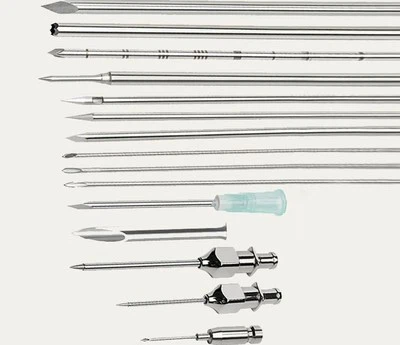
Why Needle Bevels Face Up: The Unseen Engineering Of Injection Safety
Apr 09, 2026
Why Needle Bevels Face Up: The Unseen Engineering of Injection Safety
When people watch a standard subcutaneous or intramuscular injection, one small but pivotal detail often goes unnoticed: the needle bevel (its slanted, open tip) is almost always oriented upwards, facing the clinician. This is not a random habit-it is a deliberate technique rooted in anatomy, fluid dynamics, and patient safety. While most clinicians learn this rule during training-"bevel up"-few pause to ask why this orientation matters so much, or how it influences everything from injection accuracy to patient comfort.
The principle behind bevel direction dates back to the earliest days of hollow needle design, when engineers and physicians realized that a simple 15–20° angled opening could drastically change how a needle penetrates tissue, delivers medication, and minimizes trauma. Today, that understanding is codified in international standards, training protocols, and even the ergonomics of needle packaging. From vaccine campaigns to emergency medicine, the "upward bevel" remains a small gesture with large clinical implications.
What Exactly Is "Needle Direction"?
In clinical practice, "needle direction" typically refers to the orientation of the bevel-the angled opening at the tip of a hypodermic needle-relative to the patient's skin and tissue layers. While the term sometimes broadly describes the needle's insertion path or angle, its most precise meaning concerns bevel positioning.
Bevel-Up vs. Bevel-Down
Bevel-up: The slanted opening faces upward, toward the clinician. This is the standard orientation for most injections and blood draws.
Bevel-down: The slanted opening faces downward, toward the patient's skin. This is used in specific cases, such as certain intradermal injections or when accessing very superficial veins.
Why Bevel Geometry Matters
The bevel is not merely a hole-it is a precision-cut facet usually angled between 15° and 20°. This design creates a sharp, tapered point that slices through tissue with minimal resistance. The bevel's orientation determines:
How cleanly the needle enters tissue
The degree of tissue deformation or "tenting"
How smoothly medication flows out
The risk of coring (punching out a tissue plug) or vein wall damage
The Clinical Reason: Why "Bevel Up" Become the Default
1. Cleaner Tissue Entry & Reduced Trauma
When inserted bevel-up, the needle's sharpest point-the tip of the bevel-contacts the skin first, creating a clean, slit-like opening. The rest of the bevel follows smoothly, separating tissue fibers rather than tearing them. In contrast, a bevel-down approach can cause the needle to "scoop" or push against the tissue, increasing drag, pain, and the risk of coring.
Supporting Data: A study in the Journal of Clinical Nursing(2018) comparing bevel orientations during subcutaneous injections found that bevel-up insertions required 22% less insertion force and were associated with a 31% reduction in patient-reported pain scores (p<0.01) in a sample of 120 adult patients.
2. Enhanced Visibility & Control
For venipuncture, holding the needle bevel-up allows the clinician to see the exact moment the needle enters the vein (often signaled by a "flash" of blood in the needle hub). This visual feedback is critical for precise depth control and prevents overshooting, which could result in a through-and-through puncture of the vein.
3. Optimized Fluid Dynamics
During injection, medication exits primarily from the upper portion of the bevel opening. A bevel-up orientation directs the fluid stream upward and away from sensitive nerve endings often located deeper in the tissue, potentially reducing the sharp, stinging sensation known as "jet effect" pain.
The Exceptions: When Bevel Direction Changes
While "bevel up" is the universal starting point, expert technique involves knowing when to rotate the needle.
1. Intradermal Injections (e.g., TB Skin Tests)
For shallow injections just below the skin surface, a bevel-up orientation is initially used to pierce the epidermis. Once the needle tip is in, it is often rotated to a near-parallel, bevel-up position to thread the needle within the dermal layer. A true bevel-down approach is sometimes used for the final advancement to facilitate precise, shallow medication placement.
2. Accessing Fragile or Superficial Veins
In pediatric or geriatric patients with thin, fragile veins, some practitioners use a very shallow bevel-up approach or a modified bevel-down technique to reduce the risk of blowing through the posterior vein wall. The bevel-down position can provide a blunter leading edge that may "lift" rather than slice through the delicate vein.
3. Specialty Needles with Double or Eccentric Bevels
Certain procedures use needles with non-standard bevels:
Spinal/epidural needles: Often have a pencil-point (Whitacre, Sprotte) or a directional bevel (Tuohy) designed to separate rather than cut dural fibers. Direction is used to steer the needle or catheter.
Biopsy needles: May have a bevel designed to direct the cutting action in a specific tissue plane.
The Engineering & Standardization Behind Bevel Design
Needle bevels are not accidental; they are the product of precise engineering governed by international standards.
Bevel Angles & Sharpness
ISO 7864 specifies the performance requirements and test methods for sterile hypodermic needles. While it does not mandate a single bevel angle, the industry-standard 15–20° primary bevel balances sharpness for easy insertion with durability to resist bending. The needle's secondary bevel(a smaller facet at the very tip) is honed to a razor edge, sometimes measured in microns, for a cleaner puncture.
The "Lumen-First" Design Principle
In a standard bevel-up insertion, the needle's lumen (the hollow channel) is the first part to enter the vein. This allows for immediate blood flashback, confirming correct placement. This design principle prioritizes immediate visual feedback, a critical safety feature in fast-paced clinical settings.
Color Coding & Hub Ergonomic
While ISO 6009 color codes denote needle gauge(e.g., pink for 18G), the needle hub is often designed with tactile markers or flat sides (e.g., a "flash chamber" with wings) to help the clinician maintain bevel orientation by feel, without looking away from the insertion site.
A Clinician's Checklist for Needle Direction
Assess Before Inserting
Choose bevel orientation based on procedure: Bevel-up for most SC, IM, and IV injections; consider shallow or modified angles for ID or fragile veins.
Stabilize and Visualize
For venipuncture, stabilize the vein below the planned entry point. Insert bevel-up at a 15–30° angle, watching for the flashback in the hub.
Control the Advance
Once the needle enters the skin, advance smoothly along the tissue plane. Avoid rotational "drilling" motions, which can enlarge the tissue tract.
Know When to Rotate
In intradermal techniques, after initial skin penetration, you may rotate the needle almost parallel to the skin, bevel still up, to advance within the dermis.
Minimize Redirects
If you must redirect, withdraw the needle slightly to just below the skin before changing direction. Never redirect at full depth with the bevel engaged in tissue.
Why This Small Detail Has a Large Impact
The consistent use of "bevel up" is a prime example of how a subtle, standardized technique-born from an understanding of anatomy, material science, and human factors-enhances patient safety and procedural success. It reduces pain and tissue damage, improves first-stick accuracy in venipuncture, and ensures more reliable medication delivery.
From mass immunizations to emergency IV placements, this unspoken rule bridges the gap between needle engineering and clinical touch. It turns a simple hollow tube into a precise, controlled instrument. In the end, needle direction is not just about which way the bevel faces-it's about directing care toward greater precision, comfort, and safety, one insertion at a time.