When Peripheral IVs Fail: Needles For Intraosseous Vascular Access Workflow
Nov 22, 2026
Every resuscitation guideline in the world says the same thing in different words: when peripheral access cannot be established quickly, move to the bone. In practice, teams spend far too long on the first half of that sentence. A workflow only works when the trigger to switch is defined in advance, the equipment is immediately at hand, and nobody has to negotiate with a colleague about whether one more attempt is reasonable. This is where Needles For Intraosseous Vascular Access stop being an emergency item and become part of a planning document.
The Two-Attempt Rule and Its Hidden Costs
The conventional advice is to allow two peripheral attempts, then change strategy. The advice is sound, but the way it is implemented is not. Attempts are often counted inconsistently, with a failed attempt at another site treated as a new series, and with the clock restarted every time a more experienced colleague takes over. Twenty minutes later the patient has had six punctures, no drugs, and a limb that looks like a training exercise gone wrong.
The hidden costs of the extra attempts are measurable. Each puncture takes between three and six minutes including preparation, each carries a risk of infiltration that compromises a subsequent ultrasound-guided attempt, and each one consumes the attention of the person best placed to run the resuscitation. Delay is the real harm: in cardiac arrest, every minute without adrenaline is associated with worse survival, and in shock, every minute without volume is a minute of worsening perfusion. The rule is not there to limit effort; it is there to protect time.
Why IO Beats a Third Peripheral Attempt
Intraosseous access converts a search problem into a landmark problem. The operator does not need to find a vessel, assess its calibre or check for valves; the target is a fixed anatomical point, and the marrow cavity beneath it accepts a wide-lumen cannula that supports rapid infusion. Success rates above ninety per cent on first attempt are routinely reported in trained services, which is not something that can be said for a third peripheral attempt in a shut-down circulation.
Speed is only part of the advantage. An intraosseous line does not collapse when the patient's blood pressure falls, it does not require the limb to be held still by an assistant, and it can be placed while compressions continue. It is also available in settings where ultrasound and trained vascular access staff are not, which matters in prehospital care and in smaller hospitals. The switch is not a defeat; it is the substitution of a technique with a predictable failure mode for one with an unpredictable one.
Choosing Hardware for a Failed-Access Protocol
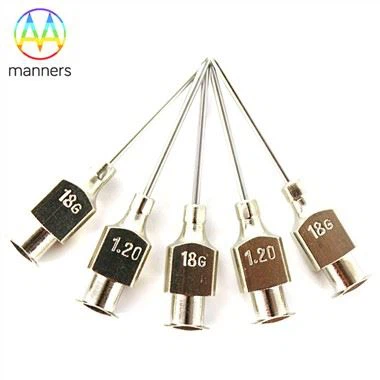
A failed-access protocol needs hardware that supports a single decision: drill now. That means a driver and at least two needle lengths in every resuscitation trolley, sealed together so that nothing has to be located during the event. Each needle is an injection and puncture instrument with a stainless steel cannula, a removable stylet and a luer-lock hub; the practical differences lie in length, hub geometry and the depth markings that let an operator judge progress.
Standardisation beats variety. Services that use one driver platform across adult, paediatric and prehospital teams simplify training and stock, and they can specify 15G or custom size configurations to cover both adults and children from the same carton. Where a legacy driver is already in service, 2D/3D drawing or sample customization allows needles to be matched to it rather than replacing the entire fleet. Standard carton or client-specific packaging then determines whether the right needle is on the trolley or in a store room.
Running the Failed-Access Algorithm
The algorithm is short enough to memorise. First attempt at the antecubital fossa; if it fails, second attempt by the most experienced person present, using ultrasound if it is available within sixty seconds. If that fails, or if the patient is in arrest, declare failed peripheral access out loud and move to the bone. Choose the proximal tibia unless it is unusable, prepare the site, anaesthetise if the patient is awake, drill at ninety degrees, stop at the give, remove the stylet, aspirate, flush with 0.9% saline, secure, and attach the infusion set through a three-way stopcock.
Two details make the difference between a protocol on paper and a protocol in use. The first is a verbal trigger, spoken by the team leader, so that the switch is a decision rather than a drift. The second is a time stamp: record when peripheral access was declared failed and when the intraosseous needle was inserted, because that interval is the number worth improving. Everything else in the algorithm, including the choice of site and the confirmation method, should already be familiar from practice.
What the Audit Data Revealed
When one district general hospital introduced a spoken trigger and a time stamp, the median interval from arrival to first intraosseous drug fell from nineteen minutes to seven over eight months. The change was not caused by new equipment; the same driver had been on the trolley for three years. What changed was that the team stopped treating the drill as a last resort and started treating it as the next step in a defined sequence.
The audit also exposed a quieter problem. In a fifth of cases the intraosseous line was placed successfully but the first drug was given through the peripheral cannula that had already been declared unusable, simply because it was still connected. Teams that adopted a visible marker, a coloured tag on the intraosseous tubing and removal of the failed cannula, eliminated the error within two months. Workflow failures are rarely dramatic; they are usually a matter of what remains attached to the patient.
Workflow Discipline Beats Heroics
Resuscitation teams reward persistence, and persistence is exactly what a failed-access protocol has to restrain. The clinician who gets a difficult line on the eighth attempt is celebrated; the clinician who declares failure at attempt two and drills in forty seconds is not, even though the second behaviour produces better outcomes. Changing that culture requires explicit permission from leadership: a written standard that says the switch is expected, not a judgement call on individual skill.
Discipline extends to the parts of the workflow nobody enjoys. Restocking the trolley after every use, checking expiry dates on cartons, logging every insertion, and reviewing the cases where peripheral access succeeded late all sustain the protocol. When Needles For Intraosseous Vascular Access are treated as controlled stock with a named owner, they are always present; when they are treated as generic consumables, they are missing at the moment the algorithm needs them.
Protocols That Will Retire Improvisation
The direction of travel is toward protocols embedded in the equipment itself. Kits that open in a fixed sequence, drivers that record insertion time and depth, and cartons that are restocked as a single unit all reduce the cognitive load on a team that is already saturated. Digital capture of the failed-access interval is beginning to appear in quality dashboards, which means the metric will soon be visible to managers rather than only to clinicians.
None of this replaces judgement about the individual patient. A patient with a single accessible vein and a stable blood pressure may reasonably receive one careful attempt; a patient in arrest with no palpable pulse should not receive any. What the workflow provides is a default that holds when judgement is degraded by noise, fatigue and urgency. Teams that build that default, stock for it and rehearse it will keep finding that the bone is faster than the vein, every time it matters.