Transcendence And Evolution: Cutting-Edge Development Of Puncture Needle Technology And Prospects Of Future Surgical Approaches
Apr 27, 2026
Transcendence and Evolution: Cutting-edge Development of Puncture Needle Technology and Prospects of Future Surgical Approaches
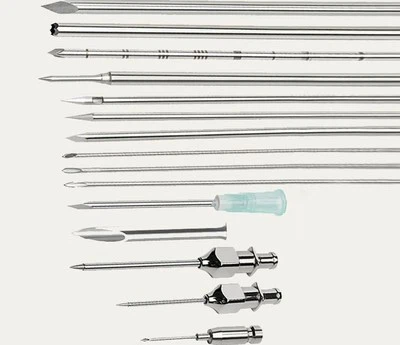
As the cornerstone of laparoscopic surgery, puncture device technology keeps advancing continuously. As the core component, the puncture needle is witnessing continuous evolution in design concepts and application boundaries, steadily driving minimally invasive surgery toward a more precise, scarless and intelligent future.
Development Direction I: Intelligent Upgrade and Functional Integration of Puncture Needles
AR-guided Navigation Puncture NeedlesIn the future, puncture needles will realize three-dimensional fusion and registration with preoperative CT/MRI images. During puncture, surgeons wearing head-mounted AR devices can directly view virtually superimposed blood vessel distribution, organ contours and preset puncture paths on the patient's body surface. This delivers perspective vision-like precise puncture and complete avoidance of high-risk areas.
Sensor-feedback Puncture NeedlesMiniature sensors for pressure, impedance or optical coherence tomography will be integrated at the needle tip. In the puncture process, real-time feedback on front tissue types - including fat, muscle, fascia and intestinal wall - can provide objective data for identifying tissue layers and adhesions, offering immense clinical value for complex and high-risk cases.
Integrated Multifunctional Puncture NeedlesBy combining puncture needles with micro endoscopes, miniature ultrasound probes or hemostatic electrodes, the all-in-one design realizes one-stop completion of puncture, visual observation, diagnosis and hemostasis. It reduces frequent instrument replacement in surgery and significantly improves operational efficiency.
Development Direction II: Further Minimally Invasive and Scarless Surgical Access
Specialized Puncture Needles for Single-port Laparoscopic SurgerySingle-port surgery is performed through a single incision, most commonly at the umbilicus, requiring dedicated multi-channel puncture devices. The built-in puncture needle adopts an optimized and complex structure to establish multiple independent and non-interfering instrument channels within a single sheath. It sets extremely high requirements on penetration performance and structural design, and has become a key research and development hotspot in the industry.
Soft Puncture Technology for Natural Orifice Transluminal Endoscopic Surgery (NOTES)NOTES enters the body cavity through natural orifices such as the oral cavity, vagina and rectum without any abdominal incision. It requires highly flexible soft endoscopes and specialized puncture devices, which can safely penetrate the gastric wall, vaginal fornix or rectal wall to access the abdominal cavity. Such puncture needles focus on controllable puncture and reversible closure technology to ensure procedural safety.
Microlaparoscopy and Needle-based InstrumentsNeedle-laparoscopic instruments with a diameter of less than 3 mm are matched with ultra-fine puncture needles and thin-walled sheaths. They bring minimal tissue trauma and nearly scarless postoperative outcomes, holding broad application prospects in pediatric surgery and cosmetic-oriented surgical procedures.
Development Direction III: Cross-border Expansion of Application Scenarios
Standardized Interfaces for Robotic SurgeryIn robotic surgical systems such as the Da Vinci platform, robotic arms enter the body through puncture access channels. Specially customized puncture needles and supporting sheaths meet exclusive requirements in dimensional matching, airtightness and bending resistance, serving as indispensable core supporting components for robotic surgery.
Integration of Interventional Therapy and Laparoscopic SurgeryUnder the guidance of interventional ultrasound or CT, high-precision puncture needles are applied for radiofrequency and microwave ablation of abdominal tumors, as well as percutaneous drainage of cysts and abscesses. In such scenarios, the puncture needle acts as both a diagnostic probe and a therapeutic electrode, placing extremely high demands on puncture accuracy and structural stability.
Emergency and Bedside Clinical ApplicationSimplified, portable and disposable visualized puncture kits can be developed for rapid diagnostic laparoscopy in patients with blunt abdominal trauma in emergency departments. Rapid, safe and reliable needle insertion becomes the core performance indicator to meet urgent clinical needs.
Conclusion
The technological evolution of puncture needles is advancing along three core directions: greater intelligence, higher minimal invasiveness, and wider cross-disciplinary integration. From sensor-embedded smart needles and cutting-edge scarless surgical designs, to in-depth integration with surgical robots and interventional therapy, modern puncture needles are no longer merely simple instruments for establishing surgical access. Instead, they serve as powerful, optimized precision keys for surgeons. The future development of puncture needle technology will be deeply intertwined with the next milestone chapter of global minimally invasive surgery.