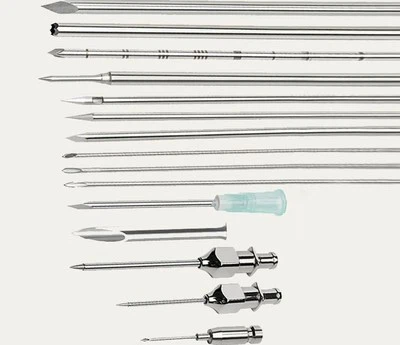
Safety Is More Important Than Mountains: Risk Control System And Norms For Puncture Needle Operations
Apr 27, 2026
Safety is more important than mountains: Risk control system and norms for puncture needle operations
Laparoscopic puncture is a crucial step in the surgery and also a potentially risky part. The material mentions that the puncture device is used to "pierces the abdominal wall", and this process directly affects patient safety. The operations related to the puncture needle have formed a rigorous risk control system.
The first line of defense: Detailed assessment of patients and screening for contraindications
Before deciding to use a puncture needle, a strict assessment must be conducted. Absolute or relative contraindications include: severe cardiac or pulmonary dysfunction that makes it impossible to tolerate pneumoperitoneum, uncorrected coagulation disorders, diffuse peritonitis, large abdominal masses in the abdominal cavity, and advanced pregnancy. For patients with a history of multiple abdominal surgeries, there is a need to be highly vigilant about intra-abdominal adhesions, which requires adjusting the puncture strategy (such as choosing the open placement method or using a visual puncture needle). Preoperative assessment is the first step in preventing systemic risks.
The second line of defense: Standardized pre-puncture preparations and establishment of pneumoperitoneum
1. Positioning and Preparation: An appropriate position (such as the head-down and foot-up position used in gynecological surgeries) can utilize gravity to move the intestinal tract away from the upper abdomen, creating a safer puncture area for the needle.
2. Establishment of Safe Intra-abdominal Pressure: The Veress needle is typically used to establish intra-abdominal pressure first. The operation has strict guidelines: perform a vertical or moderate-angle puncture, conduct an aspiration test (to confirm no entry into blood vessels or intestinal cavity), a water injection test (to confirm the natural descent of the water column), and an initial low-flow inflation to verify that the needle tip is in the free abdominal cavity. Adequate and stable intra-abdominal pressure is the "safety cushion" that ensures the safe puncture of the main puncture needle in the subsequent steps.
The third line of defense: Core safety points of the puncture technique
1. Intelligent selection of puncture points: The first puncture point (observation hole) is usually chosen at the umbilicus because it is the thinnest anatomically and has fewer organ adhesions at the rear. However, it should be noted that there may be vascular variations at the umbilicus.
2. Control of puncture force and angle: During the puncture, the wrist should remain stable, using a gentle rotational and advancing force rather than a violent thrust. The puncture direction should avoid the known areas of major blood vessels. For non-umbilical puncture points, the puncture needle usually needs to point towards the surgical target area and avoid the inferior epigastric artery at a certain angle.
3. Tactile feedback of "two missed sensations": This is an important tactile sign for determining whether the puncture needle has safely entered the abdominal cavity. The first missed sensation is the breakthrough of the anterior sheath or fascia of the rectus abdominis, and the second is the breakthrough of the peritoneum. Only having one missed sensation may indicate that the puncture is too shallow (only in the pre-peritoneal space).
4. Control of puncture needle penetration depth: Once there is a missed sensation after breaking through the peritoneum, the puncture needle along with the sheath tube should be further advanced 1-2 centimeters before stopping, to prevent damage to the contralateral tissues or major blood vessels due to excessive penetration.
The fourth line of defense: Visual monitoring for auxiliary puncture
After the first channel is established and the camera is inserted, the puncture of all subsequent auxiliary channels must be performed under the direct vision of the laparoscope. The surgeon can clearly see on the screen the area where the needle tip is pushing the abdominal wall from inside out, confirming that it avoids the peritoneum and intestinal tubes, and instructing the needle holder to adjust the position. This is the most reliable method to avoid secondary injuries.
The fifth line of defense: The withdrawal mechanism of the puncture needle and the emergency plan
1. Exit and Inspection: Once the puncture sheath is properly placed, the puncture needle should be completely withdrawn immediately, and then the lens should be inserted through the sheath tube to observe if there is any active bleeding along the puncture path. It is necessary to confirm that the end of the sheath tube is safely positioned within the abdominal cavity and there is no organ damage around.
2. Emergency Plan: If it is suspected or confirmed that the puncture needle has caused damage to blood vessels or intestinal tubes, one must remain calm and not rush to withdraw the puncture device. It is necessary to quickly transfer to laparotomy and perform exploration and repair under direct vision. The puncture device itself can provide a reference for locating the injury site.
Conclusion: The safe use of the puncture needle relies on a complete system that encompasses preoperative assessment, standardized preparation, precise puncture, continuous visual monitoring, and an emergency plan. The proficient mastery and strict implementation of this safety logic by the surgeon are the fundamental guarantee for transforming the puncture needle, this "powerful tool", into a "life passage".