Top 10 Clinical Training And Safety Quality Control System Construction For Menghini Liver Biopsy Needles (2026)
Apr 16, 2026
Top 10 Clinical Training and Safety Quality Control System Construction for Menghini Liver Biopsy Needles (2026)
Liver biopsy is a highly operator-dependent invasive procedure. In 2026, with heightened requirements for medical quality and increased patient safety awareness, standardized training and systematic quality control surrounding Menghini liver biopsy needles have become critical factors measuring a manufacturer's comprehensive strength and influencing clinical adoption. Leading enterprises are transitioning from mere product providers to solution partners encompassing simulation training, skill assessment, complication management, and continuous quality improvement.
Modern Clinical Skills Training Systems
The traditional "apprenticeship" model is being replaced by high-fidelity, structured training courses based on simulation. Manufacturers are collaborating deeply with medical education institutions to develop multi-tiered training tools:
High-Fidelity Physical Simulators: Utilizing biomimetic materials to simulate skin, subcutaneous tissue, the liver capsule, and varying parenchymal textures (normal, steatotic, cirrhotic). These models provide realistic haptic feedback and visual cues, allowing trainees to repeatedly practice needle insertion angles, depth control, and negative pressure aspiration techniques.
Virtual and Augmented Reality (VR/AR) Training Platforms: A revolutionary advancement in training. Trainees wearing VR/AR headsets undergo full-process training-from preoperative planning and image localization to puncture execution-on virtual patients. The system calculates the needle track in real-time, warns of critical structures like vessels, and provides force feedback. For instance, Imperial College London utilized Microsoft HoloLens 2 augmented reality technology with Merit Medical's biopsy devices to create a mixed-reality training environment, allowing trainees to operate on virtual anatomical structures using real needles. Studies indicate that residents show significant improvements in knowledge and procedural confidence after VR module training.
US-CT Multimodal Ultrasound Phantoms: More advanced phantoms integrate both ultrasound and CT imaging characteristics, featuring built-in simulated vascular networks and mobile lesions to mimic respiratory-induced organ displacement. Pressure sensors provide real-time feedback on insertion deviations. Data suggests that training with such phantoms can improve physician puncture accuracy by 67% and reduce complication rates by 82%.
Standardized Operating Procedures and Complication Management
Manufacturer-provided training focuses not only on skills but also emphasizes standardized workflows and complication prevention:
Structured Curricula: Covering the full spectrum from indication/contraindication assessment, preoperative preparation (including informed consent and coagulation checks), imaging guidance selection (US/CT), puncture site localization and anesthesia, standard puncture techniques, to postoperative observation and management.
Complication Simulation and Management Drills: Setting up rare but severe complication scenarios like hemorrhage or pneumothorax within simulation systems to train trainees in emergency response. Training content emphasizes the early identification and standardized management of complications such as bleeding, bile leakage, and infection.
Case-Based Learning: Integrating real clinical case images and data, allowing trainees to manage varying difficulty levels and pathological types in a virtual environment, thereby enhancing clinical decision-making capabilities.
Product Quality Control and Industry Standards
Safety begins with the product itself. The production of Menghini liver biopsy needles must adhere to stringent international and domestic standards:
International Standards: Including ISO 13485 (Quality Management Systems), ISO 7864 (Requirements for Sterile Hypodermic Needles), and ASTM F2132 (Standard Test Methods for Performance of Hollow-Bore Biopsy Needles).
Chinese Industry Standards: Primarily based on YY/T 1444-2016 "Biopsy Needles," which specifies classifications, materials, physical properties (e.g., needle tube strength, toughness), and biocompatibility requirements.
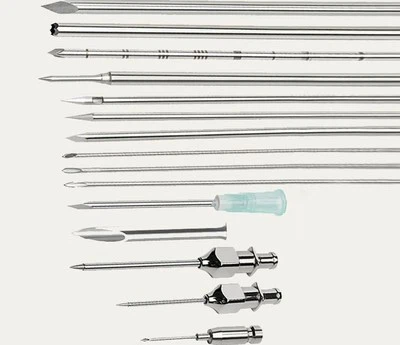
Materials and Performance: Needle bodies typically utilize 304/316L stainless steel or titanium alloys, requiring high corrosion resistance, bend resistance, and biological inertness. The sharpness of the tip, cutting efficiency, and overall rigidity/toughness undergo rigorous testing.
Manufacturer Support Throughout the Product Lifecycle
Top-tier manufacturers have established support systems spanning the entire product lifecycle:
Preoperative Planning Support: Providing detailed anatomical atlases, puncture pathway planning guides, and collaborating with imaging software companies to develop needle track simulation software.
Intraoperative Technical Support: Offering real-time telephone or online assistance to help resolve technical difficulties encountered during procedures.
Postoperative Follow-up and Data Collection: Establishing product usage registries and complication reporting systems to collect real-world data for product iteration and risk-benefit assessment.
Continuing Medical Education (CME): Hosting training courses, workshops, and webinars, inviting experts to share the latest techniques and clinical experiences to help physicians continuously improve their skills.
Building a Culture of Safety and Patient Communication
Training systems are increasingly emphasizing the cultivation of non-technical skills:
Patient Communication and Informed Consent: Training physicians on how to clearly explain the necessity, process, benefits, and risks of liver biopsy to obtain truly informed consent.
Team Collaboration: Emphasizing effective communication and collaboration between the operator, ultrasound/CT technicians, and nurses during image-guided biopsies.
Quality Improvement and Auditing: Promoting the establishment of hospital liver biopsy quality indicator databases, regularly auditing complication rates and diagnostic success rates to form a closed-loop of continuous quality improvement.
In 2026, behind every excellent Menghini liver biopsy needle lies a robust training and quality control system. A manufacturer's core competitiveness is increasingly reflected in its ability to lower the barrier to entry for the technology, enhance procedural reproducibility and safety, and ultimately assist clinicians in providing optimal diagnostic services. By combining advanced simulation technology, standardized workflows, and comprehensive support services, leading enterprises are shaping new standards for safety and standardization in liver biopsy.