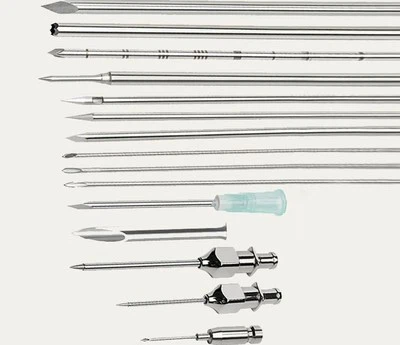
Top 10 Industry Standards, Material Innovations, And Quality Control Frontiers For Menghini Liver Biopsy Needles (2026)
Apr 16, 2026
Top 10 Industry Standards, Material Innovations, and Quality Control Frontiers for Menghini Liver Biopsy Needles (2026)
In the medical field, safety and efficacy are the lifeblood of any product. In 2026, the Menghini liver biopsy needle-a critical device for obtaining tissue samples from within the human body-is subject to increasingly stringent international and domestic standard systems governing its design, manufacturing, and quality control. Concurrently, advancements in material science and testing technologies are continuously pushing the boundaries of product performance and safety. Understanding these standards and innovations is a crucial dimension for evaluating the technical strength of top-tier manufacturers.
Adherence to Stringent Standard Systems
A qualified Menghini liver biopsy needle, from raw materials to final market release, must satisfy a complete set of standards:
Quality Management System Standards (ISO 13485): The cornerstone of medical device manufacturing, ensuring full traceability and controlled processes from design and development, procurement, and production to after-sales service.
Product-Specific Performance Standards:
YY/T 1444-2016 "Biopsy Needles": This is the dedicated industry standard for biopsy needles in China. It details requirements for product classification, material specifications, physical properties (e.g., needle tube strength, toughness, connection fastness), chemical properties, biological performance (biocompatibility), as well as sterility and packaging.
ISO 7864 "Sterile Hypodermic Needles for Single Use": While primarily for injection needles, its test methods regarding needle tip sharpness, rigidity, and corrosion resistance are highly relevant to biopsy needles.
ASTM F2132: ASTM International standard specifically for test methods regarding the piercing performance and breaking strength of hollow-bore biopsy needles.
Biological Evaluation Standards (GB/T 16886 / ISO 10993): Ensuring the product is safe upon contact with the human body. A series of tests are required, such as cytotoxicity, sensitization, and irritation or intracutaneous reactivity tests, to assess biocompatibility.
Core Dimensions of Material Innovation
Standards represent the baseline, while innovation is the pursuit. Breakthroughs by top manufacturers in materials focus on:
Substrate Upgrades:
Premium Stainless Steel: Building on traditional 316L stainless steel, special smelting and heat treatment processes yield variants with higher strength, superior toughness, and corrosion resistance to handle challenging scenarios like cirrhotic livers.
Titanium and Titanium Alloys: Used in high-end or special models due to their exceptional biocompatibility, high specific strength, and elastic modulus closer to bone (reducing stress shielding). Titanium alloy needles are lighter, stronger, and produce fewer artifacts, offering advantages in CT guidance.
The Revolution in Surface Engineering:
Ultra-Lubricious Hydrophilic Coatings: A current hotspot in R&D. Utilizing techniques like plasma polymerization and grafting to form a permanent hydrophilic polymer layer on the needle surface. This coating becomes "slippery when wet," drastically reducing tissue friction during puncture (studies show a reduction of over 80%), ensuring smoother insertion, less tissue drag, and reduced patient pain. The application of ultrasonic coating technology allows for nanoscale precision in uniformly covering the needle body, including complex needle tip geometries.
Functional Coatings: Including antimicrobial coatings (loading sustained-release agents like silver ions to reduce infection risk), echogenic coatings (enhancing visibility under ultrasound), and anti-protein adhesion coatings (minimizing tissue residue for easier sample extrusion).
Precision Needle Tip Manufacturing: Adopting advanced processes like femtosecond laser cutting to achieve nanometer-level precision and extreme sharpness at the cutting edge. This ensures high cutting efficiency, minimal tissue crushing, and samples more suitable for sophisticated molecular pathological analysis.
Full-Process Quality Control and Testing
Quality control permeates the entire process from raw material warehousing to finished product shipment:
Raw Material Inspection: Strict testing of the chemical composition, mechanical properties, and surface defects of stainless steel wire or titanium rods.
Process Control: Establishing key quality control points in every procedure, including needle tube drawing, tip forming, welding, polishing, coating, cleaning, and sterilization. Machine vision systems automatically detect tip defects and dimensional tolerances, while laser measuring instruments verify tip angles and sharpness.
Finished Product Performance Testing:
Mechanical Property Tests: Including rigidity tests (bending resistance), toughness tests (fracture resistance), and connection fastness tests (hub-to-cannula attachment).
Puncture Performance Tests: Using standard simulated materials (e.g., silicone, gelatin) to test puncture force, evaluating sharpness and smoothness.
Cutting Efficiency Tests: Assessing the integrity and length of the obtained tissue sample.
Biocompatibility and Sterility Tests: Mandatory certifications from third-party testing agencies.
Batch Traceability: Every batch of products carries a unique identifier, traceable to the raw material batch, production equipment, operators, and environmental data, ensuring any issues can be swiftly located and recalled.
Industry Trends and Future Outlook
Intelligent Quality Monitoring: Utilizing IoT technology to integrate more sensors on production lines, collecting real-time data on temperature, pressure, and dimensions. Big data analytics will predict quality trends, enabling preventive quality control.
Personalization and Compliance: As companies like Manners Technology offer customization services, quality control systems must possess sufficient flexibility to handle small-batch, multi-specification production while ensuring every custom product meets the same stringent standards.
Green Manufacturing and Sustainability: Considering environmental factors in material selection and production processes, such as using more eco-friendly coating materials, reducing process scrap, and adopting recyclable packaging.
In conclusion, the superior performance of Menghini liver biopsy needles in 2026 is a combined crystallization of precision manufacturing, material innovation, and strict quality control. Competition among top manufacturers is not just about the product itself, but a comprehensive reflection of their depth of understanding of standards, precision in process control, and continuous innovation capabilities. Only by firmly grounding innovation on the cornerstones of compliance and quality can truly safe, effective, and trustworthy medical products be produced.