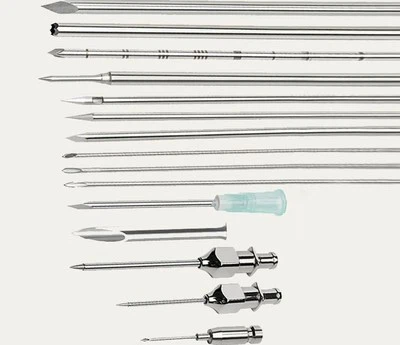
The Universal Language Of Global Surgery: From Hungarian Invention To World Standard
Apr 13, 2026
The Universal Language of Global Surgery: From Hungarian Invention to World Standard
Provocative Question:
How did a Hungarian surgical instrument, born in the mid-20th century, transcend linguistic, cultural, and technical barriers to become a "passport" for global laparoscopic surgery? In a world where medical standards are highly fragmented, how did the Veress Needle establish a unified system of trust?
Historical Context
The globalization journey of the Veress Needle began with the "Gynecological Revolution" of the 1970s. Professor Kurt Semm at the University of Kiel introduced the Veress Needle into gynecological laparoscopy, establishing standardized operating procedures. In the 1980s, French surgeon Dr. Philippe Mouret performed the first laparoscopic cholecystectomy, and the Veress Needle was enshrined in textbooks as the standard entry technique. The 1990s saw FDA approval and promotion by international surgical bodies, cementing the needle's global status.
The Standardization Landscape
The global standardization of the Veress Needle has undergone three key phases:
Technical Standardization (1970s-1980s): Unified length (120mm), diameter (2mm), and spring tension (2.0 N/mm).
Material Standardization (1990s): 316L medical stainless steel reached international consensus.
Safety Standardization (2000s-Present): ISO 7864 and AAMI ST79 became the global gold standards.
Global Manufacturing Network
The contemporary Veress Needle supply chain exhibits a multipolar distribution:
|
Region |
Technical Expertise |
Representative Companies |
Market Share |
|---|---|---|---|
|
Europe |
Precision manufacturing, traditional craftsmanship |
Aesculap (DE), Richard Wolf (DE) |
40% (High-End) |
|
USA |
Innovative design, disposable tech |
Covidien (Medtronic), Ethicon (J&J) |
60% (North America) |
|
China |
Scaled manufacturing, cost advantage |
Mindray, Kangji Medical |
50% (Global Mid-Range) |
|
Japan |
Miniaturization, material innovation |
Olympus, Nippon Medical |
30% (Asia-Pacific High-End) |
Certification Matrix
Global circulation of Veress Needles rests on a multi-layered certification system:
FDA 510(k): US market access, average approval time of 90 days.
CE Marking: EU compliance, requiring adherence to MDR 2017/745.
NMPA Registration: China's National Medical Products Administration approval, averaging 180 days.
ISO 13485: International standard for Quality Management Systems.
ISO 7864: Specific standard for sterile hypodermic needles for single use.
Clinical Practice Variations
Surgical traditions across different regions have shaped diverse usage patterns:
European School: Emphasizes tactile feedback; favors reusable needles; prefers a 70–80 degree puncture angle.
North American Style: Focuses on proceduralization; prefers disposable needles; standard angle of 60 degrees.
Asian Characteristics: Integrates ultrasound guidance; developed modified gripping techniques; pays special attention to low-BMI patients.
South American Innovation: Under resource-limited conditions, developed Veress Needle techniques combined with gasless suspension methods.
Economic Perspective
The global Veress Needle market reveals interesting stratification:
High-End Market: German-made reusable needles, priced at €200–€300, lasting for 50–100 uses.
Mid-Range Market: Chinese-made disposable needles, priced at 20–50, with performance rivaling high-end products.
Accessible Market: Local production in India and Brazil, priced at <$10, meeting basic functional requirements.
According to Grand View Research, the global laparoscopic access instrument market reached $1.28 billion in 2023, with Veress Needle-type products accounting for approximately 35%. By 2030, the Asian market CAGR is projected to reach 8.7%, far exceeding the 3.2% growth in Europe and North America.
Educational Diffusion Network
The global spread of Veress Needle technology relies on a multi-level educational system:
International Societies: SAGES and EAES train over 5,000 surgeons annually.
Manufacturer Training: Global training centers conduct over 300 workshops yearly.
Digital Education: Modules on apps like Touch Surgery have exceeded 2 million downloads.
South-South Cooperation: China donates laparoscopic simulators containing Veress Needle training modules to African nations.
Cultural Adaptation
The global success of the Veress Needle stems from its cultural inclusivity:
International Nomenclature: From Hungarian "Veress-tű" to English "Veress Needle" to Chinese "维氏针."
Technique Localization: Indian surgeons invented the "single-hand rotation technique," better suited to local patient physiques.
Religious Respect: Guidelines for "Qibla-direction" patient positioning have been developed for Muslim patients.
Future Globalization
Five trends will define the global future of the Veress Needle:
Standardization + Personalization: ISO standards ensure safety baselines, while regional modifications meet special needs.
Digital Certification: Blockchain technology enables global quality traceability, reducing counterfeit rates by 90%.
Sustainable Development: Environmental advantages of reusable needles are regaining attention.
Accessible Healthcare: "$5 Minimalist" Veress Needles make the technology available to grassroots hospitals.
AI Assistance: Global puncture databases train AI models to guide novice operators in real-time.
As stated by Dr. Walter Johnson, WHO Lead on the Global Initiative for Safe Surgery: "The globalization of the Veress Needle proves that good medical technology transcends borders, but it must respect local wisdom." From operating rooms in Budapest to training centers in Shanghai, from county hospitals in Nairobi to teaching hospitals in New York, this small puncture needle connects a shared pursuit-opening the door to minimally invasive surgery more safely for more patients.