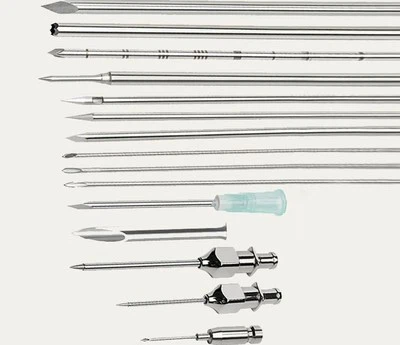
From Open To Minimal: How The Veress Needle Changed The Philosophy Of Surgical Access
Apr 13, 2026
From Open to Minimal: How the Veress Needle Changed the Philosophy of Surgical Access
Provocative Question:
As the core philosophy of surgery shifted from "maximum exposure" to "minimal trauma," what philosophical transformation did the "first cut" undergo? The Veress Needle is more than just an instrument; it is a vessel for an idea-how to safely enter a body cavity while blind. How did this 5-mm channel redefine our perception of the surgical gateway?
Historical Context
The evolution of surgical access philosophy spans three eras. The early 20th century was the "Era of the Big Incision," where the length of the incision correlated directly with the surgeon's reputation. The mid-20th century entered the "Era of Selective Incisions," where classic approaches like McBurney's point became standard, though trauma remained significant. It wasn't until the 1980s, with the popularization of the Veress Needle, that the philosophy of "keyhole surgery" truly took hold-achieving the most complex operations through the smallest entries. German surgeon Erich Mühe performed the first laparoscopic cholecystectomy using a Veress Needle in 1985, inaugurating a new era of minimally invasive surgery.
The Philosophical Shift
The minimally invasive philosophy represented by the Veress Needle manifests across five dimensions:
|
Dimension |
Traditional Open Surgery |
Veress Needle Era |
Philosophical Connotation |
|---|---|---|---|
|
Access View |
Larger incision = Better exposure |
Minimize entry, minimize trauma |
From "Conquering Nature" to "Following Nature" |
|
Visual Field |
Direct vision, 3D but limited |
Endoscopic magnification, 2D but deep |
From "Macroscopic Holism" to "Microscopic Precision" |
|
Operative View |
Direct manual manipulation, rich touch |
Indirect instrument control, vision-led |
From "Tactile Extension" to "Visual Extension" |
|
Spatial View |
Utilizing existing spaces |
Creating space (Pneumoperitoneum) |
From "Using the Given" to "Active Creation" |
|
Trauma View |
Necessary trauma are unavoidable |
All trauma must be minimized |
From "Accepting Cost" to "Pursuing Perfection" |
Democratization of Technology
The Veress Needle lowered the barrier to entry for minimally invasive surgery:
Simplified Technique: Basic puncture skills can be mastered in under 5 minutes, unlike the complex layered anatomy of open surgery.
Affordable Equipment: A Veress Needle set costs 1/10th of traditional open surgical instruments.
Rapid Dissemination: In the 1990s, laparoscopic surgery spread at 30% annually, with the Veress Needle as the key technological catalyst.
Educational Philosophy Shift
The Veress Needle transformed surgical pedagogy:
Simulation First: Practicing puncture on animals or simulators avoids the learning curve on patients.
Error Analysis: Every failed puncture becomes a lesson in physics, anatomy, and technique.
Global Standards: Unified puncture techniques allow surgeons to collaborate seamlessly in any hospital worldwide.
Data from the Royal College of Surgeons shows that after introducing Veress Needle simulation training, resident first-attempt success rates rose from 68% to 92%, while major complications dropped from 0.5% to 0.1%.
Cultural Resistance and Breakthrough
The promotion of minimally invasive philosophy faced headwinds:
Generational Conflict: In the 1990s, 65% of senior surgeons opposed laparoscopy, believing "what you can't see, you can't fix."
Technical Skepticism: Early complications related to pneumoperitoneum were magnified, fueling skepticism.
Economic Barriers: High initial equipment costs restricted adoption to wealthy regions.
Breakthrough Moment: The 1992 NEJMmulticenter study provided definitive proof of the advantages of laparoscopic cholecystectomy.
Global Impact Assessment
The minimally invasive revolution led by the Veress Needle reshaped global surgery:
Patient Benefit: Hospital stays shortened from 7–10 days (open) to 1–2 days.
Health Economics: Although single-procedure costs rose by 20%, total medical costs decreased by 30% due to faster recovery and fewer complications.
Surgical Ecology: Gave rise to endoscopic surgery as a specialty, with over 200,000 endoscopic surgeons worldwide.
Technology Spillover: The minimally invasive ethos expanded to thoracoscopy, arthroscopy, and spine surgery.
Philosophical Reflection
Minimally invasive surgery sparked deep medical contemplation:
Perfection & Limits: How small can the incision be? Single-port and Natural Orifice Transluminal Endoscopic Surgery (NOTES) continually challenge the limit.
Man vs. Machine: Robots like da Vinci are technological extensions, but is the "feel" represented by the Veress Needle irreplaceable?
Elitism vs. Accessibility: How can minimally invasive technology benefit resource-limited regions? Simplified Veress Needles and training programs are the answer.
Contribution of Chinese Wisdom
The Chinese surgical community developed unique interpretations of the Veress Needle philosophy:
East-West Integration: Drawing parallels between the "De Qi" (obtaining Qi) sensation in acupuncture and the "breaking through" feeling of puncture, developing techniques characterized by "lightness, dexterity, and precision."
Scale Innovation: With 2 million laparoscopic surgeries annually, China has built the world's largest database on Veress Needle usage.
Accessible Solutions: For grassroots hospitals, the "Three-Step Veress Method" simplifies the learning curve.
Future Philosophy
Five directions will define the future of surgical access:
Scarless Philosophy: Natural orifice surgery eliminates surface scars entirely.
Intelligent Access: AI-guided personalized puncture paths that avoid every aberrant vessel.
Regenerative Medicine: Bioabsorbable access channels leave no trace post-surgery.
Telesurgical Puncture: 5G technology allows experts to remotely guide junior doctors through difficult punctures.
Patient Choice: Patients select access techniques based on scar preferences.
As Professor Alfred Cuschieri, a pioneer of minimally invasive surgery, once stated: "What the Veress Needle taught us is not just technique, but humility-achieving the maximum effect with the minimum intervention. This is the new ethics of surgery." From pursuing the "heroic incision" to pursuing the "invisible entry," the Veress Needle records not just a technological shift, but a profound transformation in surgical philosophy-from heroism to humanistic care.