Crafted Premium Instruments — Decoding The Design Secrets And Performance Evolution Of Tapered Shaver Blades
Apr 29, 2026
Crafted Premium Instruments - Decoding the Design Secrets and Performance Evolution of Tapered Shaver Blades
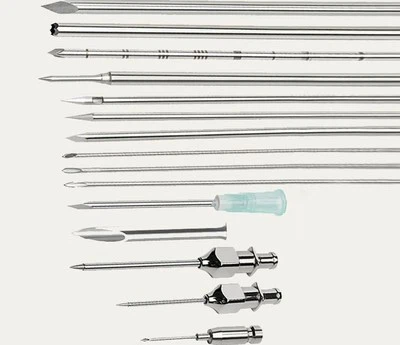
Within the microscopic operative environment of arthroscopy, tapered shaver blades act as the direct tissue-contacting terminal devices. Their comprehensive performance dictates surgical efficiency, precision and patient safety. Evolving from primitive simple cutting tubes to highly specialized high-precision instruments, modern tapered blades represent integrated breakthroughs in engineering design and material innovation.
I. Hydrodynamic Design: The Lifeline of Continuous Clear Visualization
Arthroscopic surgery depends on sustained fluid perfusion for joint distension and hemorrhage irrigation. Anti-clogging high-efficiency debris evacuation constitutes a core technical challenge.
1. Venturi Effect & Optimized Chip Removal: Precisely calculated internal lumens of high-quality tapered blades generate localized low pressure at distal cutting ports under high-speed rotation via the Venturi effect, producing powerful instantaneous tissue suction. Polished inner surfaces reduce flow resistance and prevent debris accumulation and lumen occlusion.
2. Strategic Port Configuration: The dimension, morphology and lateral eccentricity of cutting windows determine cutting efficiency and tissue adaptability. Large ports enable rapid soft tissue debridement, while miniaturized ports support microsurgical manipulation. Specialized lateral cutting edges enhance grasping performance for dense fibrous tissues, with thermally treated coated edges maintaining long-term sharpness and wear resistance.
II. Ergonomics & Maneuverability: The Source of Surgeon's Tactile Sensation
Intraoperative tactile feedback directly influences surgical accuracy and operational comfort.
1. Balanced Taper Ratio: Optimized conical gradients balance distal flexibility and proximal structural rigidity, ensuring stable torque transmission, reduced bending deformation and minimized high-speed vibration in dense tissue dissection.
2. Vibration Suppression & Dynamic Balance: High-speed rotating blades undergo strict dynamic balance calibration to eliminate microscopic mass imbalance, effectively resolving water ripple image distortion and unstable manipulation.
3. Reliable Connection Interface: Universal quick-lock connectors for disposable blades deliver rapid, airtight high-torque connection, preventing fluid and tissue backflow and protecting high-value powered handpiece motors.
III. Material Science & Surface Treatment: The Cornerstone of Durability and Biosafety
1. High-Performance Medical Alloys: Premium blades adopt medical-grade stainless steel (17-4 PH) and special hard alloys processed through vacuum heat treatment and cryogenic treatment, achieving superior strength, hardness and corrosion resistance against human biochemical environments and repeated high-temperature sterilization.
2. Revolutionary Coating Technology: Ultra-hard coatings including titanium nitride (TiN) and diamond-like carbon (DLC) reduce friction coefficients, enhance wear resistance, sustain edge sharpness and mitigate tissue adhesion with excellent biocompatibility.
3. Disposable Instrument Innovation: Single-use tapered shaver blades have become the mainstream solution to cross-infection risks, residual protein contamination and progressive reusable instrument performance degradation. Composite construction integrates high-precision metal cutting tips and medical polymer handles, balancing clinical performance, cost control and standardized sterile packaging.
IV. Functional Integration & Preliminary Intelligent Development
1. Multi-Functional Platform Compatibility: Integrated surgical systems unify shaving, burring and radiofrequency ablation functions on a single power platform, improving procedural efficiency through rapid working tip replacement.
2. Intelligent Sensing Exploration: Cutting-edge research focuses on miniature sensor integration for real-time cutting force and tissue impedance monitoring, enabling tactile feedback and automatic safety protection mechanisms as the future direction of intelligent blade iteration.
Conclusion
The seemingly simple tapered shaver blade is a sophisticated integration of hydrodynamics, material science, ultra-precision manufacturing and ergonomic engineering. Every rotational movement and cutting action embodies rigorous industrial design logic. Optimized debris evacuation channels, balanced tapered profiles and nano-scale hard coatings collectively enhance surgical precision, safety and operational fluency. More than routine disposable supplies, premium tapered blades underpin high-quality minimally invasive orthopedic surgery. Driven by advanced materials and intelligent sensing technology, next-generation blades will achieve further precision and intelligence, continuously promoting the high-quality development of modern arthroscopic surgery.