The Pinnacle Of Precision — The Manufacturing Process And Quality Fortress Of Hypodermic Needles
Apr 25, 2026
The Pinnacle of Precision - The Manufacturing Process and Quality Fortress of Hypodermic Needles
A qualified hypodermic needle is born in a world of precision manufacturing where every micron counts. Transforming from a metal tube into a smooth, sharp, and sterile finished product, it undergoes dozens of stringent processes. Each step condenses the essence of modern manufacturing technology and constructs a fortress of quality that safeguards patient safety. Using the production lines of global leaders such as BD (Becton, Dickinson and Company), Terumo, and Nipro as a blueprint, we can glimpse the secrets behind this "micron-level art."
Core Forming: The Art of Drawing and Grinding
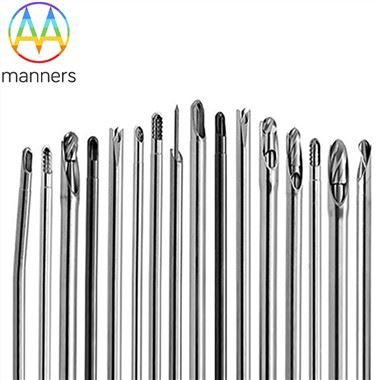
Manufacturing begins with high-quality stainless steel tube blanks. Through a series of cold-drawing processes, the outer diameter (OD) and inner diameter (ID) of the tube are gradually reduced to target sizes (e.g., 26G, 30G). Simultaneously, the metal's grain structure is elongated and strengthened, achieving higher mechanical integrity. Subsequently, shaping the needle tip is critical. Traditional mechanical grinding uses high-speed rotating grinding wheels to hone a sharp piercing bevel at a precise angle (typically 12° to 20°). More advanced laser cutting technology enables more complex and consistent needle tip geometries (such as five-facet grinding tips). This design further reduces puncture resistance and tissue trauma. Certain product lines from B. Braun employ such precision grinding techniques to ensure the needle tip is extremely sharp and burr-free.
Lumen Finishing and Cleaning: Perfection You Cannot See
The smoothness of the needle's inner lumen is crucial, directly affecting fluid flow smoothness and residual volume. Through electropolishing or chemical polishing, microscopic protrusions on the inner wall can be dissolved to achieve a mirror-like finish, while removing metal particles generated during processing. Following this, the needle tubes undergo multiple rounds of ultrasonic cleaning. Utilizing the cavitation effect generated by high-frequency vibrations in specialized cleaning solutions, all grease, metal debris, and contaminants are thoroughly removed, preparing the needles for subsequent sterilization.
Assembly and Automation: Guarantees of Efficiency and Consistency
In highly automated cleanrooms, needle tubes and hubs (typically injection-molded from medical-grade polypropylene or ABS) are securely joined via adhesive bonding or heat staking. For safety syringes, complex springs, shields, or telescopic mechanisms must also be assembled. The entire assembly process is monitored in real-time by vision inspection systems to ensure that the dimensions, positioning, and assembly quality of every component fully comply with standards. Nipro is renowned for its highly automated syringe production lines, achieving seamless integration and efficient output from components to finished goods.
Sterilization and Packaging: The Final Guardianship
Finished needles must be sterilized to ensure a sterile state. Ethylene Oxide (EO) sterilization and Gamma irradiation sterilization are two mainstream methods. After sterilization, needles are primary packaged (e.g., in blister packs) in ISO Class 7 (or higher) cleanroom environments before being placed into outer cartons. Packaging materials must maintain the sterile barrier and clearly label specifications, batch numbers, expiry dates, and regulatory marks such as CE and FDA.
Quality Systems: The Lifeline Throughout
All these operations run under rigorous quality management systems, such as ISO 13485 (Medical Device Quality Management Systems) and GMP (Good Manufacturing Practice). From incoming raw material inspection (verifying material certifications) to online SPC (Statistical Process Control) during production, and finally to full-performance testing of finished products (including needle tube rigidity, hub connection strength, needle sharpness testing, and sterility testing), every link is documented and traceable. Global quality networks established by giants like BD ensure that products manufactured in any factory maintain equally high reliability.
Therefore, a small hypodermic needle is more than just a medical tool; it is a crystallization of precision manufacturing, automation engineering, and top-tier quality management. It embodies the manufacturer's reverence for life and their relentless pursuit of excellence.