The Philosophy Of Engineering in Miniature — Decoding Manufacturer Design Logic Through Specifications
Apr 17, 2026
The Philosophy of Engineering in Miniature - Decoding Manufacturer Design Logic Through Specifications
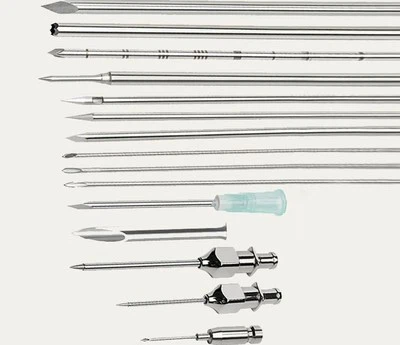
The design of endoscopic biopsy needles represents a delicate balancing act at the millimeter and centimeter scale. The length, diameter (gauge), and biopsy window size are not arbitrary figures; they are systematic engineering decisions made by manufacturers based on deep clinical insight, ergonomics, and instrument compatibility. Analyzing these parameters reveals the distinct design philosophies and market positioning of different manufacturers.
Length specifications are directly tied to the clinical application. Needles for transbronchial biopsy are typically much longer (e.g., over 1.5 meters) to navigate the tortuous anatomy of the respiratory tract, whereas those for digestive endoscopy are relatively shorter. Manufacturers like Medtronic offer a variety of length options, clearly indicating their compatibility with the working channel lengths of specific endoscope models. This ensures that physicians have sufficient extension for precise targeting while maintaining maneuverability, preventing the handling degradation that comes with excessive length. This modular approach to length demonstrates a flexibility oriented towards meeting diverse clinical demands.
Diameter (commonly denoted by "Gauge") represents a core design trade-off. Higher gauge needles (e.g., 25G) are thinner and more flexible, causing less tissue trauma and suitable for navigating narrow, curved channels or vascular-rich areas; however, they yield a smaller tissue sample. Lower gauge needles (e.g., 19G) are thicker and stiffer, capable of obtaining larger, more intact tissue cores ideal for pathological diagnosis, but they demand greater technical skill and suitable patient anatomy. Boston Scientific's "Acquire" biopsy needle series is renowned for offering a full range of gauges (19G, 22G, 25G). Their design focus ensures that even the finest 25G needle possesses adequate lumen strength and cutting efficiency, solving the historical pain points of buckling and insufficient sampling associated with fine needles.
The design of the biopsy window is where precision meets efficiency. The size and shape of the window (e.g., oval, trough-style) determine the sample volume and integrity. Manufacturers like Olympus employ unique "needle tip geometry," optimizing the cutting bevel of the window edge. This allows for a clean tissue acquisition upon rapid firing, minimizing crush artifact and providing higher-quality samples for the pathologist. Other designs focus on the smooth transition from the window to the needle lumen to prevent tissue clogging.
Therefore, behind every set of parameters lies a manufacturer's careful deliberation between "minimizing trauma" and "optimizing the sample," and between "operational flexibility" and "structural reliability." Excellent design is not a mere accumulation of specs; it is the harmonious unification of these competing factors, giving the physician a stable, reliable, and precise "hand" in the unseen world within the body.