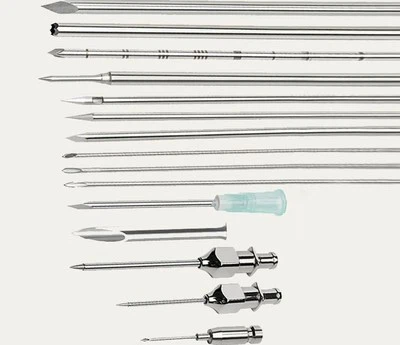
The Industrial Ecosystem Of EBUS-TBNA Needles And Future Development Trends
Apr 19, 2026
The Industrial Ecosystem of EBUS-TBNA Needles and Future Development Trends
Despite its small size, the EBUS-TBNA needle is a typical Class III interventional medical device characterized by high technical barriers and significant added value. Its journey from raw materials to clinical application involves a lengthy, strictly regulated, and highly system-dependent industrial chain, which is currently evolving towards greater integration, intelligence, and compliance.
Industrial Ecosystem Panorama
Upstream:
This tier includes suppliers of special metal materials such as medical-grade stainless steel and nickel-titanium alloy, as well as providers of polymer compounds used for handles and sheaths. It also encompasses manufacturers of precision processing equipment like high-precision CNC machine tools, laser cutters, and electropolishing devices. The biocompatibility and mechanical properties of these raw materials-such as strength, elasticity, and wear resistance-must conform to international standards like ASTM, and suppliers are required to provide comprehensive ISO 10993 series biocompatibility test reports.
Midstream:
This segment consists of brand-name manufacturers such as Olympus, Boston Scientific, Cook Medical, and Fujifilm. They are responsible for core research and development, precision machining, assembly, sterilization, and validation. The production process must occur within cleanroom facilities, utilizing Statistical Process Control (SPC) to ensure the stability of critical procedures, such as needle tip grinding and echo-enhancing treatments. Sterilization processes, typically using Ethylene Oxide (EO), must undergo rigorous validation to ensure a Sterility Assurance Level (SAL) of 10⁻⁶.
Downstream:
Products enter the hands of end-users-primarily respiratory and critical care departments, thoracic surgery units, and endoscopy centers in large general hospitals and cancer centers-via dealer networks or direct sales. The ultimate value of the product is realized by interventional pulmonologists during surgical procedures. Hospital procurement decisions are profoundly influenced by brand reputation, clinical evidence, host system compatibility (due to strong system dependency), and national health insurance reimbursement policies.
Stringent Regulation and Quality Systems
In major markets such as China, the USA, and Europe, EBUS-TBNA needles are classified as Class III medical devices, representing the highest risk category. The pre-market process involves prolonged design verification, animal testing, clinical trials (with some exceptions), and complex registration submissions-such as PMA or 510(k) clearance from the US FDA, NMPA registration in China, or CE marking for the EU. Post-market requirements include the establishment of a Unique Device Identification (UDI) system, adverse event monitoring and reporting systems, and continuous post-market clinical follow-up (PMCF). This rigorous framework constitutes a formidable barrier to market entry.
Future Development Trends
1. System Closure and Ecosystem Competition
Market competition is increasingly manifesting as a battle between closed ecosystems of "ultrasound consoles + dedicated needles." Technological upgrades to the console-such as higher-frequency ultrasound processors, elastography, and fusion navigation-drive the iteration of compatible needles. Manufacturers leverage patents and technical bindings to create high switching costs for customers, locking them into a specific brand's ecosystem.
2. Deep Integration of Intelligence and Precision Navigation
The convergence of Artificial Intelligence (AI) and Electromagnetic Navigation Bronchoscopy (ENB) represents a clear future direction. Future EBUS procedures may feature AI-powered automatic planning of optimal puncture paths pre-operatively, real-time ENB guidance during the procedure to navigate the bronchoscope near the target, and AI-enhanced ultrasound imaging for final precise localization and puncture. This will drastically reduce reliance on operator experience while improving first-pass success rates and diagnostic yields.
3. Innovation in Tissue Acquisition Technology
To meet the demand for substantial tissue samples required by precision medicine, the trend is shifting from traditional Fine Needle Aspiration (FNA), which yields cell suspensions, towards Fine Needle Biopsy (FNB) needles that acquire larger tissue cores. This is also complemented by techniques like EBUS-guided cryobiopsy, which can obtain larger specimens with intact architecture, greatly facilitating molecular and pathological analysis.
4. Material and Functional Innovation
Exploration into advanced alloy materials, such as cobalt-chromium alloys, aims to achieve higher rigidity and kink resistance while maintaining a thin diameter. The future may even see the advent of "smart needles" integrated with micro-sensors capable of providing real-time feedback on tissue impedance or pressure signals, further enhancing procedural safety and efficacy.
5. Localization in Emerging Markets and Cost Control
In emerging markets like China, domestic enterprises are accelerating technological breakthroughs and import substitution under policy support. By offering high cost-performance products and localized services, they challenge the market dominance of international giants. Simultaneously, global pressure for healthcare cost containment compels all manufacturers to prove that their products not only accomplish diagnosis but also reduce overall medical expenditures by improving diagnostic efficiency and avoiding unnecessary surgeries.
In conclusion, the future of the EBUS-TBNA needle lies in deep interdisciplinary integration, continuously improving levels of intelligence, and the pursuit of superior clinical value under strict regulation. Every link in its industrial chain must adapt to this trend, jointly propelling respiratory interventional diagnostics into a new era characterized by greater precision, safety, and accessibility.