The Future Of Dark-Circle Care
Nov 07, 2026
The Pain Point: Fragmented Supply Chain
Brands struggle to find reliable gold micro-needle suppliers who understand eye-zone limits, customization, and medical-grade quality control. The pain point is inconsistency: one batch performs well, the next causes complaints, and no one can trace why. This inconsistency is costly because it damages clinical outcomes and brand reputation simultaneously. A clinic may blame its own technique when the real problem is a change in tip geometry between orders. Without traceability, the root cause remains invisible. The fragmentation also affects pricing and lead times, making it difficult for clinics to plan inventory and for brands to scale. In some cases, clinics switch suppliers repeatedly, hoping to find a stable source, and each switch introduces new variables that complicate outcome tracking. The industry needs suppliers who can document quality, maintain consistency, and support customization without sacrificing reliability.
The Principle: Manufacturing as Medicine
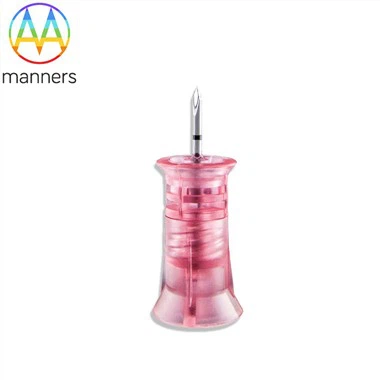
True performance comes from tight diameter tolerance above 0.2 mm, burr-free tip grinding, consistent gold thickness, cleanroom packing, and ISO 9001 process discipline. A two-micron burr can tear capillaries, so surface finish is clinical performance, not cosmetic detail. Manufacturers who understand this treat quality control as a medical function rather than a marketing claim. They invest in microscopy, adhesion testing, and batch documentation because these are the evidence that clinics need in order to trust the product. The principle extends to material selection: 316L stainless steel offers corrosion resistance and mechanical strength, while gold plating provides biocompatibility and conductivity. The combination must be validated for each production run, because plating thickness and adhesion can vary with process conditions. A supplier who can show test results for every batch is offering more than a product; they are offering a guarantee of consistency that the clinic can rely on.
Device Categories: OEM and ODM Reality
Standard tips offer fast minimum order quantities and are suitable for clinics that want a reliable, low-risk entry into the category. Custom tips are driven by 2D or 3D drawings and allow brands to differentiate through geometry, depth markings, and packaging. Private-label kits combine needle, serum, and aftercare for clinics that want a complete protocol. Each model serves a different business need. The key is to choose a supplier who can scale with the brand without sacrificing consistency. A supplier who cannot maintain quality across batches will eventually become a liability, regardless of initial pricing. Clinics should also consider whether the supplier can provide training materials, clinical evidence, and regulatory documentation, because these are increasingly required for insurance and compliance purposes.
Operation Guide: Procurement Checklist
Ask suppliers for base steel certification, gold adhesion test results, tip microscopy reports, sterility validation, and batch traceability. A supplier who cannot provide these is a risk to your brand. Also request samples from multiple batches and compare them under magnification. Consistency across samples is the best predictor of long-term reliability. Clinics should review this checklist annually, because supplier processes can change over time. It is also useful to audit the supplier's production facility if possible, or to request a video walkthrough of the cleanroom and inspection stations. For custom orders, confirm that the supplier can reproduce the approved sample exactly and that they have a process for handling deviations. Finally, establish a clear communication channel for quality issues so that problems are reported and resolved quickly rather than discovered by patients.
Field Experience: Closing the "No Effect" Loop
Clinics that pair good hardware with patient nutrition protocols report satisfaction above 80 percent. The rest is communication: explaining timeline, depth, and aftercare clearly before treatment begins. Experienced buyers also maintain a small reserve of verified stock so that a supplier delay does not disrupt patient schedules. This operational discipline is part of what makes a clinic dependable. In practice, the most successful clinics treat procurement as part of clinical governance. They keep records of which batch was used for which patient, and they review outcomes by batch to detect any drift in quality. When a new batch arrives, they test it on a small number of patients before rolling it out widely. This cautious approach protects both patients and reputation, and it turns the supply chain into a source of confidence rather than a source of risk.
Summary: Dark Circles Are Solvable
With the right needle, the right depth, and the right repair protocol, dark circles can be measurably improved. The category is maturing from anecdote to evidence. Clinics that embrace this maturity will earn patient trust and repeat business. The supply chain is part of that maturity: a reliable supplier is not a commodity but a partner in clinical outcomes. When manufacturers, brands, and clinics align around consistent quality and honest communication, the entire category benefits.
Outlook: A Specialized Eye Aesthetics Industry
Gold micro needles for dark circles will become a defined category-engineered, regulated, and patient-aware. Brands that invest in eye-specific design and transparent education will lead the next phase of growth. As standards rise, the market will reward suppliers who can document quality and clinics who can demonstrate results. We can expect clearer regulatory pathways for eye-zone devices, more clinical studies on depth and serum combinations, and greater patient awareness of what the treatment can and cannot do. The future belongs to those who treat the eye not as a smaller face but as a distinct anatomical and biological environment with its own rules, its own risks, and its own rewards.