Radio Frequency Microneedling Devices: A Buyer's Guide
Nov 07, 2026
The Pain Point: Two Identical Spec Sheets, Two Different Machines
Procurement in this category is unusually difficult because the specification sheets are almost identical. Both devices list 49 pins, adjustable depth to 3.5 mm, bipolar output, a touchscreen, and a set of certifications. Both come from reputable-looking factories. One costs twice as much. The buyer, under pressure to reduce capital expenditure, chooses the cheaper unit - and discovers eighteen months later that cartridges fail mid-session, the depth ring drifts, and no one can supply consistent consumables.
The root cause is that most spec sheets describe capability rather than consistency. "Depth 0.5–3.5 mm" says nothing about repeatability at 1.5 mm across a hundred insertions. "49 pins" says nothing about pin straightness or coating uniformity. "ISO 9001" says nothing about whether the process controls are actually applied to the needle line rather than to the assembly line next door.
Buying Radio Frequency Microneedling equipment is therefore not a specification comparison exercise. It is a supply-chain risk assessment.
The Principle: What Actually Determines Output Quality
Four subsystems decide whether a platform performs: the generator, the handpiece, the cartridge, and the control logic.
The generator must deliver a stable pulse whose energy is independent of small impedance fluctuations. Cheap designs use fixed voltage with limited current feedback, so output drifts as tissue heats. Better designs measure impedance during each pulse and truncate or adjust delivery, which is why two machines with identical stated maximum energy can produce very different lesion depths.
The handpiece must deliver consistent insertion velocity and depth. Spring-driven or motorised mechanisms achieve this; manual pressure does not. A handpiece that flexes under pressure changes effective depth by several tenths of a millimetre, which is enough to move a lesion from dermis into fat.
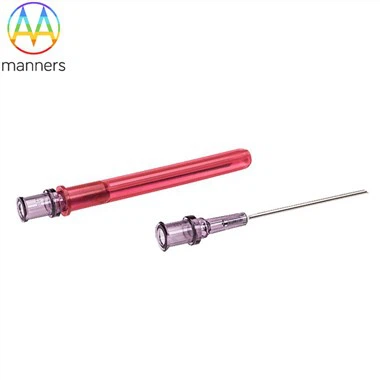
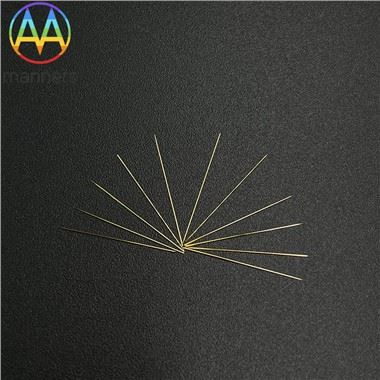
The cartridge is where cost is most easily hidden. Needle straightness, bevel symmetry, insulation thickness uniformity, gold adhesion and tip exposure length all affect the delivered lesion. A cartridge that passes visual inspection can still show 5–10% variation in exposed tip length, which translates into clinically visible unevenness.
The control logic determines whether the operator can reproduce a treatment. Presets, energy-per-area calculation, pass counting and lot logging look like software conveniences - until you need to explain why one patient improved and another did not.
Classification: Entry, Mid and Clinical-Grade Platforms
Entry-level platforms are typically single-handpiece, low pin-count systems with limited depth ranges and minimal feedback. They suit small clinics offering Radio Frequency Microneedling as an add-on, with low patient volume and simple indications. Their weakness is not clinical capability but durability: consumable tolerance is loose and long-term consistency is unverified.
Mid-tier platforms add motorised insertion, impedance monitoring, selectable pin counts and multiple tip geometries. This is the practical sweet spot for most aesthetic practices: sufficient control for scar and laxity work, enough versatility for neck and body protocols, and consumables available from more than one qualified supplier.
Clinical-grade platforms integrate per-pulse feedback, energy logging, locked protocols and validated sterilisation documentation. They are bought by hospitals, dermatology departments and high-volume chains where auditability matters as much as outcome. The premium is largely paid for documentation and repeatability rather than raw power.
A fourth category deserves mention: OEM and private-label platforms built for distributors. These can be excellent, but the buyer must inspect the needle supply behind the label, because the brand name on the housing often has no relationship to the manufacturing tolerances of the cartridge.
A fifth axis cuts across all three tiers and is usually ignored until after purchase: consumable economics. Ask what a cartridge costs per session, what the minimum order quantity is, how long resupply takes, whether a second qualified source exists, and whether the handpiece will refuse third-party tips. Proprietary locking is a legitimate business model and a serious operational risk; a clinic that cannot source cartridges for three weeks cannot run the procedure it has been selling.
Practical Guide: A Twelve-Point Evaluation Checklist
Before purchase, ask for evidence rather than brochures.
Energy reproducibility test. Request a run of 100 pulses into a test load and the coefficient of variation of delivered energy.
Depth repeatability. Ask how depth is mechanically limited, and whether it is verified per unit or per design.
Pin straightness specification. Look for a stated tolerance, not a description like "medical grade."
Insulation specification. Material, nominal thickness, pinhole test method, and whether testing is per batch or per pin.
Tip exposure tolerance. This is the single most under-specified parameter in the industry.
Plating specification. Gold thickness, barrier layer, adhesion test method.
Impedance feedback behaviour. Ask for a demonstration on synthetic loads of varying resistance.
Cartridge traceability. Lot codes readable by the operator, and a documented complaint process.
Sterilisation and residuals. Ethylene oxide validation, residual limits, shelf life.
Consumable continuity. Written commitment on supply for at least five years, and a second-source option.
Service response time. Downtime cost usually exceeds the price difference between platforms.
Training and protocol documentation. Ask whether protocols are written for your patient mix or copied from a brochure.
A practical note on how to read the answers: a supplier who replies with a certificate and a photograph has answered a marketing question. A supplier who replies with a measurement method, a tolerance, and a sample inspection report has answered the procurement question. The distinction is worth several thousand dollars of capital expenditure, and it is visible within a single email exchange.
Real-World Experience: The Cost of a Cheap Cartridge
A distributor in a mid-sized market once calculated the true cost of a discount cartridge supply. The unit price was 35% lower. Over twelve months, the failure rate during treatment was 4%, each failure requiring a rescheduled session and a goodwill credit. Two clinics reported burns that required follow-up visits. One clinic switched brands entirely and took forty patients with it.
The arithmetic is rarely done, but it is simple: consumable cost per treatment is a small fraction of treatment revenue; a single complication can consume the margin of twenty sessions. When buyers negotiate hard on cartridge price without specifying insulation testing, they are trading a visible saving for an invisible liability.
The counter-example is equally instructive. A chain that standardized on a single cartridge specification - fixed pin geometry, documented coating thickness, per-lot pinhole testing - reduced treatment-related complaints by more than half without changing its generators. The equipment did not improve. The variability did.
Summary: Buy the Supply Chain, Not the Brochure
A Radio Frequency Microneedling platform is four products sold as one: generator, handpiece, cartridge, and protocol. Most purchasing processes evaluate only the first two, negotiate hardest on the third, and ignore the fourth.
The clinics that get consistent results invert that order. They define the clinical protocol first, specify the consumable that can deliver it repeatedly, then choose a generator capable of driving that consumable within tolerance. Price becomes a tiebreaker rather than a decision criterion.
Outlook: Standardization and Traceability
The category is moving toward the standards already familiar in surgical devices: per-lot metrology reports, unique device identification on cartridges, and audit trails linking each session to a specific lot. Regulators in several markets are beginning to treat microneedle cartridges as sterile single-use accessories with their own conformity requirements, which will raise the barrier for informal suppliers.
For buyers, this is good news. It means the questions that currently feel unreasonable - prove your coating, prove your depth, prove your lot - will become normal procurement language. The earlier a clinic or distributor adopts that language, the less exposed it will be when the market tightens.