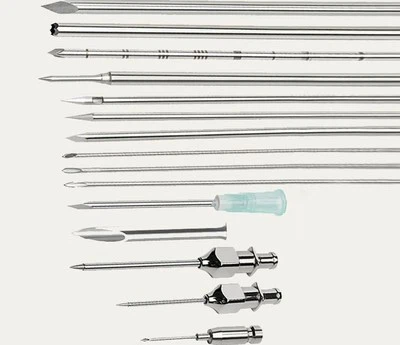
The Future Has Arrived: Evolution Trends Of Meniscus Repair Needles Under The Vision Of Smart Materials And Robot-Assisted Surgery
Apr 23, 2026
The Future Has Arrived: Evolution Trends of Meniscus Repair Needles under the Vision of Smart Materials and Robot-Assisted Surgery
At present, meniscus repair needles have achieved exceptional mechanical precision, yet technological evolution is an endless journey. Amid the rapid advancement of intelligent surgery, bioengineering and robotic technologies, next-generation meniscus repair needles will break through the existing paradigm of "passive puncture instruments" and evolve toward perception, multifunctionality and intelligence. Their clinical value will progress from simple instruction execution to decision assistance and active adaptation, ushering in a brand-new era of meniscus repair.
Smart needles integrated with biosensors represent an imminent future. The tips of upcoming repair needles will be embedded with miniature biosensors. For instance, micro-force sensors will provide real-time feedback on resistance variations encountered during puncture, enabling surgeons to distinguish between penetration of meniscal parenchyma, contact with the joint capsule, and abutment against bone, thus preventing over-penetration injuries to vital anatomical structures.Impedance sensors will identify subtle differences in tissue electrical impedance to determine whether the needle tip is located in the vascularized red zone or avascular white zone, offering objective data for suture strategy selection and healing potential prediction. These real-time biological signals will be wirelessly transmitted to surgical displays, endowing surgeons with extended tactile perception and tissue differentiation capabilities beyond visual observation.
Bioactive coatings and degradable needle bodies integrate structural repair with tissue regeneration. The surfaces of needle bodies will be loaded with bioactive coatings, including growth factors (such as bFGF and TGF-β) and stem cell homing peptides. As the needle penetrates and forms a tract along the tear margin, these bioactive substances will be precisely delivered to the lesion site, actively stimulating cell migration, proliferation and extracellular matrix synthesis. This upgrades treatment from purely mechanical fixation to biologically enhanced repair.On a deeper level, the needle body itself will be fabricated from novel bioresorbable polymer composite materials. After completing suture delivery and initial fixation, the degradable needle will safely decompose in vivo without secondary removal, eliminating long-term foreign-body risks. Therapeutic agents can also be sustainably released throughout the degradation process.
Specialized needles customized for robot-assisted surgery will become the industrial standard. As arthroscopic surgical robots enter clinical practice, the fundamental design philosophy of repair needles will be revolutionized. Instead of merely accommodating manual dexterity, needles will be optimized for perfect compatibility with robotic end-effectors.Modifications will include standardized mechanical clamping interfaces, integrated optical or magnetic positioning markers for real-time 3D pose tracking by robotic vision systems, and highly consistent mechanical properties to support accurate algorithm modeling and force feedback control. Robot-adapted repair needles will achieve sub-millimeter repetitive positioning with stability surpassing human hands, enabling complex multi-needle suturing patterns unattainable via conventional manual surgery.
Integration of real-time imaging and augmented reality navigation will render the entire repair procedure transparent. Future repair needles will be deeply integrated with intraoperative imaging modalities. Micro ultrasonic transducers embedded in the needle will enable localized real-time ultrasound imaging adjacent to the tip, clearly visualizing relative positions among the needle tip, meniscal tear edges and articular cartilage.Furthermore, the needle will serve as a spatial coordinate anchor for augmented reality systems, fusing with preoperative 3D knee MRI models. Via head-mounted displays, surgeons will observe precise superposition of virtual needle models and virtual meniscal tear anatomy, which dynamically guides puncture angle and depth in real time. This achieves truly precise repair embodying the principle of "what you see is what you get".
In summary, the future evolution of meniscus repair needles embodies a transformation from basic surgical tools to intelligent terminals. Integrating multifunctional modules including sensing, drug delivery, imaging and navigation, they will form intelligent closed-loop bidirectional information interaction with surgeons or surgical robots. No longer merely extensions of the human hand, they will become extensions of perception and powerful aids for clinical decision-making.For leading manufacturers such as Manners Technology to maintain long-term competitiveness, development cannot be confined only to optimizing existing manufacturing processes. It is essential to proactively lay out interdisciplinary innovations spanning material science, microelectronics, artificial intelligence and bioengineering.These smarter, more biocompatible and high-performance repair needles will ultimately elevate meniscus repair surgery from an experience-dependent surgical craft into a data-driven, predictable, precision medicine discipline.