Across Ages And Diseases: The Art Of Individualized Application Of Bone Marrow Biopsy Needles in Special Patient Groups
Apr 23, 2026
Across Ages and Diseases: The Art of Individualized Application of Bone Marrow Biopsy Needles in Special Patient Groups
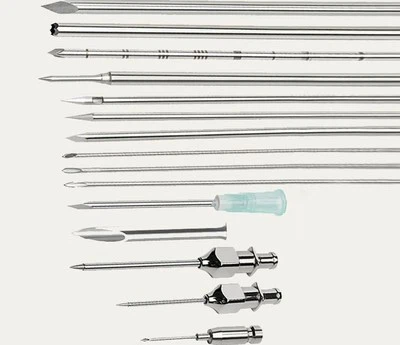
Bone marrow biopsy is an operation that highly depends on the patient's anatomical and pathological conditions. Standardized needles often fall short when dealing with individuals ranging from infants to the elderly, and from osteoporosis to osteosclerosis. Therefore, the significance of the bone marrow biopsy needle lies in its diverse specifications and adjustable operation modes, which represent a profound art of individualized medical care. It requires the operator not only to be a technical executor but also to be a strategist who selects the "best weapon" based on the unique circumstances of the patient.
The "micro-sculpting" challenge for pediatric patients is the primary special situation. The iliac crest of children is small and thin, with a shallow bone marrow cavity, and the patients cannot cooperate to remain still. To address this, specialized pediatric bone marrow biopsy needles have emerged. They are significantly shorter (typically 6-8 cm) and thinner (such as 13G-15G core needles, paired with thinner puncture needles). The needle tip design may be sharper to achieve rapid penetration and reduce the child's pain and the duration of immobilization. More importantly, the operation rhythm and anesthesia management (often requiring deep sedation or general anesthesia) are completely different from those for adults. For pediatric hematologists, this fine needle is crucial for evaluating pediatric leukemia, neuroblastoma bone marrow metastasis, and hereditary bone marrow failure syndromes. Each operation must be carried out with great caution, striving to obtain sufficient diagnostic samples with minimal trauma.
The elderly and patients with osteoporosis present at the other extreme. Their bones are brittle and porous, resembling an eggshell. Using standard needles, the surgeon is prone to over-penetrate due to the lack of obvious "penetrating sensation", risking damage to pelvic organs by penetrating the inner plate. At this point, a more blunt needle tip or a more delicate technique may be needed, relying on rotation rather than forceful downward pressure. The obtained specimens may appear "dry and shriveled" due to fatification of the bone marrow or fragmented tissue strips, which are also important pathological clues (indicating reduced bone marrow hyperplasia). On the contrary, for patients with osteosclerosis or those in areas previously treated with radiotherapy, the bones are as hard as stone. The electric bone marrow biopsy device demonstrates significant advantages here, as its continuous drilling force can overcome the difficulties of manual penetration. At the same time, the highest grade of hardness must be selected to prevent the needle tip from chipping or breaking.
The "remote projection" problem for obese patients cannot be ignored. For extremely obese patients, the thick subcutaneous fat layer makes it impossible for standard-length needles (such as 8-10 cm) to reach the ilium. Therefore, elongated bone marrow biopsy needles (up to 15 cm or even longer) are essential tools. However, long needles bring new challenges: the bending of the needle body in the long-distance soft tissue can lead to a decrease in control, and higher requirements are placed on the spatial positioning ability of the operator. During the operation, assistants are often needed to flatten the abdominal fat and precisely measure the depth of the needle insertion.
Thrombocytopenia and the risk of bleeding are at the core of safety considerations for patients. For patients with severe thrombocytopenia (such as aplastic anemia, bone marrow suppression after chemotherapy) or coagulation disorders, the risk of local hematoma formation after biopsy is high. At this time, in addition to strict preoperative preparations (such as platelet transfusion), in the selection of needles, although the size is mainly determined by diagnostic needs, after the operation, using absorbable gelatin sponge strips filled through the needle tube into the bone channel for hemostasis is an important auxiliary technique. This requires that the needle tube have a sufficient inner diameter to pass through the filling material, reflecting the synergy between needle design and perioperative management.
Strategic considerations for multiple biopsies and sampling site selection. For patients requiring dynamic monitoring of the disease (such as evaluating the remission status after chemotherapy for leukemia, or following up on patients with myelofibrosis), the contralateral posterior superior iliac spine is usually alternated for sampling to avoid interference from local fibrosis. When iliac bone sampling is inadequate or there is suspicion of local lesions, sternum puncture is another option, but it is extremely risky and requires the use of a dedicated sternum puncture needle with a adjustable depth sheath to prevent accidental penetration into the mediastinum. The design of this needle is the ultimate embodiment of safety.
Therefore, the art of individualized application of bone marrow biopsy needles lies in transforming the cold and unfeeling instruments into a warm and flexible clinical solution. It requires doctors to deeply understand the entire chain from "the needle" to "the patient": choosing the length based on the patient's body type, determining the hardness and insertion method based on the bone structure, deciding the thickness and sampling volume based on the condition, and planning the hemostasis plan based on the coagulation function. Thus, this needle becomes a vivid link connecting standardized industrial products and highly personalized clinical practice. In each unique puncture, it writes the highest respect for the individual differences of life.