The Evolution Of Technical Principles And Design Innovation
Apr 27, 2026
The Evolution of Technical Principles and Design Innovation
Q&A: Why Has the PTC Needle Become the "Gold Standard" in Biliary Intervention?
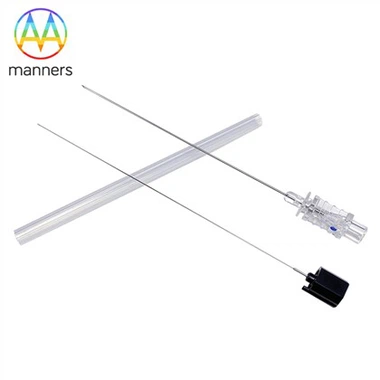
In the fields of interventional radiology and gastroenterology, the PTC needle (Percutaneous Transhepatic Cholangiography needle) is revered as the "gold standard" tool for biliary system diagnosis and treatment. This status is not accidental; it stems from the needle's unique technical principles and continuous design innovation. The PTC needle stands out among numerous puncture devices due to its precision, excellent safety profile, and broad adaptability. From the initial use of thick needles to today's fine-needle technology, and from blind procedures to image-guided precision punctures, the technological evolution of the PTC needle mirrors the developmental trajectory of interventional medicine itself.
Historical Context: The Technical Revolution from Thick to Thin Needles
The history of PTC technology dates back to 1937, when Huard first reported the technique of percutaneous transhepatic cholangiography. However, early PTC procedures using thick needles were plagued by high complication rates of 5%–12%, including severe issues like intraperitoneal hemorrhage, bile leakage, bile peritonitis, sepsis, and toxic shock caused by biliary infections. These high risks severely limited the clinical adoption of the technology.
A true technological breakthrough occurred in 1974, when Professor Okuda of Chiba University in Japan adopted a specially designed long, thin needle-later known as the "Chiba needle." By combining this innovative design with the test-injection method, the success rate of PTC increased dramatically to over 90%, while reducing complication rates to extremely low levels. This innovation fundamentally changed the clinical prospects of PTC technology. Subsequently, in 1976, the introduction of ultrasound-guided PTC pushed the procedure from a blind or semi-blind puncture of the intrahepatic bile ducts into a new phase of real-time, ultrasound-guided superselective puncture. This series of technological innovations laid the foundation for modern PTC techniques.
Standard Definition: Technical Specifications for Precision Manufacturing
The standardized production of PTC needles adheres to strict medical device regulations. According to the industry standard YY/T 1768.2-2021 "Needle-based Injection Systems for Medical Use - Requirements and Test Methods - Part 2: Needles," PTC needles-as sterile, disposable, double-ended needles-must meet rigorous requirements regarding materials, physics, chemistry, and biology. Issued by the National Medical Products Administration on March 9, 2021, and implemented on April 1, 2022, this standard falls under the purview of the National Technical Committee for Standardization of Medical Syringes and Needles.
Regarding material requirements, the standard mandates that needles must be manufactured from materials compliant with medical device safety standards. Physical requirements include dimensional accuracy, needle flow rate, connection strength between the hub and cannula, needle sharpness, straightness, and lubrication performance. Chemical requirements involve the preparation of test solutions and testing for pH levels and heavy metal content. Biological requirements emphasize sterility assurance to ensure safety during clinical use. These strict standards provide technical assurance for the quality control and clinical safety of PTC needles.
Clinical Applications: A Versatile Platform from Diagnosis to Treatment
The clinical application of PTC needles has long since exceeded its original purpose of biliary imaging, evolving into a multifunctional platform that integrates diagnosis and treatment. In the diagnosis and treatment of biliary diseases, PTC needles are primarily used in the following key areas:
Biliary Cholangiography and Diagnosis: PTC has become a recognized and effective method for examining biliary system diseases. For patients with bile duct dilation, the success rate of ultrasound-guided fine-needle puncture cholangiography approaches 100%. Biliary angiography can comprehensively and clearly display pathological changes in the biliary system, achieving a diagnostic accuracy rate of around 90% for conditions such as cholelithiasis, biliary and pancreatic head malignancies, ampullary tumors, and benign biliary strictures.
Therapeutic Interventions: PTC needles provide the technical basis for Percutaneous Transhepatic Cholangial Drainage (PTCD). First successfully reported by Kaude et al. in 1969, PTCD has become a vital treatment for patients with biliary obstruction-induced cholestasis who are unfit for immediate surgery. Through the channel established by the PTC needle, physicians can perform various interventional therapies such as biliary decompression, stone extraction, and stricture dilation.
Expanded Applications: In recent years, with technological advancements, the scope of PTC needle application has further expanded. In the field of oncology, PTC needles can be used to establish isolation zones to protect surrounding normal tissues. In cyst treatment, they are used for drainage and sclerotherapy. Innovatively, they have even been used in non-biliary fields such as pediatric lumbar puncture under special circumstances. These diversified clinical applications fully demonstrate the value and potential of the PTC needle as a critical tool in interventional medicine.