The Evolution Of Materials: From Stainless Steel To Medical Polymers – Materials Science Behind The Advancement Of Trocars
Apr 18, 2026
The Evolution of Materials: From Stainless Steel to Medical Polymers – Materials Science Behind the Advancement of Trocars
Core Product Terms: Medical Polymer, Polycarbonate, Bladeless Trocar DesignRepresentative Manufacturers: BD, Stryker, Zhejiang Shuangge Group
Trocars have evolved from heavy, reusable metal instruments into today's lightweight, transparent, and functionally integrated single-use devices, driven by a profound revolution in materials. At the heart of this transformation is the replacement and advancement of traditional metallic materials by high-performance medical-grade polymers.
I. Limitations of the Metal Era
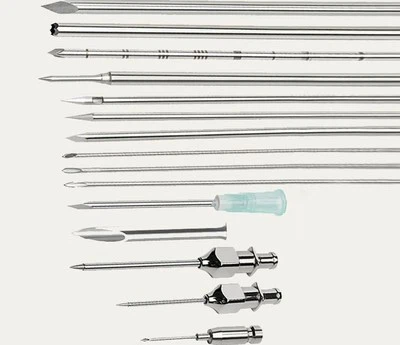
Early trocars were predominantly manufactured from 316L stainless steel. Despite its high strength and corrosion resistance, the material presented significant drawbacks:
Opacity: Surgeons could not directly visualize tissue layers during insertion, relying mainly on the "pop-through" sensation, which increased the risk of iatrogenic injury.
High weight: Placed additional burden on the patient's abdominal wall and compromised the maneuverability of intraoperative instruments.
Thermal and electrical conductivity: Posed risks of unintended thermal injury or current leakage when electrosurgical devices were used.
Limited functional integration: It was difficult to economically and reliably integrate single-use functional components such as valves and seals with a metal body.
II. The Rise and Advantages of Medical Polymers
Engineering plastics represented by polycarbonate (PC), polyetheretherketone (PEEK), acrylonitrile-butadiene-styrene (ABS), and medical-grade polypropylene (PP) have completely reshaped the design paradigm of trocars:
Transparency: This is the most critical breakthrough. Transparent polymer cannulas allow surgeons to clearly observe the separation of abdominal wall layers-including skin, subcutaneous fat, fascia, muscle, and peritoneum-during puncture, enabling visualized trocar insertion and greatly improving procedural safety. Many laparoscopic instruments from Stryker fully leverage this transparent material property.
Lightweight: Weighing only a fraction of their metal counterparts, they reduce patient discomfort and surgeon fatigue.
Electrical insulation: Eliminates conductive risks associated with electrosurgical instrumentation.
Design freedom and functional integration: Precision injection molding enables the one-step production of highly complex main bodies, with seamless integration of functional structures such as multi-leaf sealing valves, smoke shields, side ports, and connecting threads. This allows high-level functional integration and low-cost mass production. BD possesses profound expertise in plastics processing for single-use medical consumables.
III. Bladeless Design: The Perfect Fusion of Materials and Structure
The widespread adoption of bladeless trocar design represents a design innovation enabled by material evolution. Instead of using sharp stylets to cut tissue, these trocars employ tapered or pyramidal blunt stylets paired with high-strength polymer cannulas. During insertion, the blunt tip separates muscle and fascial fibers through mechanical dilation rather than transection, delivering multiple clinical benefits:
Significantly reduced bleeding: Avoids cutting abdominal wall blood vessels.
Lower risk of incisional hernia: Minimizes damage to the fascial layer, promoting stronger wound healing.
Reduced postoperative pain: Less irritation to nerve endings.
IV. Opportunities and Challenges for Domestic Polymer Materials
China is the world's largest producer of general plastics, yet in the field of high-end medical-grade polymers-such as PEEK and ultra-high-molecular-weight polyethylene (UHMWPE) used in long-term implants or high-stress components-the country still relies heavily on imports from suppliers including Evonik, Solvay, and Celanese. This creates potential supply chain risks for domestic high-end trocar manufacturers.
Established domestic medical device companies, such as Zhejiang Shuangge Group, are expanding from basic infusion sets and syringes into higher-value surgical consumables. Their understanding of medical plastics and processing experience represent valuable assets. Further upgrades of domestic trocars will depend on breakthroughs in domestic materials science and in-depth collaborative R&D with upstream material suppliers.