The Evolution From Stainless Steel To Polymers
Jun 13, 2026
https://www.mayoclinic.org/tests-procedures/breast-biopsy/about/pac-20384812
In the workflow of precise diagnosis for breast disorders, the breast biopsy needle stylet acts as the "first critical checkpoint". Its performance directly governs specimen quality and diagnostic accuracy, and the material selected for the stylet forms the cornerstone of its functional performance. At present, dominant stylet materials include medical-grade stainless steel, titanium alloys and high-performance polymers, each tailored to distinct clinical requirements and technical considerations.
Stainless Steel: The Classic Durable Option
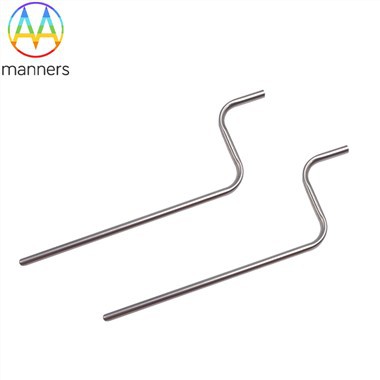
Traditionally, medical stainless steel (e.g., 304 and 316L grades) has served as the staple material for reusable biopsy stylets thanks to its outstanding tensile strength, corrosion resistance and biocompatibility. Its high rigidity prevents bending during penetration through dense breast tissue, enabling stable access to target lesions. Nevertheless, stainless steel features relatively high density, which may generate substantial imaging artifacts under MRI guidance and compromise image interpretation. Additionally, its high hardness may raise the risk of tissue trauma during puncture. Even so, stainless steel stylets remain vital for their cost efficiency and universal adaptability, especially for ultrasound-guided core needle biopsy.
Titanium Alloy: A Breakthrough in Lightweight Design and MRI Compatibility
Advancements in image-guided techniques, particularly the widespread adoption of MRI-guided biopsy, have imposed stringent magnetic compatibility standards on stylet materials. Titanium alloys (represented by Ti-6Al-4V) stand out for their non-magnetic properties, low density and high strength. Titanium stylets weigh far less than their stainless steel counterparts, drastically alleviating hand fatigue for operators. More crucially, they produce negligible artifacts in MRI environments, allowing clinicians to pinpoint tiny lesions via real-time scanning. Furthermore, titanium's exceptional fatigue resistance enables repeated punctures without structural deformation. Despite higher costs, titanium alloy stylets are the premium choice for minimally invasive clinics prioritizing maximum precision and patient comfort.
Polymers: The Future of Single-Use Devices and Functional Integration
In recent years, medical-grade polymers (such as polyetheretherketone (PEEK) and polycarbonate) have been adopted for single-use biopsy stylets. Their greatest merit lies in high design customizability; for instance, injection molding can fabricate stylets with specialized coatings or grooved geometries to enhance tissue capture capacity. Polymer stylets are exclusively disposable, completely eliminating cross-contamination risks and streamlining workflows by eliminating cleaning and sterilization steps. Their inherent drawback is lower rigidity compared to metals, which can create difficulties when puncturing severely fibrotic breast tissue. Accordingly, polymer stylets are predominantly deployed for fine-needle aspiration (FNA) or in semi-automatic biopsy guns with specialized configurations.
Clinical Trade-offs in Material Selection
In practical practice, clinicians select materials holistically based on lesion characteristics, imaging modality, patient physique and budget. For example, sampling calcified lesions demands superior sharpness and clean cutting performance, making stainless steel or titanium alloy the superior options. For deep lesions adjacent to the chest wall, titanium's MRI compatibility becomes indispensable. Moving forward, composite materials (e.g., metal-polymer hybrid structures) may strike an optimized balance among strength, flexibility and functionality, propelling the evolution of biopsy stylets toward greater intelligence and precision.