The Structure, Dimensions, And Sampling Efficiency Of Breast Biopsy Needles
Jun 13, 2026
https://www.mayoclinic.org/tests-procedures/breast-biopsy/about/pac-20384812
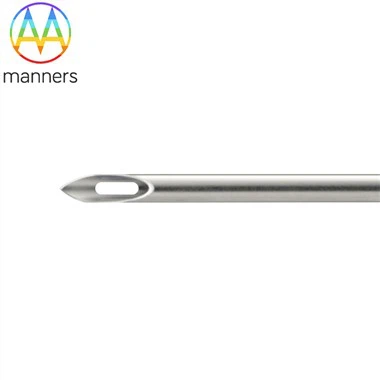
A breast biopsy needle is far more than a simple hollow tube; it is a precision-engineered microsurgical instrument. Its length, diameter (gauge), tip geometry, and sample notch design collectively determine whether a sufficient, intact, and uncompressed tissue specimen can be obtained to support an accurate pathological diagnosis.
Length and Diameter: The Golden Rule for Matching Lesion Depth
The length of the stylet is typically selected based on the depth of the lesion from the skin surface, with common specifications being 10 cm, 15 cm, and 20 cm. A needle that is too short may fail to reach deep-seated lesions, while one that is excessively long increases unnecessary tissue damage and the risk of bleeding. The diameter is expressed in "Gauge" (G); counterintuitively, a higher gauge number indicates a thinner needle. 14G to 18G needles are commonly used in Core Needle Biopsy (CNB). A 14G needle yields a tissue core approximately 2 mm in diameter-providing ample sample volume but with slightly greater trauma-whereas 16G or 18G needles are better suited for small lesions or areas near the skin or chest wall to minimize complications. Vacuum-assisted biopsy systems often utilize larger calibers (7G to 11G) to harvest significant amounts of tissue via negative pressure suction in a single pass, making them ideal for high-stakes scenarios such as diagnosing ductal carcinoma in situ (DCIS).
Tip Geometry: The "Icebreaker" of Puncture
The shape of the needle tip directly impacts insertion smoothness and the degree of tissue displacement. Common tip designs include:
- Bevel Tip: Similar to a standard hypodermic needle, it is sharp and easy to insert but may push tissue aside rather than cleanly severing it. It is primarily used for Fine Needle Aspiration (FNA).
- Tru-Cut Type: This features a concave sampling notch and an outer cutting cannula. Once the stylet is positioned within the target, the outer sheath advances to cut and entrap the tissue protruding into the notch. This design reliably captures relatively intact tissue cores and remains the classic structure for CNB.
- Spring-Driven Mechanism: Modern biopsy guns employ high-speed spring propulsion to complete the "advance-cut-retract" sequence in milliseconds. This drastically reduces tissue drag and tearing, thereby increasing sampling success rates.
Micro-Intelligence in Sample Notch Design
The volume of the sampling notch, the sharpness of its edges, and its surface treatment are equally critical. A longer notch accommodates more tissue, but if the groove is too shallow, the tissue may become deformed by compression. High-end needles feature laser-honed edges or specialized coatings to ensure clean cuts and prevent tissue burn or carbonization. Some novel designs even incorporate microscopic barbs or textured surfaces within the notch to anchor soft, slippery adipose tissue, preventing specimen loss during needle withdrawal.
Correlation Between Dimensions and Diagnostic Accuracy
Studies indicate that the diagnostic accuracy rate for CNB using a 14G needle exceeds 95%. Conversely, when using an 18G needle, the risk of misdiagnosis or underestimation of lesion grade rises slightly due to the smaller sample size. For evaluating microcalcifications, large-caliber vacuum-assisted needles (e.g., 9G) can obtain sufficient tissue for radiographic confirmation (specimen radiography), significantly enhancing the detection rate of DCIS. Therefore, clinicians must strike a precise balance between "obtaining adequate tissue" and "minimizing trauma"-a decision rooted entirely in a deep understanding of the needle's engineering parameters.