The Design Significance Of Arthroscopic Conical Shaver Tips: A Geometric Key To Narrow Cavities
Apr 23, 2026
The Design Significance of Arthroscopic Conical Shaver Tips: A Geometric Key to Narrow Cavities
In the world of arthroscopic minimally invasive surgery, the distal working component-often referred to as the "tip" or "shaver head"-is the ultimate actuator through which a surgeon's sense of touch and vision is extended. For the arthroscopic conical shaver produced by Manners Technology, the design of the shaver tip is far from a simple cutting component; it is a meticulously calculated geometric key capable of unlocking complex anatomical spaces. Its core significance lies in resolving the fundamental contradictions between "visualization" and "access," and between "access" and "manipulation" in minimally invasive procedures through unique morphological design.
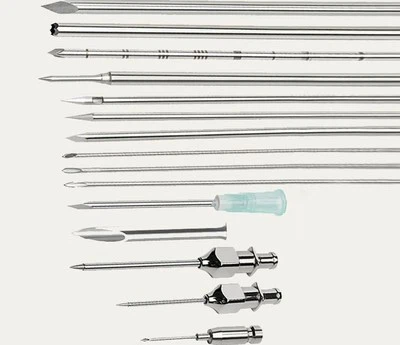
The most prominent feature-the conical tip-is the soul of its design philosophy. Within the narrow joint spaces or cavities of the knee, shoulder, ankle, or even ENT regions, the blunt tip of a standard cylindrical instrument often struggles to enter or traverse crowded areas like plicae or synovial recesses without causing trauma. The conical design acts as a gentle wedge; leveraging its gradually narrowing profile, it performs blunt dissection and pathway creation in confined spaces. It gently pushes aside soft tissues obstructing the view rather than cutting them recklessly. This not only expands the surgical field of vision but, more importantly, protects normal structures that do not require intervention, thereby reducing iatrogenic injury. Manners Technology utilizes 5-axis CNC grinding centers to achieve multidimensional curved surface precision molding, ensuring a smooth transition on the conical surface that optimally balances "penetration capability" with "safety."
If the conical design solves the problem of "access," the elliptical outer window design revolutionizes the efficiency of "capturing" and "resecting." Traditional circular or square openings are prone to "clogging" when cutting soft tissues-especially fibrous, tenacious synovium, meniscal fragments, or ligament stumps. This occurs when tissue fills the window, halting the movement of the inner cutting blade and forcing the surgeon to repeatedly withdraw the instrument for cleaning, severely disrupting the surgical workflow. The elliptical window, with its unique geometry, increases the perimeter length of the opening, making it easier for tissue to be guided, stretched, and slipped into the cutting zone upon contact with the window edge. Its streamlined edges reduce the likelihood of "catching" tissue, ensuring continuous and smooth suction and cutting. This drastically reduces intraoperative clogging rates, achieving the "clean and aggressive tissue resection" highlighted as a core advantage in product descriptions.
Within the elliptical outer window, the design of dual inner cutting windows represents a sophisticated upgrade in cutting dynamics by Manners Technology. A single cutting window can generate unbalanced cutting forces during high-speed rotation, potentially causing tip vibration or tissue "slippage." The dual inner window design acts like two "gripping points" with alternating phases for the rotating inner blade, making the cutting action smoother, more continuous, and powerful. This design not only improves cutting efficiency-particularly evident when dealing with harder or fibrotic tissues-but also produces finer tissue debris, facilitating rapid clearance via the suction system and maintaining a consistently clear surgical view. This is a direct manifestation of "optimizing surgical outcomes" at the mechanical level.
The overall material composition and surface treatment of the tip form the cornerstone of its performance. Utilizing medical-grade stainless steel or special alloys, formed through 5-axis CNC machining and 5-axis laser cutting technology, ensures microscopic geometric precision of the cutting edge (laser cutting accuracy ≤ ±10μm, kerf width only 15–30μm). This is the prerequisite for achieving sharp cuts, reducing tissue drag, and minimizing thermal damage. Subsequent electrolytic polishing and ultrasonic cleaning remove all microscopic burrs, resulting in a mirror-smooth surface. The significance of this surface finish extends far beyond aesthetics: it drastically reduces tissue adhesion, allowing cut debris to be flushed away rapidly; it minimizes friction against the outer cannula, ensuring smoother rotation and less vibration of the inner blade; and it enhances corrosion resistance, allowing the instrument to withstand repeated sterilization and high-intensity use.
Therefore, the shaver tip of the Manners Technology arthroscopic conical shaver is a highly integrated functional terminal combining pathway creation, efficient tissue capture, stable and powerful cutting, and smooth debris clearance. Every curve, every angle, and every contour of the window is engineered to solve specific physical challenges encountered in arthroscopic surgery. The significance of this "geometric key" lies in its ability to translate the surgeon's intent into precise, efficient, and low-trauma mechanical action within the cavity. It serves as an irreplaceable engineering bridge connecting macroscopic surgical goals with microscopic tissue manipulation.