Precision Manufacturing For Life: How 5-Axis Technology Forges The Intelligent Fingertip Of Arthroscopic Surgery
Apr 23, 2026
Precision Manufacturing for Life: How 5-Axis Technology Forges the "Intelligent Fingertip" of Arthroscopic Surgery
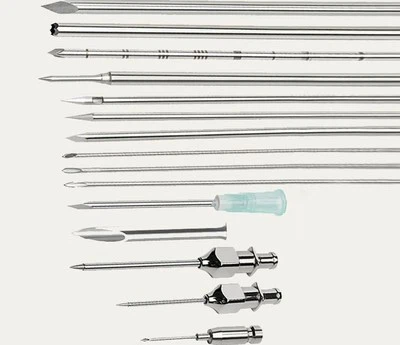
In arthroscopic procedures, surgeons operate through instruments while observing via endoscopic cameras. The blade tip of the arthroscopic shaver acts as an extension of their fingertips. Yet unlike human tissue, this artificial fingertip must perform precise resection, polishing and reshaping within a millimeter-scale surgical field without direct visual access.The state-of-the-art manufacturing processes adopted by Manners Technology for its conical arthroscopic shaver tips - specifically 5-axis CNC machining, 5-axis laser cutting and 5-axis CNC grinding - transform these components from ordinary standardized industrial parts into biocompatible masterpieces with exceptional precision, structural strength and functional adaptability. In turn, they endow surgical operations with unprecedented controllability and procedural predictability.
5-axis CNC machining serves as the fundamental technology for forming the intricate 3D geometry of shaver tips. Conventional 3-axis machine tools only move along three linear axes (X, Y, Z). Processing complex curved surfaces requires repeated workpiece clamping, which accumulates substantial errors and restricts the machining of internal hollow structures.5-axis CNC systems integrate two additional rotational axes (such as A-axis and C-axis) on the basis of three linear axes, enabling cutting tools to approach workpieces from arbitrary angles. For conical shaver tips, this allows all processes from rough machining to finishing, as well as in-situ deburring, to be completed in a single clamping cycle for complex conical surfaces, internal suction channels and precision bearing mating surfaces.The claimed minimal positioning error and ultra-high precision of the product originate directly from this process. Single-time clamping eliminates micrometer-scale deviations caused by repeated positioning, ensuring perfect concentricity and dynamic balance of the internal and external geometry of the tip. This is a prerequisite for stable high-speed rotation at thousands of revolutions per minute without abnormal vibration.Vibration is an invisible hazard in arthroscopic surgery, as it causes unnecessary soft tissue tearing, rough cutting surfaces and blurred tactile feedback for surgeons.
5-axis laser cutting is specially developed for machining the most delicate feature of the shaver tip: the cutting windows. The contour definition, edge perpendicularity and surface smoothness of both external elliptical windows and internal dual cutting windows directly determine cutting efficiency and soft tissue response.Equipped with ultrafast nanosecond or picosecond pulsed lasers and coordinated with a 5-axis motion system, laser beams perform vertical cutting on all complex curved surfaces. This enables the fabrication of high-precision elliptical windows on the sidewalls of conical tips with a tolerance of ≤ ±10 μm, alongside slit widths of merely 15–30 μm. The process generates virtually no heat-affected zone or material slag.Resulting edges are entirely burr-free and smooth with no secondary polishing required, fully preserving the intrinsic crystalline structure and mechanical properties of the base material. Such sharp, clean window edges enable atraumatic, precise tissue transection rather than avulsive tearing of soft tissue.
5-axis CNC grinding centers are advanced equipment for final edge forming and hard material processing. The cutting edges of shaver tips demand extreme hardness and wear resistance to maintain sharpness, while the substrate requires sufficient toughness to prevent fracture. These properties are commonly achieved via localized heat treatment and superhard coatings.Utilizing high-precision grinding wheels, 5-axis grinding centers perform mirror finishing on heat-hardened cutting edges at optimal angles, producing uniformly sharp microscale cutting edges. More importantly, this technology enables efficient customized production.Distinct surgical procedures (knee meniscus repair, subacromial decompression, ankle joint debridement) and varied tissue types (soft synovium, fibrotic meniscus, calcified cartilage) require tips with distinct rake angles and edge profiles, including serrated, curved and straight edges.5-axis grinding centers rapidly and accurately revise machining programs, shaping standard blanks into customized specialized shaver tips and delivering high-quality, tailor-made surgical solutions for orthopedic surgeons.
Collectively, these 5-axis technologies establish a fully closed-loop digital precision manufacturing workflow. The entire transformation from digital 3D models to physical components is fully computer-controlled with minimal manual intervention, minimizing process variation and product defects to the lowest possible level.The manufacturing precision guarantees far more than superior product quality, and directly translates into intraoperative clinical advantages:
Predictable cutting performance: Highly consistent cutting depth and efficiency allow surgeons to anticipate procedural outcomes reliably via tactile feedback.
Superior tissue compatibility: Ultra-smooth surfaces and sharp edges minimize traction and collateral damage to surrounding healthy tissue.
Extended instrument lifespan: Precision mating structures and optimized material treatment enable prolonged high-intensity operation of shaver tips.
In essence, through 5-axis manufacturing technologies, Manners Technology imparts inherent performance predictability to shaver tips beyond their basic metallic properties. It allows surgeons to fully trust every subtle movement of this intelligent fingertip within the concealed surgical cavity.Accordingly, arthroscopic surgery evolves from an experience-dependent empirical craft into a precise, controllable and highly repeatable engineering discipline. This is the core driving force behind the advancement of modern minimally invasive orthopedic surgery.