The Customization Frontier: From 2D/3D Drawings To Personalized Medicine And Industry 4.0
Jul 21, 2026
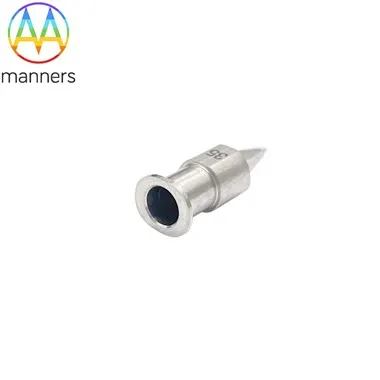
In the realms of medical devices and precision manufacturing, standardized products often address only generic challenges. Truly solving specific clinical demands or navigating complex industrial scenarios requires highly customized solutions. As a fundamental yet critical precision component, the Pencil Point Needle is increasingly focused on "customization" as its future trajectory. From personalized production based on client 2D/3D drawings to integration into smart Industry 4.0 ecosystems, the customization journey of the Pencil Point Needle illustrates a profound shift in precision manufacturing-from "mass replication" to "on-demand creation."
Personalized Medical Demand is the primary catalyst for Pencil Point Needle customization. Human anatomical variations are vast-ranging from subcutaneous fat thickness in obese patients to vertebral angulation in spinal deformities, or the minute scale required for neonatal procedures. Standardized needles may fail to adapt perfectly to these nuances, leading to difficult insertions, lower success rates, or heightened complications. By providing patient-specific CT or MRI data, manufacturers can leverage reverse engineering software to reconstruct individualized 3D models. This enables the design of Pencil Point Needles that conform precisely to unique anatomies. For instance, crafting a spinal needle with a specific bend angle and length for a patient with ankylosing spondylitis, or designing an ultra-fine, ultra-short ventricular puncture needle for a neonate. This "tailored" production model significantly elevates surgical safety and success rates, serving as a vivid implementation of precision medicine principles within the device sector.
Complex Industrial Applications provide a vast stage for Pencil Point Needle customization. In modern manufacturing, dispensing scenarios are incredibly diverse: some require multi-angle dispensing in confined spaces, others demand precise metering of high-viscosity pastes, and many necessitate operation in high-temperature, high-pressure, or corrosive environments. Standard needles frequently falter under these demands. Automotive engine control unit (ECU) potting, for example, may require continuous bead dispensing along complex 3D contours, dictating specific bend geometries and lengths for the Pencil Point Needle. Micro-Electro-Mechanical Systems (MEMS) packaging might necessitate needles with multiple side ports for simultaneous multi-point dispensing. Services like Manners' "According to your 2D/3D Drawing or sample provided" exist specifically to meet these hyper-personalized needs. Clients submit detailed schematics or physical samples, and manufacturers utilize advanced CAD/CAM systems and precision machinery to rapidly produce compliant components. This agile customization capability allows Pencil Point Needles to integrate seamlessly into non-standard automated equipment, functioning as flexible modules within Industry 4.0 production lines.
Diversified Hub Configurations constitute another vital facet of customization. As referenced, the most common hubs for Pencil Point Needles are 1/4" or 1/8" NPT threads-robust, durable, and leak-proof for high-pressure industrial use. However, disparate equipment and systems often require alternative interfaces. Luer Lock fittings, valued for convenience and ubiquity, dominate laboratory automation. Microfluidic systems may demand connection to specific plastic luer adapters or metal compression fittings. Manners addresses this by offering a wide array of hub options-including various thread specs, luer configurations, and bespoke connectors-ensuring Pencil Point Needles mate flawlessly with downstream apparatus. This eliminates costly secondary modifications due to interface mismatches, enhancing overall system integration and reliability.
Digital and Smart Manufacturing Technologies form the bedrock supporting the customized future of Pencil Point Needles. With the maturation of the Industrial Internet of Things (IIoT) and Digital Twins, future customization will grow more efficient and intelligent. Clients will upload 3D models via online portals; systems will automatically perform Design for Manufacturability (DFM) analyses and generate optimized toolpaths. During production, IoT sensors will monitor critical parameters-like rotary forging pressure and electropolishing current-in real-time, ensuring batch-to-batch consistency. Blockchain technology will enable end-to-end traceability, from raw material sourcing to final delivery, providing the highest level of quality assurance for medical and high-end industrial applications. Furthermore, Artificial Intelligence (AI) algorithms, trained on vast datasets of clinical outcomes and industrial use-cases, could recommend customization strategies or autonomously generate optimized designs. Looking ahead, Pencil Point Needles will cease to be merely passive tools; they will evolve into intelligent nodes bridging the digital and physical worlds. Satisfying personalized demands while continuously driving advancements in medical technology and manufacturing processes, the customization odyssey of the Pencil Point Needle stands as a symphony composed jointly by human ingenuity and precision engineering.