Product Definition, Structural Principle And Core Manufacturing Technology Analysis Of Pencil Point Needles
Jul 21, 2026
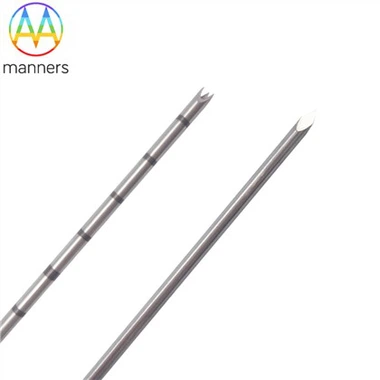
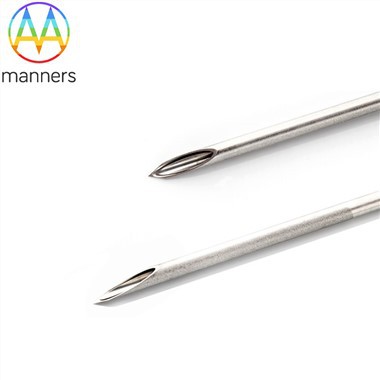
Pencil Point Needles are precision puncture and injection instruments featuring closed tapered pencil-style tips with side fluid outlets. Distinct from traditional bevel-cut needles, their unique non-cutting puncture design makes them multi-functional precision consumables widely used in medical, laboratory and industrial fluid control sectors. The most iconic feature of such needles is the sealed tapered tip, equipped with one or two coaxial circular holes near the needle tip and integrated with a hub assembly. They enable precise irrigation, dispensing and extraction of gases, pastes and liquids via lateral ports, while eliminating long-standing industry drawbacks of conventional needles such as coring, lumen blockage and diaphragm debris contamination. As dedicated products for precision fluid manipulation and minimally invasive puncture, Pencil Point Needles integrate reusability, high precision and outstanding stability to meet stringent high-precision operation demands across various industries.
In terms of core structural principles, Pencil Point Needles completely redefine the operating logic of traditional puncture needles. Conventional open-bevel needles slice sealing diaphragms during penetration, generating tiny debris that easily clogs tubing lumens and contaminates fluids; repeated punctures will further destroy the sealing integrity of septa. In contrast, pencil-pointed needles adopt an integrally closed tapered tip. During puncture, the tip only squeezes and expands gaps on the diaphragm instead of cutting materials, thoroughly eliminating the coring issue at the source. Meanwhile, fluids flow in and out through lateral tip holes to keep the cannula lumen unobstructed all the time, preventing needle clogging and inconsistent flow rates. In certain application scenarios, the puncture site forms a self-sealing inlet after withdrawal, greatly enhancing operation tightness and safety. The standard swaging angle of the tip ranges from 12° to 15°, a geometric parameter verified through decades of industrial practice. This angle strikes an optimal balance between smooth penetration, structural stability and sealing performance, making it ideal for piercing most silicone, rubber and plastic septa.
Rotary swaging (rotary forging), a precision cold forming technology, serves as the core manufacturing process that differentiates pencil point needles from ordinary needles. As a cold working procedure without high-temperature heating, it synchronously reduces the outer and inner diameters of stainless steel tubing through mechanical rotary extrusion to form uniform tapered pencil tips. Compared with thermal processing and mechanical cutting methods, rotary swaging preserves the complete molecular structure of metal alloys without compromising tensile strength, corrosion resistance and structural toughness. The formed tips feature consistent wall thickness, regular radian, burr-free surfaces and zero internal stress defects, significantly boosting needle durability and reusability. Moreover, this technology boasts broad material compatibility and works for almost all malleable alloys, laying a solid technical foundation for material upgrading and customized production of needles.
The full manufacturing workflow includes 8 standardized procedures: tube selection, precision cutting, rotary cold swaging, precision side-hole drilling, mirror polishing, hub assembly, dimensional calibration and sterilization treatment. Every step implements high-precision inspection criteria, controlling micron-level tolerances for tip taper radian, side-hole aperture, hole coaxiality and cannula straightness to guarantee consistent fluid delivery stability and puncture performance of every finished needle. Supported by mature process systems, leading manufacturers like Manners realize large-scale mass production while maintaining superior precision and durability, delivering high-end precision needle products compatible with spinal surgical operations, high-precision laboratory research and automated industrial production lines, and establishing the benchmark status of pencil point needles in the precision fluid instrument industry.