Head-to-Head: Pencil Point Needles Vs. Quincke Needles – Reshaping Clinical Protocols
Jul 21, 2026
In the evolutionary timeline of invasive devices, the debate between Pencil Point Needles and traditional cutting bevel needles (exemplified by the Quincke needle) represents a fundamental ideological clash between "cutting" and "separating." This contention is particularly fierce in spinal anesthesia, where the outcome influences not just procedural success but the postoperative quality of life for millions. A multi-dimensional comparison reveals why non-coring "pencil point" designs are increasingly becoming the dominant force reshaping clinical protocols.
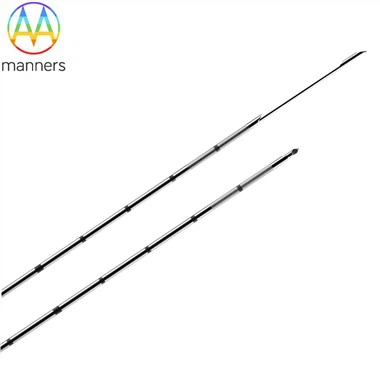
The Fundamental Difference in Puncture Mechanism is the core distinction. The Quincke needle features a long, razor-sharp bevel. Upon penetrating the dura mater, it acts as a miniature scalpel, transecting collagen fibers horizontally to create a rhomboid defect. Lacking natural tissue recoil, this defect fails to seal spontaneously. In contrast, the Pencil Point Needle has a closed conical tip with a lateral side port. Its mechanism is "separation"; the blunt tip parts collagen fibers along their longitudinal axis, creating a slit-like tract. Upon withdrawal, the elastic recoil of the dural fibers collapses this slit, facilitating self-sealing. This mechanistic divergence directly results in vastly different complication profiles.
The incidence of Post-Dural Puncture Headache (PDPH) is the paramount metric for evaluating spinal needles. PDPH results from persistent CSF leakage through the dural defect, causing intracranial hypotension and severe headache. Extensive evidence-based medicine confirms that Quincke needles carry a PDPH risk of 10%-30%, particularly elevated in young females, obstetric patients, and those with a history of migraines. This not only inflicts significant suffering but also extends hospital stays, increases costs, and may necessitate invasive treatments like epidural blood patches. Conversely, Pencil Point Needles (e.g., Whitacre, Sprotte) reduce PDPH incidence to below 1%. This orders-of-magnitude difference establishes them as the preferred choice for obstetrics, ambulatory surgery, and ERAS protocols, significantly enhancing patient satisfaction and recovery.
Regarding Nerve Injury Risk, Pencil Point Needles again demonstrate superiority. The sharp Quincke bevel can directly lacerate nerve roots or the spinal cord during insertion or redirection, potentially causing permanent deficits. The blunt tip of a Pencil Point Needle, however, tends to deflect neural tissue rather than cut it. While no procedure is risk-free, clinical data indicates that serious neurological injuries are exceedingly rare with pencil-point designs. Additionally, lateral fluid exit promotes more uniform anesthetic spread, reducing the need for supplementary infiltrations due to inadequate blocks.
Admittedly, the Quincke needle retains certain advantages, primarily in Tactile Feedback. Its prominent bevel provides a distinct "pop" or loss-of-resistance sensation upon dural penetration, aiding novice practitioners in identifying tissue planes. The Pencil Point Needle offers a more subtle, nuanced sensation, demanding greater experience and tactile acuity. Furthermore, for any given outer diameter, Quincke needles traditionally offer a larger inner diameter, theoretically permitting faster injection rates. However, advances in Pencil Point Needle manufacturing-specifically ultra-thin wall technology-are closing this gap. Newer designs also mitigate tactile differences through enhanced echogenicity (via laser etching or coatings) for improved ultrasound/X-ray visibility.
To crystallize these distinctions, consider the following comparison:
|
Dimension |
Quincke Bevel Needle (Cutting) |
Pencil Point Needles (Non-Coring) |
|---|---|---|
|
Mechanism |
Cuts collagen; Rhomboid defect |
Separates fibers; Slit-like tract |
|
PDPH Incidence |
High (10%-30%) |
Low (<1%) |
|
Nerve Injury Risk |
Higher (Potential transection) |
Lower (Tendency to deflect) |
|
Tactile Feedback |
Distinct "pop"; Easier for trainees |
Subtle; Requires experience |
|
Primary Applications |
General spinal anesthesia; Speed prioritized |
Obstetrics, Ambulatory Surgery, ERAS, PDPH-sensitive pts |
|
Trend |
Being superseded by non-cutting types |
Becoming clinical gold standard; Driving protocol change |
In summary, Pencil Point Needles are irreversibly reshaping clinical puncture norms due to their overwhelming benefits in reducing PDPH and protecting neural structures. While they demand slightly higher technical proficiency-overcome through structured training-they offer patients less pain, faster recovery, and enhanced safety. This shift represents not merely technological progress, but a profound embodiment of humanistic care in modern medicine.