The Century-Long Stagnation And Biomimetic Breakthrough Of Hypodermic Needles
Apr 11, 2026
The Century-Long Stagnation and Biomimetic Breakthrough of Hypodermic Needles
Introduction: A Forgotten Corner of Technology
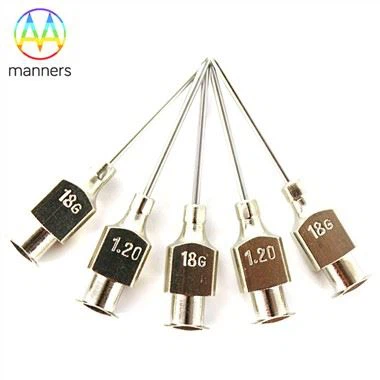
In the grand narrative of medical technology, our focus often gravitates toward dazzling breakthroughs like gene editing, immunotherapy, and AI diagnostics, while overlooking the most fundamental and ubiquitous medical tool-the hypodermic needle. Since the invention of the first modern metal syringe by Charles Gabriel Pravaz in 1853, the basic morphology of the hypodermic needle has remained largely frozen in time: a hollow metal tube, sharp at one end and connected to a syringe at the other. Although materials have upgraded to medical-grade 316L stainless steel and surface treatments like siliconization have been added to reduce friction, the core design philosophy-"puncture by pushing"-has never changed.
This stagnation presents a stark contrast to the rapid evolution elsewhere in medicine. When an mRNA vaccine can leap from sequence design to clinical trials in a matter of weeks, the needle used for its injection remains, in terms of mechanical principles, fundamentally indistinguishable from the one used for penicillin a century ago. However, with the deepening of biomimetic research, this neglected corner is on the cusp of a silent revolution.
I. Biomimetic Wisdom: The Art of Puncture Learned from Insects
Mosquitoes: Masters of Painless Puncture
In nature, the mosquito is undoubtedly an expert in subcutaneous injection. A female mosquito can insert its 2–3 mm proboscis into human skin with virtually no sensation, consuming blood several times its own body weight. Mechanical engineer Yichi Ma and his team at UC Berkeley noted in a review for Biomimetics and Intelligent Roboticsthat the mosquito's success relies not only on anesthetic saliva but also on the unique structural design and movement strategy of its mouthparts.
Structural Innovation: Traditional hypodermic needles feature a smooth bevel at the tip. During puncture, they act like wedges, forcibly prying apart tissue, which generates significant pain and cellular damage. In contrast, the mosquito's proboscis features a serrated tip with a gradient in material stiffness-soft at the tip and gradually hardening toward the base. This design allows it to "cut" rather than "wedge" tissue fibers apart, significantly reducing puncture resistance. A 2020 Sino-US joint study confirmed that mosquito-inspired needles require 27% less insertion force than traditional needles, directly translating to reduced pain perception.
Movement Strategy: Mosquitoes do not simply "push" their mouthparts into the skin. They first use their legs to slightly stretch the skin, reducing tissue tension. During penetration, the proboscis vibrates at high frequency with micro-amplitudes. This "vibration-assisted puncture" effectively reduces static friction between the needle body and the tissue. Applying this principle to hypodermic needles-via piezoelectric ceramic actuators integrated into the needle hub-could make the insertion process exceptionally smooth.
Wasps: Experts in Deep-Tissue Navigation
For scenarios requiring deep drug delivery (e.g., intratumoral injection), traditional hypodermic needles with high aspect ratios (length-to-diameter ratio) face severe challenges: they are prone to buckling within soft tissue, leading to deviation from the target or even needle breakage.
Scientists at Delft University of Technology drew inspiration from the female wasp's ovipositor. This is one of nature's most precise "puncture navigation systems," composed of three independently sliding valves that telescope. By controlling the alternating slide of these three valves, the wasp can drill a deep, straight channel in dense wood to precisely deposit eggs at specific locations.
The research team mimicked this structure using bundles of nickel-titanium (NiTi) alloy wires, creating ultrafine needles less than 1 mm in diameter but up to 200 mm long. These needles demonstrate remarkable stability when navigating artificial liver tissue, allowing them to be "steered" precisely to target locations, avoiding the buckling issues of traditional long needles. For precise drug delivery or biopsy of deep-seated tumors, this technology means reaching previously inaccessible lesions without open surgery, fulfilling the promise of true minimally invasive therapy.
II. Functional Expansion: From Passive Tubing to Smart Systems
Parasites: Inspiration for Anchoring Indwelling Needles
One of the major clinical challenges of traditional intravenous catheters (cannulas) is accidental dislodgement. Inspired by certain fish parasites (e.g., copepods), researchers have developed "distally expandable needles." After insertion into a blood vessel, the tip of this needle can undergo controlled expansion via temperature- or pH-sensitive materials, forming an anchoring structure that secures the catheter firmly in place. This not only reduces the risk of slippage due to patient movement but also significantly decreases the relative motion between the needle tip and the vessel wall, thereby lowering the incidence of phlebitis.
Hemiptera Insects: New Approaches to Surface Drug Delivery
For scenarios requiring large-surface-area drug delivery (e.g., local anesthesia, intradermal vaccination), the point-like delivery of traditional needles is inefficient. Inspired by European Hemiptera insects (including aphids and bed bugs), scientists have developed needles capable of precisely directing fluid along their surface. The exoskeletons of these insects feature complex micron-scale groove structures that channel defensive chemicals to specific body areas.
Biomimetic needles etched with similar microchannel networks can form a uniform liquid film on the needle's surface as fluid passes through. This allows for large-area superficial drug delivery via a single puncture, which is particularly suitable for intradermal immunization and promises to significantly enhance vaccine immunogenicity.
III. Clinical Value: The Profound Significance Beyond "Painlessness"
Cornerstone of Precision Medicine
The value of biomimetic hypodermic needles extends far beyond pain reduction. In the era of precision medicine, spatial accuracy and temporal control of drug delivery are equally critical.
In transrectal biopsy of prostate cancer, the high insertion force of traditional needles often causes gland displacement, leading to sampling bias. A 2020 University of Michigan study showed that using mosquito-inspired needles, which dramatically lower insertion force, reduced gland displacement by over 60%, significantly improving biopsy accuracy. For diagnosing early-stage small tumors, this improvement in precision could mean saving lives.
In the field of oncology, wasp-inspired needles capable of precise navigation to deep lesions make "direct drug delivery to the tumor microenvironment" feasible. This avoids the systemic toxicity associated with systemic administration while increasing local drug concentration and enhancing efficacy.
The Leverage Effect on Public Health
According to WHO data, approximately 16 billion injections were administered globally in 2018-and this was before the COVID-19 pandemic. One in four people suffers from varying degrees of trypanophobia (fear of needles), directly leading to low vaccination rates and poor treatment adherence among chronic disease patients.
Biomimetic needles, by reducing pain and fear, hold the potential to be a powerful lever for improving healthcare accessibility. Imagine if flu vaccinations were no longer frightening, or if diabetic patients no longer avoided insulin injections due to fear. The reduction in the global burden of disease would be immeasurable.
IV. Challenges and Future: The Long Road from Lab to Clinic
Despite the promising outlook, the journey from concept to ubiquity for biomimetic hypodermic needles faces multiple challenges:
Manufacturing Complexity: The serrated mouthparts of mosquitoes or the sliding structures of wasps are extremely challenging to manufacture with precision at the micron scale. While existing MEMS (Micro-Electro-Mechanical Systems) technology is feasible, costs are 5–10 times higher than traditional needles, making it difficult to meet the demand for tens of billions of units annually.
Biocompatibility: Complex surface topologies may increase the risk of protein adsorption and thrombosis. Ensuring blood compatibility while achieving functionality requires further breakthroughs in materials science and surface engineering.
Standardization and Regulation: Traditional hypodermic needles have mature ISO standards and regulatory pathways. As "novel medical devices," biomimetic needles require entirely new testing methods and evaluation criteria, a process that typically takes years or even decades of industry consensus and regulatory adaptation.
Clinical Validation: The ultimate value of any medical device must be proven through rigorous clinical trials. Biomimetic needles must demonstrate advantages not just in being "less painful," but across multiple dimensions including sample quality, dosing accuracy, and clinical outcomes, necessitating large-scale, multi-center, long-term studies.
Conclusion: Humanitarianism on the Tip of a Needle
The biomimetic revolution in hypodermic needles appears, on the surface, to be a triumph of engineering, but at its core, it is an extension of medical humanistic care. It signifies a profound shift in medical technology-from focusing solely on "curing disease" to prioritizing the "treatment experience." In this transition, the needle ceases to be a passive conduit for delivering drugs and becomes a vessel carrying the humanitarian mission of reducing suffering, respecting dignity, and improving quality of life.
In the future, the most successful medical innovations may not necessarily be the most complex or expensive technologies, but rather improvements that make the most universal and basic medical acts better and gentler. A tiny biomimetic needle stands at this historical intersection: connecting a century of medical tradition with cutting-edge biological inspiration, linking engineering precision with patient experience, and bridging technological progress with humanistic care.
When the day comes that children no longer cry from fear of needles, and chronic disease patients no longer evade treatment due to fear, we may realize that this scientific story-which began with the mosquito's proboscis and the wasp's ovipositor-ultimately tells us this: True medical progress begins with empathy for every small suffering and is fulfilled through the meticulous polishing of every detail.