Economic Benefit Analysis Of Standardized Needle Size Matching Procurement
Oct 11, 2026
1. Procurement and Operation Cost Pain Points of Blind Size Matching
Blind and irregular size matching procurement of lumbar puncture stylet needles brings huge implicit economic waste and operation cost pressure to medical institutions. Most medical institutions adopt single-size bulk procurement, resulting in surplus inventory of universal-size needles and serious shortage of special-size needles, forming inventory backlog and emergency procurement premium cost. The mismatched size application leads to high postoperative complication rate, increasing additional medical expenses for complication treatment and prolonged hospitalization, raising the overall operating cost of the department. Repeated puncture and operation failure caused by improper size selection increase the consumption of medical supplies and human resource costs, reducing clinical operation efficiency. In addition, non-standard size procurement leads to mixed specifications of hospital instruments, poor compatibility of replacement products, increased equipment management difficulty and maintenance cost, forming a series of chained economic loss problems.
2. Standardized Size Procurement Benefit Balance Principle
The standardized classified size procurement mode of lumbar puncture stylet needles adheres to the core principle of "demand matching, hierarchical procurement, zero inventory waste and maximum cost performance", realizing the optimal balance between hospital procurement cost and clinical application benefit. According to the clinical scenario proportion and patient group distribution, quantitatively calculate the demand ratio of universal size, pediatric special size, emergency thick size and scientific research ultra-fine size, formulate hierarchical and proportional procurement plans, eliminate inventory backlog and shortage problems. Standardized size matching reduces the incidence of postoperative complications and operation failure rate, saves additional treatment and human resource costs, and improves hospital bed turnover efficiency. Unified standard size procurement improves product compatibility and interchangeability, reduces equipment management and replacement costs, and realizes refined cost control of medical supplies.
3. Classification of Hierarchical Procurement Size Schemes
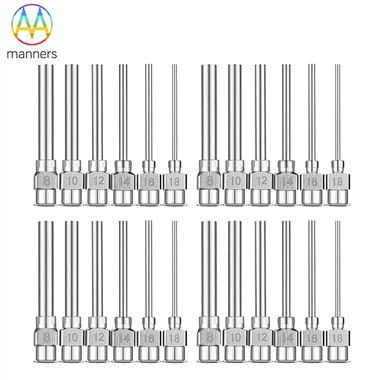
According to clinical usage frequency and scenario demand, the hierarchical procurement size scheme is divided into four classified procurement modules to realize precise cost control. The first is conventional high-frequency procurement size (19G-25G standard size), with large clinical usage volume and stable demand, adopting batch bulk procurement to reduce unit procurement cost, suitable for daily routine puncture. The second is special group low-frequency procurement size (31G-36G pediatric ultra-fine size), with small single usage volume but rigid demand, adopting small-batch frequent procurement to avoid inventory waste. The third is emergency reserve procurement size (10G-18G thick size), reserved as emergency special supplies, adopting fixed small-batch reserve procurement to ensure emergency supply without overstocking. The fourth is special scenario customized procurement size, adopting on-demand customized procurement according to scientific research and difficult case demand, realizing zero inventory and zero waste.
4. Standardized Procurement and Inventory Management Guidelines
Medical institutions need to formulate standardized size classified procurement and refined inventory management processes to maximize economic benefits. First, conduct monthly clinical size usage data statistics, analyze the usage ratio of different specifications, and dynamically adjust the procurement proportion of each size. Second, implement classified inventory management: place high-frequency standard-size products in conventional inventory, place special-size products in special classified inventory, and set up emergency reserve inventory for emergency thick-size products. Third, establish a zero-customized-inventory mechanism for special scenario customized sizes, complete on-demand procurement and production docking to avoid waste. Fourth, regularly count the cost-benefit data of size matching application, compare the complication treatment cost and operation efficiency before and after standardized procurement, and continuously optimize the procurement scheme.
5. Practical Procurement Benefit Data and Experience
Practical operation data of multiple medical institutions verifies that standardized classified size procurement can effectively reduce comprehensive operating costs. After implementing hierarchical size procurement, the inventory backlog rate of lumbar puncture needles drops from 35% to below 8%, and the annual inventory waste loss is reduced by more than 40%. The postoperative complication rate caused by size mismatch is significantly reduced, saving 25%-30% of additional complication treatment costs every year. The one-time puncture success rate is improved, reducing the consumption of auxiliary medical supplies and the working hours of medical staff, and improving the daily diagnosis and treatment efficiency by more than 15%. The standardized size matching mode eliminates emergency premium procurement, stabilizes the procurement cost of medical supplies, and brings stable and sustainable economic benefits to medical institutions.
6. Procurement Management Value and Benefit Sublimation
The standardized classified size procurement and matching management mode realizes the refined cost control of lumbar puncture stylet needle procurement, completely solves the economic waste and cost pressure caused by blind bulk procurement, and improves the economic operation efficiency of hospital medical supplies. It not only reduces the comprehensive procurement cost and inventory management cost of medical institutions, but also improves the safety and efficiency of clinical diagnosis and treatment, realizes the dual optimization of economic benefits and medical service quality. The standardized procurement mode also standardizes the hospital medical equipment management process, improves the refined management level of clinical supplies, and provides a replicable cost-control management model for the procurement of similar medical invasive instruments.
7. Procurement Standardization Development Prospects and Suggestions
In the future, the industry will develop towards intelligent dynamic procurement of size specifications. Medical institutions can build a big data usage monitoring system, realize intelligent prediction of various size demand, and automatically generate optimal procurement plans. Industry procurement platforms should establish standardized size classification supply mechanisms to facilitate hospitals' classified procurement and customized ordering. Hospital management departments should take size standardized matching procurement as a key link of medical cost control, promote the full implementation of hierarchical procurement mode, and eliminate extensive blind procurement. Guide primary medical institutions to formulate targeted size procurement schemes according to local patient characteristics, realize precise matching of supply and demand, and maximize the cost-performance advantage of lumbar puncture stylet needles.