The Art Of Dose Painting: How Brachytherapy Needles Achieve Tumor Sculpting
Apr 13, 2026
The Art of Dose Painting: How Brachytherapy Needles Achieve "Tumor Sculpting"
Provocative Question:
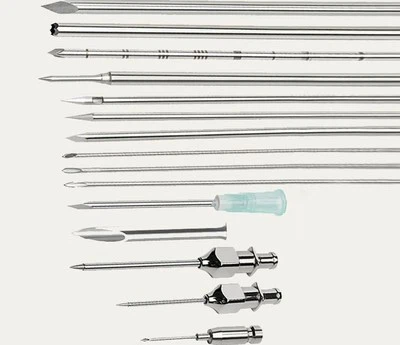
If radiation therapy is an art form, then the brachytherapy needle is the physician's "paintbrush," and the radiation dose is the "pigment." But how does one use dozens of metal needles to "paint" a dose distribution within a three-dimensional tumor that perfectly covers the malignancy while sparing normal tissue? Behind this lies a perfect symphony of medicine, physics, and engineering.
Historical Context
The embryonic form of dose painting emerged in the 1990s. With the advent of inverse treatment planning systems, physicians could, for the first time, start with the question, "What dose distribution do I need?" and work backward to determine "where the sources should be placed." This gave rise to dedicated needle systems for various anatomical sites-flexible needles, steerable needles, and shape-memory alloy needles successively appeared. After 2010, the integration of 3D printing technology allowed every patient to have a fully individualized needle guide template, propelling dose painting to new heights.
Physics Essentials
The physical essence of brachytherapy is radiation dose distribution governed by the Inverse Square Law. An Ir-192 source in a 17G needle delivers a dose at 1 cm from the source axis that could be 100 times higher than at 10 cm. It is precisely this steep dose gradient that enables clinicians to achieve:
Dose Cliff Effect: A rapid fall-off of dose at the tumor boundary, protecting surrounding critical organs.
Dose Painting: Creating heterogeneous yet optimized dose distributions within the tumor by adjusting source dwell times across multiple needles.
Dynamic Modulation: HDR afterloading systems can rapidly switch the radiation source between different needles and depths, realizing 4D dose sculpting.
Technical Matrix
Modern dose painting relies on a multi-dimensional technical system:
Needle Array Topology: Prostate "perineal templates" typically employ a hexagonal arrangement with 5mm needle spacing, a configuration mathematically proven to produce the most uniform dose coverage.
Source Stepping Algorithms: Modern afterloaders can move miniature radiation sources (0.6mm diameter) in 0.5mm steps, creating dozens of independently controllable dose points within each needle.
Real-Time Adaptation: Intraoperative plan adjustment guided by ultrasound or CT allows for re-optimization of dose distribution based on the actual needle positions.
Research from the Sun Yat-sen University Cancer Center shows that cervical cancer brachytherapy using individualized 3D printed templates increased the D90 (minimum dose covering 90% of the target) of the High-Risk Clinical Target Volume (HR-CTV) from 75Gy with conventional techniques to 85Gy, while simultaneously reducing the bladder D2cc (dose to the most irradiated 2cc of tissue) from 75Gy to 65Gy.
Clinical Canvas
Across different cancer types, dose painting demonstrates unique technical forms:
Prostate "Spherical Sculpting": Implanting 18-20 needles through the perineum creates a spherical dose distribution, reducing the rectal anterior wall dose by 30%.
Breast "Bullseye Artistry": Post-lumpectomy, multi-channel balloon needles achieve uniform irradiation within a 2cm margin around the surgical cavity.
Head & Neck "Topographic Following": For residual nasopharyngeal carcinoma, flexible needle technology follows the contours of the skull base, avoiding brainstem injury.
Future Palette
Next-generation dose painting technology is breaking through in three directions:
AI Optimization: Deep learning-based automatic needle placement planning can accomplish in 5 minutes what traditionally required 2 hours of manual optimization.
Biology-Guided Targeting: Sub-regions identified by PET-CT can receive boosted doses, realizing "biological dose painting."
Real-Time Dosimetry: Miniature detectors implanted within the needles allow online verification of the actual dose delivered, with errors controlled within 3%.
As Bruce Thomadsen, Past President of the American Brachytherapy Society, once said: "The best dose distribution is not necessarily the most uniform one, but the one that best fits the biology of the tumor." In the art of dose painting, the placement of every needle is a perfect balance of rational calculation and clinical experience; every treatment is a radiation sculpture tailored specifically for the patient.