How Brachytherapy Needles Reshape Tumor Treatment
Apr 13, 2026
The "Scalpel" of Precision Radiation: How Brachytherapy Needles Reshape Tumor Treatment
Provocative Question:
In cancer treatment, how can a lethal radiation dose be delivered precisely to the tumor core while maximizing the protection of surrounding healthy tissue? Traditional external beam radiation therapy often faces the dilemma of "destroying one thousand enemies while losing eight hundred of its own." The advent of brachytherapy needles acts like installing a "GPS navigation system" for radiotherapy, implanting the radiation source directly inside the tumor. But have you ever wondered how this hair-thin metal needle carves out a precise "radiation battlefield" within the human body?
Historical Context
The concept of brachytherapy dates back to the early 20th century, but the true revolutionary breakthrough occurred when material science intersected with precision manufacturing. Early radioactive source implantation relied on crude trocar needles. It wasn't until the 1980s, with the development of Computed Tomography (CT) and ultrasound guidance, that dedicated brachytherapy needles emerged. These instruments evolved from simple catheters into precision devices integrating extensive engineering wisdom-from the geometry of the needle tip for penetration to the hydrodynamic optimization of the lumen, every detail embodies decades of clinical experience and engineering refinement.
Defining the Specification
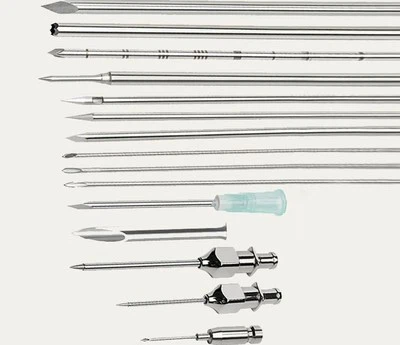
The core parameters of brachytherapy needles construct a precise selection matrix:
|
Parameter |
Specification Details |
Clinical Indication Example |
|---|---|---|
|
Gauge (14G-21G) |
14G (≈2.1mm): Offers superior rigidity, suitable for deep punctures. |
Prostate: 17G-18G |
|
Length (5-20cm) |
Length must precisely match the puncture path, with error controlled within ±0.5mm. |
Cervical Cancer: 15-18cm |
|
Tip Design |
Triple-bevel tips optimize the puncture trajectory; side-holes ensure uniform radiation source distribution. |
Prostate implants often use 17G triple-bevel; breast balloon brachytherapy uses 20G blunt-tip needles. |
Clinical Breakthroughs
Modern brachytherapy needles have established three major technical schools of application:
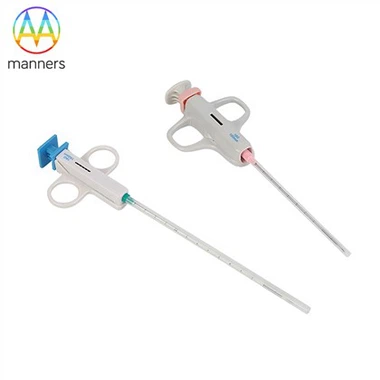
High Dose Rate (HDR) Systems: Utilizing Afterloading technology, the needles are implanted first to establish channels, followed by the computer-controlled delivery of miniature radiation sources (e.g., Ir-192) to predefined points. In prostate cancer treatment, 12-20 needles are precisely implanted via a perineal template, condensing a course of radiation that would traditionally take weeks into just 1-2 hours.
Permanent Seed Implants: Applicable for I-125 or Pd-103 seed implantation in prostate cancer. Each "radioactive seed" is only 0.8mm in diameter. Using an 18G implantation needle, these seeds are sown like crops to form a radiation field lasting several months within the tumor.
Surface Mold Therapy: Customized needle arrays for skin cancers. Physicians tailor the density and depth of needle placement according to the lesion's shape, achieving millimeter-level "dose painting."
In the clinical practice at Fudan University Shanghai Cancer Center, breast brachytherapy combined with 3D-printed individualized templates has reduced needle placement errors from the 3-5mm typical of free-hand techniques to under 1mm, realizing true "sculptural radiotherapy."
The Engineering Revolution
The manufacturing of contemporary brachytherapy needles has entered an era of "minimally invasive intelligence":
Material Innovation: The widespread use of medical-grade titanium alloys allows for thinner needles while maintaining strength and offering superior MRI compatibility.
Surface Engineering: Nanodiamond coatings reduce puncture resistance by 40%, which is particularly beneficial for multi-needle breast implantations requiring repeated punctures.
Smart Needle Technology: "Smart needles" integrated with optical fiber sensors can monitor tip temperature and tissue impedance in real-time, preventing damage to adjacent blood vessels and nerves.
As stated by Professor Li Yexiong, Director of the Department of Radiation Oncology at the National Cancer Center/Cancer Hospital, Chinese Academy of Medical Sciences, "The development history of brachytherapy needles is the evolutionary history of tumor radiotherapy-from 'carpet bombing' to 'precision guidance.'" From manual implantation to today's robot-assisted puncture, these metal needles, with diameters under 2mm, are redefining the precision boundaries of cancer radiotherapy.