Technical Evolution And Innovation Trends Of EBUS-TBNA Puncture Needles
Apr 19, 2026
Technical Evolution and Innovation Trends of EBUS-TBNA Puncture Needles
Since the clinical application of Endobronchial Ultrasound-Guided Transbronchial Needle Aspiration (EBUS-TBNA) technology in 2004, its core tool-the puncture needle-has undergone remarkable technical evolution, advancing from an adaptive instrument to a specialized, high-performance consumable. Current technological innovations focus on improving sampling quality, operational convenience, visualization, and in-depth integration with digital and intelligent surgical platforms.
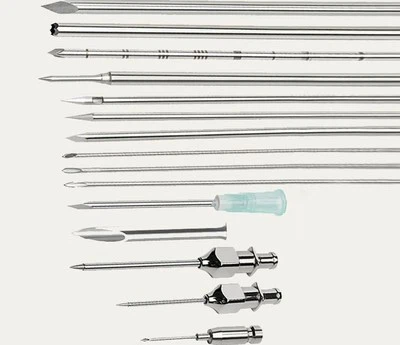
Refinement and Diversification of Needle Design: Early EBUS-TBNA puncture needles were mostly modified from needles used for Endoscopic Ultrasound-Guided Fine-Needle Aspiration (EUS-FNA), mainly in 21G and 22G specifications. Today, needle specifications have expanded to 19G, 21G, 22G, and even the finer 25G to meet the needs of different clinical scenarios. The 19G thick needle can obtain larger tissue samples, which is beneficial for subsequent molecular pathological testing; while the 25G ultra-fine needle may have better penetrability and flexibility, suitable for lesions that are difficult to reach. Tip design is the core of the technology, and various manufacturers have launched unique designs: for example, Olympus's ViziShot 2 FLEX needle adopts spiral laser cutting and a dual-locking device to improve puncture accuracy and sample quality; Cook Medical's EchoTip ProCore needle features a unique lateral cutting groove design, aiming to obtain more Core Tissue rather than just cytological specimens.
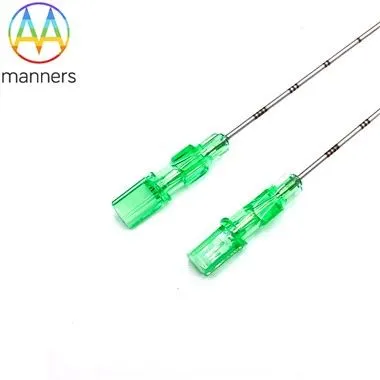
Upgrading of Materials and Manufacturing Processes: To meet the requirements of repeatedly passing through the curved working channel of a bronchoscope while maintaining rigidity to penetrate the airway wall and lymph node capsule, modern EBUS puncture needles are mostly made of high-performance materials such as medical stainless steel or nickel-titanium alloy. The manufacturing process requires extremely high standards, involving five-axis laser cutting, precision grinding, electrolytic polishing, and ultrasonic cleaning, to ensure the needle tip is sharp, the inner wall is smooth, and there are no burrs, thereby reducing tissue damage and blood contamination and ensuring sample integrity. Echo-enhanced treatment of the needle surface (such as laser-etched texture) has become a standard configuration, which can significantly improve the visibility of the needle under ultrasound and help surgeons confirm the position of the needle tip in real time.
Integration with Cutting-Edge Technologies:
1. Artificial Intelligence (AI) Integration: This is one of the most prominent trends. AI algorithms are being used to assist in identifying lymph nodes, automatically outline lesion contours, and improve the accuracy of biopsy. For example, companies such as Olympus and Boston Scientific are developing EBUS platforms integrated with AI, aiming to reduce inter-operator variability, shorten surgical time, and improve the diagnostic efficiency of early lung cancer.
2. Adaptation to Robotic Bronchoscope Platforms: With the development of robot-assisted bronchoscopes (such as Intuitive Surgical's ION platform), dedicated flexible puncture needles (such as Flexision needles) matching them have emerged. These needles need to adapt to the manipulation characteristics of robotic arms to achieve more stable and precise remote puncture.
3. Supplement of Emerging Biopsy Technologies: Traditional Fine-Needle Aspiration (FNA) sometimes fails to obtain sufficient tissue volume for comprehensive molecular typing. Therefore, EBUS-guided cryobiopsy technology, which can obtain larger and better-preserved tissue samples, is emerging, which may give birth to dedicated needles or probes matching the new biopsy mode.
In the future, the development of EBUS-TBNA puncture needles will pay more attention to personalization and intelligence. The selection of needles will be based not only on specifications but also on AI analysis of lesion imaging characteristics to recommend the optimal needle type. Advances in materials science may lead to "smart needles" with sensing functions, which can real-time feedback puncture resistance or tissue type. These innovations collectively point to a goal: to obtain the highest quality and sufficient tissue samples with minimal trauma, laying the foundation for the accurate diagnosis and treatment of diseases such as lung cancer.