The Core Medical Value Of EBUS-TBNA Needles
Apr 19, 2026
The Comprehensive Clinical Application Spectrum and Core Medical Value of EBUS-TBNA Needles
The core medical value of the EBUS-TBNA (Endobronchial Ultrasound-Guided Transbronchial Needle Aspiration) needle lies in its ability to revolutionize the diagnostic landscape for thoracic diseases. By utilizing a minimally invasive, transbronchial approach combined with real-time ultrasound guidance, it enables the safe and precise acquisition of tissue samples from mediastinal and hilar regions that were traditionally difficult to access. This capability has fundamentally transformed how clinicians diagnose and stage critical pulmonary conditions.
Core Application Areas
1. Diagnosis and Staging of Lung Cancer
This represents the most significant and classic application of EBUS-TBNA. For central lung cancers or cases with enlarged mediastinal or hilar lymph nodes, EBUS-TBNA is the preferred minimally invasive method for obtaining a pathological diagnosis and performing nodal (N) staging. It allows for the accurate assessment of metastasis in specific lymph node stations, including groups 2, 4, 7, 10, 11, and 12.The technique boasts a diagnostic sensitivity of 92%–95%, a specificity approaching 100%, and an overall accuracy exceeding 94%. By providing this level of precision, EBUS-TBNA prevents a significant number of unnecessary thoracotomies (surgical explorations), allowing for the formulation of highly targeted treatment plans.
2. Differential Diagnosis of Mediastinal Lymphadenopathy
For patients presenting with unexplained mediastinal lymph node enlargement, EBUS-TBNA serves as a critical diagnostic tool. It effectively differentiates between granulomatous diseases, such as sarcoidosis and tuberculosis, and malignant conditions like lymphoma or metastatic carcinoma. For instance, in the diagnosis of sarcoidosis, the diagnostic yield of EBUS-TBNA can exceed 80%, making it an indispensable tool for clinicians.
3. Diagnosis of Intrapulmonary and Mediastinal Masses
When dealing with intrapulmonary masses adjacent to the central airways or tumors located within the mediastinum, EBUS-TBNA allows for direct puncture and tissue acquisition. This capability is vital for confirming the nature of the lesion, whether it is primary lung cancer, a metastatic deposit, or a benign tumor.
4. Other Expanded Applications
As the technology matures, the indications for EBUS-TBNA continue to broaden. Its use has expanded to include sampling of thyroid lesions and left adrenal gland lesions, drainage of mediastinal cysts, and even endobronchial needle injection (EBUS-TBNI) for localized drug delivery. These extended applications highlight the versatility and growing importance of this technique in interventional pulmonology.
Operational Workflow and Advantages
The procedure is typically performed under sedation or general anesthesia. The physician inserts the bronchoscope, integrated with an ultrasound transducer, into the patient's airway via the oral cavity. Under real-time ultrasound imaging, the EBUS-TBNA needle is advanced through the working channel of the bronchoscope, penetrating the airway wall to precisely target the lesion for aspiration or biopsy.
Compared to traditional surgical methods like mediastinoscopy or open biopsy, EBUS-TBNA offers tremendous advantages: it is minimally invasive, safer, associated with fewer complications, can often be performed on an outpatient basis, and allows for rapid patient recovery. When contrasted with imaging modalities like CT or PET-CT, EBUS-TBNA provides definitive pathological evidence rather than just morphological or metabolic information, thereby offering superior diagnostic accuracy.
Contribution to Precision Medicine
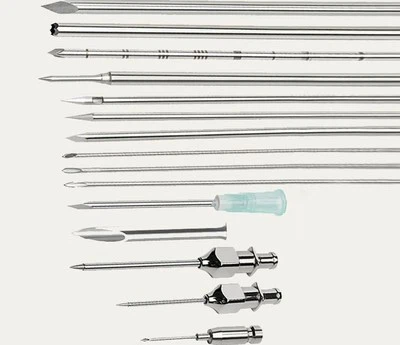
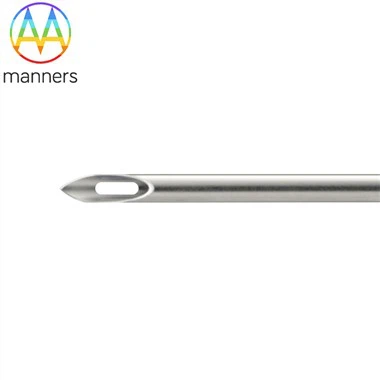
In modern lung cancer treatment, obtaining sufficient, high-quality tissue samples is paramount. These samples are not merely for pathological diagnosis; they are the prerequisite for molecular testing, including driver gene detection (e.g., EGFR, ALK, ROS1)and PD-L1 expression analysis. They serve as the essential "passport" for implementing targeted therapy and immunotherapy. Technological advancements in EBUS-TBNA needles-specifically the emergence of needles capable of obtaining larger tissue cores, such as 19G needles or those with side-cutting grooves-have dramatically ensured the success rate of subsequent molecular assays. This directly propels the development of personalized, precision treatment for lung cancer patients.
Challenges and Future Outlook
Despite its clear advantages, EBUS-TBNA is not without limitations. It demands a high level of technical proficiency from the operator and requires expensive equipment. Furthermore, accessibility to certain lymph node stations (such as groups 5, 6, 8, and 9)remains limited. Looking forward, ongoing optimization of needle design, the integration of AI-powered navigation assistance, and the combined application of techniques like Endoscopic Ultrasound Fine-Needle Aspiration of the Bronchus (EUS-B-FNA) will further expand the diagnostic scope and success rates of EBUS-TBNA, cementing its core status in the minimally invasive diagnosis of thoracic diseases.