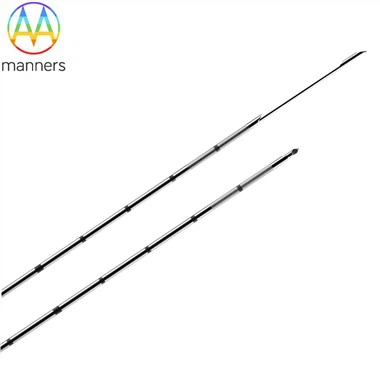
Systematic Construction Of Industrial Regulation And Standardization Development
Apr 27, 2026
Systematic Construction of Industrial Regulation and Standardization Development
Q&A Insight: How Do Stringent Regulatory Requirements Shape the Development Trajectory of the PTC Needle Industry?
The medical device industry is highly regulated, making the regulatory environment a core factor influencing the development of the PTC needle sector. Regulatory provisions covering product registration, manufacturing licensing, quality control and clinical evaluation jointly form the institutional framework for industrial operation. Although rigorous supervision increases corporate compliance costs, it also underpins the sound and sustainable development of the entire industry. Understanding how regulations impact the PTC needle market is critical for identifying development trends and formulating corporate strategies. Key topics worthy of in-depth discussion include how this regulatory framework balances innovation incentives and risk control, and how to reconcile international standards with localized regulatory requirements.
Historical Evolution: From Loose Administration to Systematic Supervision
Regulatory governance within the PTC needle industry has evolved from fragmented, loose management toward standardized, full-scale systematic supervision. In the early stage, interventional radiology was still in its infancy, and the regulation of corresponding medical devices remained relatively lenient. As PTC technology matured and clinical applications expanded, a complete regulatory system was gradually established and refined.
In China, the improvement of medical device regulation has advanced alongside the development of national healthcare services. In the 1990s, the official promulgation and implementation of the Regulations on the Supervision and Administration of Medical Devices marked the standardization of medical device oversight. For Class II medical devices such as PTC needles, systematic management mechanisms including product registration, production licensing and business filing were gradually rolled out.
Entering the 21st century, rising awareness of medical safety and accelerated technological progress have driven continuous upgrades to regulatory standards. The revised Regulations on the Supervision and Administration of Medical Devices issued in 2014 strengthened full life-cycle supervision for medical devices. For high-risk products represented by PTC needles, additional management provisions were introduced, covering clinical trial requirements, adverse event monitoring and complete product traceability.
Globally, medical device regulatory systems across major economies have followed a similar evolutionary path. The U.S. FDA's 510(k) and PMA approval procedures, the EU CE certification framework, and Japan's PMDA review system have all set unified technical thresholds and market access rules for cross-border PTC needle sales. International regulatory experience has also provided valuable references for the continuous optimization of China's local medical device governance system.
Standard Definition: Integration of Technical Specifications and Regulatory Compliance
Technical standards serve as a vital bridge connecting industrial application and regulatory supervision in the PTC needle industry. As a key industrial norm, YY/T 1768.2-2021 Medical Needle Injection Systems - Requirements and Test Methods - Part 2: Needles delivers unified technical specifications and standardized testing protocols for PTC needles. Closely aligned with official regulatory requirements, this standard forms a complete technical supervision system tailored to interventional puncture devices.
In terms of content, YY/T 1768.2-2021 covers comprehensive requirements for material performance, physical indicators, chemical properties and biological safety. These technical clauses correspond directly to core registration review elements, including performance verification, biocompatibility assessment and sterilization validation, providing clear technical guidelines for enterprise R&D and regulatory declaration.
Officially implemented on April 1, 2022, the standard establishes unified technical benchmarks for mass production and standardized quality control, improving the consistency and stability of end products while offering objective evaluation criteria for regulatory inspections and market supervision.
In response to technological iteration and evolving clinical demands, technical standards for PTC needles are continuously updated and supplemented. Emerging clinical scenarios such as oncological intervention and cyst sclerotherapy require targeted supplementary specifications and technical guidelines. The dynamic optimization of the standard system reflects the coordinated interaction between industrial supervision and technological innovation.
Clinical Application: Regulatory Impacts on Clinical Practice
The regulatory environment exerts a profound and far-reaching influence on the clinical application of PTC needles. Stringent supervision ensures product safety and effectiveness, laying a solid foundation for standardized clinical operation. Meanwhile, policy adjustments continuously guide the optimized development of clinical diagnosis and treatment workflows.
In terms of market access, the medical device registration system ensures that only products meeting safety and efficacy benchmarks can be used clinically. Though extending time cycles and increasing upfront costs for product launch, this mechanism effectively prevents substandard devices from threatening patient safety. Imported PTC needles must complete localized registration approval in China. For example, the puncture and angiography needles manufactured by Japan's HAKKO hold the import registration certificate National Medical Device Import Registration No. 20172146872, proving full compliance with Chinese regulatory review and safety standards.
In daily clinical practice, unified technical specifications and professional operating guidelines standardize the safe application of PTC needles. Clinical consensus documents such as the 2018 Expert Consensus on Percutaneous Transhepatic Cholangial Drainage and Stent Implantation for Obstructive Jaundice systematically standardize indications, contraindications, operational procedures and complication prevention for PTC intervention. Combined with product supervision rules, these guidelines jointly regulate standardized, safe and rational clinical operations.
For technological innovation, national regulatory policies strongly encourage medical device R&D and upgrading. Medical device innovation has been listed as a key development priority, with innovative products eligible for priority review and approval, as well as policy support for clinical promotion and large-scale application. This policy orientation boosts technological breakthroughs in the PTC needle industry, especially in the fields of high-precision design, intelligent function integration and minimally invasive optimization.
In terms of quality management, mandatory Good Manufacturing Practice (GMP) regulations implement full-process quality control throughout production. Strict quality management requirements covering raw material procurement, production processing, finished product inspection, warehousing and transportation guarantee the long-term stability and reliability of high-risk devices such as PTC needles.
Overall, regulations profoundly shape the PTC needle industry and clinical practice through multi-dimensional governance covering market access, clinical operation, technological R&D and full-life-cycle quality control. With the continuous improvement of global regulatory systems and sustained technological advancement, the PTC needle sector will achieve standardized development alongside innovative upgrading, delivering safer, more professional and high-quality medical devices and services for patients worldwide.