Analysis Of The Production Standards For Piercing Needles - Core Quality Control Guidelines For Manufacturers
Apr 27, 2026
Analysis of the Production Standards for Piercing Needles - Core Quality Control Guidelines for Manufacturers
Rhetorical Question Puzzle Solving
As medical devices that directly contact human tissues, how can puncture needles ensure clinical safety? The key lies in manufacturers strictly adhering to the full-process production standards and quality control systems. Many people are curious about how many rigorous tests puncture needles need to undergo from raw materials to finished products? What are the specific quality control links that cause differences in product quality among different manufacturers? This is precisely the key to measuring the strength of puncture needle manufacturers and the core of high-quality development in the industry.
Historical Origins
The establishment of production standards for puncture needles is the result of the gradual standardization of the industry and is led by leading manufacturers. In the early days, there were no unified standards for the production of puncture needles, and the manufacturing processes of different manufacturers were uneven, with prominent quality risks and high clinical use risks. In the 1980s, leading minimally invasive instrument manufacturers in Europe and the United States, in collaboration with industry organizations, first formulated industry standards for puncture needle raw materials, processing, testing, and packaging, clearly defining product performance indicators and quality requirements, and promoting the industry to enter the stage of standardized production. After 2000, the International Organization for Standardization released unified production standards for medical puncture instruments, and countries successively issued their own medical device production regulations. At the same time, China also formulated national and industry standards for medical puncture needles, requiring manufacturers to strictly follow the standards for production. With the development of the industry, production standards have continued to be upgraded, gradually adding strict indicators such as biocompatibility, sterilization, and ethylene oxide residue, forcing manufacturers to continuously optimize their production processes and improve their quality control systems, and promoting the overall quality improvement of the industry.
Standard Definition
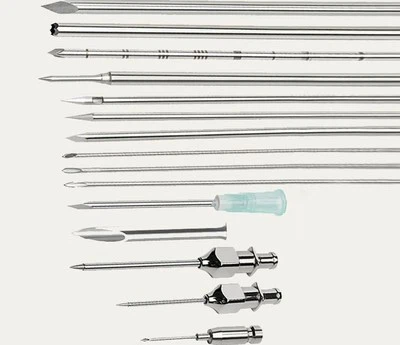
Puncture needles that meet national standards are medical interventional devices produced by manufacturers using medical-grade stainless steel and medical-grade polymer materials through precise CNC processing, surface passivation, and sterile packaging. The state clearly stipulates that the metal components of the puncture needles produced by manufacturers must have good rigidity and corrosion resistance, and the puncture force and bending resistance must meet the standards; the tip of the needle core must be sharp and free of burrs to avoid tissue tearing during puncture; the inner wall of the cannula must be smooth to ensure smooth entry and exit of the device; the products must undergo sterile treatment, free of pathogenic bacteria and harmful substances. At the same time, manufacturers must establish a complete production quality traceability system, and each batch of products must be sampled for testing, with production and testing data retained to ensure that the entire process of the product is traceable. Only after all indicators meet the standards can they be put on the market for circulation.
Clinical application
Puncture needles strictly produced in accordance with standards provide safe and reliable instrument support for various clinical surgeries. In minimally invasive gynecological surgeries such as laparoscopy and hysteroscopy, puncture needles that meet standards have good sealing properties and precise puncture capabilities, preventing gas leakage and tissue damage during the operation and ensuring its smooth progress. In pediatric minimally invasive diagnosis and treatment, manufacturers produce small-sized and highly safe puncture needles that are suitable for children's delicate tissues, reducing surgical trauma. In scenarios of long-term and repeated punctures, puncture needles of high standards have stable materials and will not cause allergic reactions or infections in the human body. In infectious disease surgeries, puncture needles that have undergone strict aseptic treatment can effectively prevent cross-infection. In addition, domestic puncture needles that comply with international standards, with their excellent quality, are widely used in medical institutions at all levels both domestically and internationally. They not only reduce the cost of clinical diagnosis and treatment but also enhance the industry reputation of domestic medical devices, becoming an important support in the global minimally invasive diagnosis and treatment field.