Supply Chain And Manufacturing Perspective | The Industrial Significance Of Biopsy Needles
Apr 10, 2026
Supply Chain and Manufacturing Perspective | The Industrial Significance of Biopsy Needles: The Compliant Journey from "Raw Material" to "Sterile Product"
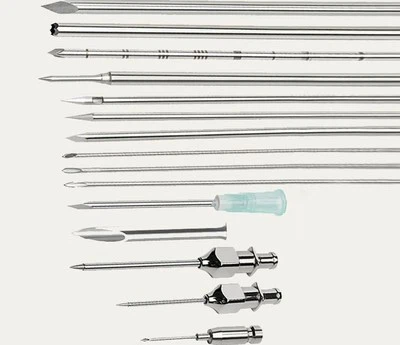
Within the global medical supply chain, a seemingly simple biopsy needle represents a sophisticated manufacturing and quality control process that crosses borders, involves dozens of steps, and is subject to stringent regulatory oversight. Its "significance" is that of a "medical device product unit" with complete traceability, compliance with international standards, and readiness for clinical use. This article, from an industrial and manufacturing viewpoint, examines how biopsy needles, represented by the Chiba needle, are transformed from steel mill coils into sterile-packaged medical products.
Industrial Positioning of the Chiba Needle: A Hybrid of Standardization and Customization
In industrial catalogs, the Chiba needle is both a "standard item" compliant with international standards like ISO 9626, with defined dimensional series (e.g., length, outer diameter), and a "custom-engineered component" that can be tailored to specific customer requirements (e.g., particular tip geometry, depth markers, connector interfaces). Its supply chain value lies in the ability to stably and batch-produce products of uniform quality while remaining flexible to respond to unique clinical or device integration needs.
Manufacturing and Control Logic of Core Dimensional Parameters
Length (15-30 cm):
Manufacturing Challenge: Ensuring length consistency across tens to hundreds of thousands of needles. This relies on high-precision servo-driven cut-to-length machines equipped with in-line laser gauges for real-time feedback and compensation.
Quality Significance: Length is a direct reflection of batch-to-batch consistency. Suppliers must provide full-dimension inspection reports proving that all products in a batch fall within the tolerance band of the nominal length ±0.5mm. This is directly related to compatibility with matching devices (e.g., biopsy guns).
Diameter (0.7-1.5 mm):
Manufacturing Core: This is primarily determined by the precision medical-grade stainless steel tubing, compliant with standards like ISO 9626. Sourcing the tubing is a critical input. Suppliers must provide material certificates, mechanical property reports, and dimensional inspection reports for each batch of raw material.
Industrial Control: The needle's diameter (especially the inner diameter, ID) is a Critical Process Parameter (CPP) in production. Manufacturers must use Statistical Process Control (SPC) charts to continuously monitor trends in OD/ID during production, ensuring they remain within tolerance. The cleanliness and burr-free state of the inner diameter are crucial for preventing thrombosis or particulate contamination caused by the product, guaranteed through rigorous processes like high-pressure water flushing and ultrasonic cleaning.
Industrial Logic Behind Material Selection: Why Stainless Steel?
Supply Chain Maturity: AISI 304/316L stainless steel is the most readily available, consistently high-quality, and process-mature medical-grade metal globally. Its vast industrial base ensures cost-effectiveness and stable supply.
Machinability: Its excellent properties for cutting, grinding, and polishing are suitable for large-scale, high-efficiency precision machining, forming the foundation for industrialization and cost control.
Regulatory Passport: The material has a long history of safe use (master files) with major global regulatory bodies like the FDA, CE, and NMPA, significantly simplifying the medical device registration and submission process.
From "Needle" to "Product": Key Value-Added Steps
Cleaning and Packaging: Performed in a Class 10,000 cleanroom. Needles are cleaned, dried, and loaded into specialized blister trays to prevent deformation during shipping.
Sterilization: A validated sterilization process-Ethylene Oxide (EO) or Gamma Irradiation-is chosen based on product material and packaging. Complete sterilization validation reports must be provided, proving a Sterility Assurance Level (SAL) of 10^-6 is achieved.
Labeling and Traceability: Each smallest sales unit must bear a label containing the product lot number, expiration date, and Unique Device Identification (UDI) code. This code enables full-chain traceability from the hospital back to the factory and even to the raw material heat number.
Conclusion: The Anchor Point of the Needle's Industrial Value
From an industrial chain perspective, the meaning of a Chiba needle is that of a highly standardized commodity embodying precision manufacturing technology, rigorous quality systems, and global regulatory knowledge. Its value lies not only in the physical object but also in the verifiable quality documentation, traceable production records, and certified sterile status behind it. What a hospital purchases is not merely a box of needles, but a "guarantee of safety and performance" underwritten by an entire quality management system. This needle is a microcosm of the globalization and standardized collaboration of the modern medical industry.