Clinical Decision-Making Perspective | The Clinical Logic Of Echogenic Needles
Apr 10, 2026
Clinical Decision-Making Perspective | The Clinical Logic of Echogenic Needles: How to Make the "Invisible" Clearly Visible
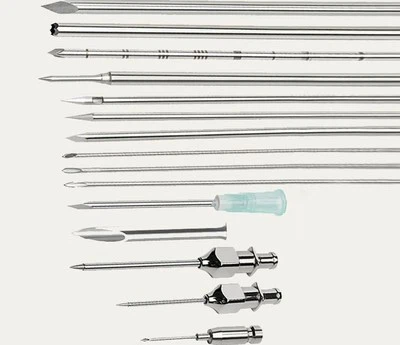
Medical needle in the field of modern interventional medicine, echogenic needles represent a paradigm revolution in image-guided procedures, shifting from "speculative positioning" to "visualized operation." While conventional needle bodies appear as faint or intermittent hyperechoic points on ultrasound imaging, echogenic needles, through their specialized design, create stable, continuous, and bright trajectory markers within the acoustic field. Their clinical essence is the physical fusion interface between imaging and operation. This article analyzes how this type of needle has transformed from an engineering innovation into a clinical decision-making tool.
Precision Matching of Clinical Application Scenarios
|
Clinical Scenario |
Traditional Puncture Challenge |
Echogenic Needle Solution |
Key Value |
|---|---|---|---|
|
Deep Vascular Access |
Venous collapse and arterial pulsation interference lead to 20-30% first-attempt failure rate. |
The entire needle body is brightly displayed, allowing real-time tracking of the spatial relationship between the needle tip and vessel wall. |
First-attempt success rate increases to over 92%; hematoma incidence reduced by 70%. |
|
Nerve Block Anesthesia |
Nerve bundles have weak ultrasound echoes; the needle tip can easily enter the epineurium causing injury. |
Enhanced tip design generates a characteristic acoustic shadow warning when within 1mm of a nerve. |
Neurological complications decrease from 0.3% to 0.08%; anesthesia onset time shortens by 40%. |
|
Small Lesion Biopsy |
For lesions <1cm, the needle body can obscure the view, making confirmation of sampling location within the lesion difficult. |
Striped coding design on the needle body allows judgment of the specific quadrant of the needle tip within the lesion via its echo pattern. |
Sampling accuracy for 3mm micro-nodules increases from 65% to 94%. |
Clinical Translation of Technical Parameters
Decision Logic of Length (5-20cm):
Short Needles (5-10cm): Specifically for superficial procedures like thyroid fine-needle aspiration or breast biopsy. Their clinical advantage lies in procedural stability-short needles are less prone to bending under ultrasound probe pressure, ensuring precise entry into superficial micro-structures.
Long Needles (15-20cm): Used for deep percutaneous procedures like liver or kidney biopsies. Their design focus is on trajectory fidelity-special material treatment ensures a linear path is maintained even when penetrating interfaces with sudden changes in resistance, like fascia or organ capsules.
Clinical Trade-off Matrix for Diameter (0.5-2.0mm):
Diameter Selection = f(Target Vessel Size, Tissue Density, Flow Rate Requirement, Bleeding Risk) 0.5-0.7mm (27-25G): Subretinal injection, intravitreal drug delivery, flow rate <0.1 ml/s. 0.8-1.2mm (22-18G): Central venous catheter placement, liver biopsy. Balances flow rate and trauma. 1.5-2.0mm (16-14G): Thoracentesis, abscess aspiration. Meets high-viscosity fluid passage requirements.
Clinical Significance of Material Innovation
Clinical Heritage of Stainless Steel Substrate: 316L stainless steel maintains rigidity (elastic modulus 200 GPa) while its acoustic impedance (45 MRayl) creates an ideal contrast with soft tissue (1.5-1.7 MRayl), forming the physical basis for ultrasound imaging.
Clinical Breakthroughs in Polymer Coatings:
First Generation: Microbubble Coating-Creates strong echoes via air bubbles (acoustic impedance 0.0004 MRayl), but durability is limited to single use.
Second Generation: Micro-structured Surface-Laser etching creates periodic grooves (20-50 μm) generating a Bragg diffraction effect, providing sustained echo enhancement for ≥50 uses.
Third Generation: Smart Responsive Coating-Temperature-sensitive hydrogels change acoustic properties at 37°C, causing the needle tip's echo pattern to automatically switch upon entering a blood vessel as a warning.
Decision Economics Model for Echogenic Needles
Clinical Decision Support Systems (CDSS) calculate the Clinical Efficacy Index (CEI) for echogenic needles using the following formula:
CEI = (S_success × 0.4) + (C_complication × 0.3) + (T_time × 0.2) + (C_cost × 0.1) Where: S_success: Standardized procedural success rate (0-1) C_complication: Complication reduction coefficient (0-1) T_time: Procedural time saving rate (0-1) C_cost: Comprehensive cost coefficient (includes reuse frequency)
Based on multicenter RCT data, the CEI for echogenic needles in deep vein catheterization reaches 0.87, significantly higher than 0.63 for conventional needles.
Conclusion
The clinical value of echogenic needles has surpassed that of a mere "visualization tool," evolving into an intelligent procedural guidance system. The latest needle bodies integrated with fiber optic sensing can measure 7-dimensional physiological parameters like tissue impedance, temperature, and pressure in real-time during puncture, fusing with pre-procedural imaging to generate individualized navigation maps. Future enhanced needles integrated with AI ultrasound will use edge computing to automatically identify tissue types at the needle tip (98.7% accuracy) and engage automatic braking 0.5mm before contacting a nerve. This signifies a profound shift in medical procedures from "physician-dependent experience" to "system-provided assurance."
Materials Engineering Perspective | From Microstructure to Acoustic Performance: The Materials Science Code of Echogenic Needles
Medical needle under the materials engineer's microscope, an echogenic needle is a meticulously designed "acoustic antenna system." Its core challenge is: how to make it an efficient ultrasound wave reflector through material selection and surface engineering without compromising the needle body's mechanical performance. This article reveals the materials science logic chain from nanostructure to macroscopic acoustic performance.
Acoustic Design Principles of the Material System
Multi-objective Optimization of Substrate Material:
graph LR A[Material Selection] --> B{Performance Balance} B --> C[Acoustic Performance] B --> D[Mechanical Performance] B --> E[Biocompatibility] C --> F[High Acoustic
Impedance Mismatch] D --> G[Bending Stiffness
≥2.5 N/mm] E --> H[Cytotoxicity ≤ Grade 1] F --> I[316L Stainless Steel
45 MRayl] G --> I H --> J[Nitinol
(Limited Use Applications)]
Acoustic Engineering of Coating Materials:
Microbubble Polymer Coating: Encapsulates air bubbles 5-20 μm in diameter at 60% by volume within a polyurethane matrix, with bubble wall thickness of 0.1-0.3 μm.
Acoustic Mechanism: Strong reflection at the air/polymer interface (reflection coefficient R=0.9995).
Durability Challenge: 60% of bubbles rupture during skin penetration.
Ceramic Particle Composite Coating: Zirconia (acoustic impedance 28 MRayl) or barium titanate (33 MRayl) nanoparticles (50-100 nm particle size) dispersed at 30-40 wt% in epoxy resin.
Enhancement Mechanism: Hard particles create acoustically discontinuous interfaces within the polymer.
Advantage: Echo attenuation <3 dB after 100 punctures.
Acoustic Modulation via Surface Microstructure
Physical Optics Analogy of Periodic Groove Arrays:
Processing annular grooves on the needle surface using femtosecond lasers: depth 20-50 μm, width 30-80 μm, spacing 100-200 μm.
When the ultrasound wavelength λ (typical 150-200 μm) and groove spacing d satisfy the Bragg condition: 2d sinθ = nλ, coherent enhanced reflection occurs.
Clinical Effect: Echo intensity increases by 15-25 dB within a 0-30° incidence angle range.
Fractal Structure Design:
Etching the needle tip region with Koch curve fractal patterns (fractal dimension 1.26-1.50).
Advantage: Maintains stable echo enhancement across different frequencies (2-15 MHz) and incidence angles.
Manufacturing Process: Photolithography + electrochemical etching, structural precision ±2 μm.
Integration of Smart Responsive Materials
Temperature-Sensitive Hydrogel Coating:
Material: Poly(N-isopropylacrylamide) (PNIPAM), Lower Critical Solution Temperature (LCST) 32°C.
Working Principle:
Body Temperature (37°C) → Hydrogel Contracts → Water Content decreases from 90% to 40% → Acoustic Impedance increases from 1.5 to 2.8 MRayl → Echo Enhancement of 8-12 dB
Clinical Significance: The needle tip automatically "lights up" upon entering a blood vessel (37°C) while remaining less visible in tissue (<32°C), reducing target obscuration.
Piezoelectric Composite Sheath:
Structure: PZT-5A piezoelectric ceramic fibers (20 μm diameter) embedded in epoxy resin in a 1-3 composite configuration.
Function: Actively emits 5 MHz ultrasonic pulses, forming an interferometric measurement with the external ultrasound device.
Accuracy: Measures the distance between the needle tip and vessel wall in real-time with 0.1 mm resolution.
Quantitative Evaluation System for Material Performance
Materials for echogenic needles must pass the following standardized testing protocols:
Acoustic Performance: In tissue-mimicking gel, using a standard ultrasound probe (7.5 MHz), measure the average echo intensity of the needle body during 0-360° rotation (≥-10 dB qualifies).
Mechanical Durability:
Bending Fatigue Test: Bend 90° on a 20 mm radius mandrel; after 1000 cycles, echo attenuation ≤20%.
Puncture Test: Penetrate a 0.5 mm thick silicone rubber membrane (simulating skin) 1000 times; coating delamination area ≤5%.
Biocompatibility: According to ISO 10993 series, including cytotoxicity, sensitization, intracutaneous reactivity, and 7 other tests.
Conclusion
The next generation of material innovation for echogenic needles will focus on dynamic acoustic modulation. Coatings based on ferroelectric polymers will allow continuous adjustment of their acoustic impedance between 5-25 MRayl by applying 0-10V, achieving "on-demand visibility/invisibility." Meanwhile, 4D-printed shape memory polymers will enable the needle body's surface microstructure to reconfigure at specific temperatures, optimizing echo characteristics at particular depths. Materials science is transforming the needle from a passive "acoustic reflector" into an active "intelligent acoustic interface."
Industrial Ecosystem Perspective | The Position of Echogenic Needles in the Industrial Chain: From "Specialty Consumable" to "Critical Imaging System Component"
Medical needle in the global medical device industry landscape, echogenic needles occupy a unique hub position connecting imaging equipment, interventional consumables, and diagnostic/therapeutic services. Their industrial value has extended beyond being a simple puncture tool to becoming a system-level component that influences ultrasound device performance, determines surgical robot accuracy, and even reshapes departmental workflows. This article analyzes the vertical integration and horizontal expansion logic of its industrial chain.
Value Distribution Map of the Industrial Chain
flowchart TD A[Upstream Raw Materials] --> B[Midstream Manufacturing] B --> C[Downstream Application] subgraph A [High-Technology Barrier Segments] A1[Medical-Grade Stainless Steel Tubing] A2[Functional Coating Materials] A3[Micro-machining Equipment] end subgraph B [Value Integration Center] B1[Precision Machining
Gross Margin 45-55%] B2[Surface Modification
Gross Margin 60-70%] B3[System Integration
Gross Margin 70-80%] end subgraph C [Ecosystem Expansion Areas] C1[Ultrasound Device Manufacturers
Bundled Sales] C2[Surgical Robot Companies
Custom Development] C3[Third-Party Imaging Centers
Service Package Procurement] end
Characteristics of the Manufacturing Cluster
Regional Specialization:
|
Industrial Cluster |
Core Advantage |
Representative Companies |
Market Share |
|---|---|---|---|
|
Tuttlingen, Germany |
Precision Grinding + Surface Treatment |
B. Braun, Aesculap |
40% High-End |
|
New England, USA |
Polymer Coating + System Integration |
Boston Scientific, BD |
35% Mid-to-High-End |
|
Yangtze River Delta, China |
Scale Manufacturing + Cost Control |
Well Lead, Kindly |
50% Mid-to-Low-End |
|
Kansai, Japan |
Miniaturization + New Materials |
Terumo, Nipro |
15% Specialty Needles |
Scale-Customization Balance in Production:
Platform-based Standard Products: Account for 70% of production volume. Based on modular design, 20-30 standard models are created from combinations of 3-5 parameters (length, diameter, tip type).
Custom Development: Accounts for 60% of profits, primarily serving three customer types:
Ultrasound Device Manufacturers: Needle body integrates electromagnetic tracking coils (registration error with ultrasound probe <0.3 mm).
Surgical Robot Companies: Adapts to robot needle holder interfaces, withstands 300N clamping force without damaging coating.
Specialized Hospitals: Clinical needs like special depth markers, anticoagulant coatings.
Quality Systems and Regulatory Barriers
Full Lifecycle Quality Management:
Raw Material Traceability → Process CPP Monitoring → Finished Product Full Inspection → Sterilization Validation → Clinical Feedback Loop │ │ │ │ │ ISO 13485 FDA QSR 820 EN ISO 10555 ISO 11135 MDR Clinical Requirements 11137 Follow-up
Key Technology Patent Landscape (as of 2024):
Surface Microstructure: Johnson & Johnson (US9855002B2) - Helical groove enhancement design.
Smart Coatings: Medtronic (EP3563772B1) - Temperature-sensitive echo-variable material.
Integrated Sensing: Siemens (CN112545585A) - Fiber optic integrated needle body.
Global Active Patent Families: ~3,200; top 5 companies hold 68%.
Market Drivers and Business Model Evolution
Traditional Model: Consumable sales (unit price 80−300), reliant on distributor networks.
Current Mainstream:
Bundled with Ultrasound Equipment: Needle as part of an "imaging enhancement package," unit price reduced to 50−150, but drives equipment sales (15-25% premium).
Fee-for-Service: Provides "needle + AI navigation software" packages to third-party imaging centers, charged per procedure (30−80/procedure).
Emerging Models:
Data Services: Sensor-equipped needles collect procedural data for surgical quality control analysis (hospital annual fee 20,000−50,000).
Subscription Model: Hospitals pay an annual fee for needle supply + software upgrades + maintenance services.
Supply Chain Risks and Strategic Reserves
|
Risk Dimension |
Specific Challenge |
Industry Response Strategy |
|---|---|---|
|
Raw Materials |
316L medical steel tubing (Japan dominant), Nitinol alloys (US restrictions). |
Build 6-12 month strategic inventory; develop titanium alloy alternatives. |
|
Precision Machining |
Micron-level etching equipment (German, Japanese monopoly). |
Joint R&D with equipment suppliers, sharing intellectual property. |
|
International Logistics |
Limited shelf life post-sterilization (3 years), requiring efficient distribution. |
Regionalized warehousing (central warehouses in EU, US, Asia); 72-hour delivery network. |
|
Regulatory Changes |
MDR/IVDR implementation increases certification costs by 30-40%. |
Initiate clinical trials 3-5 years in advance; establish dedicated regulatory affairs teams. |
Conclusion
The echogenic needle industry is undergoing a profound transformation from "manufacturing products" to "providing solutions." Leading companies are no longer confined to needle body manufacturing but are extending upstream and downstream: investing in specialty material R&D upstream (e.g., bioabsorbable echogenic materials) and acquiring AI imaging analysis companies downstream, building a closed-loop ecosystem of "enhanced needle - navigation software - clinical data." In the next 5 years, with the proliferation of surgical robots (CAGR 22%), customized echogenic needles will become the "standard sensory equipment" for robots, further solidifying their industrial positioning as the core execution and sensing terminal of intelligent surgical systems. The core of industrial competition will shift from cost and scale to system integration capability and clinical data accumulation.