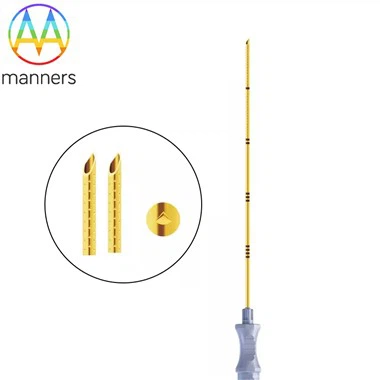
Safe Use Of The Veress Needle in Laparoscopic Surgery
Jun 18, 2026
https://en.wikipedia.org/wiki/Veress_needle
From the "Double Click" to the Confirmation Triad: Mastering the 15-Centimeter Key
In laparoscopic surgery, the Veress needle serves as the primary key-it must blindly unlock the doorway to the peritoneal cavity while ensuring that the viscera behind that door remain unharmed. As noted in your source material, the critical application of the Veress needle is to establish a safe and controllable peritoneal entry, the foundation upon which all subsequent laparoscopic procedures are built. However, wielding this key is highly dependent on the operator's skill and adherence to strict protocol.
1. Site Selection and Patient Positioning
Standard Entry: The umbilical midline or infraumbilical region is preferred due to minimal abdominal wall thickness (approximately 2–4 cm in obese patients; 1–2 cm in thin patients) and relative paucity of major vessels.
Alternative Sites: For patients with a history of abdominal surgery (to avoid adhesions), consider the left subcostal (Palmer's point) or right upper quadrant.
Positioning: Supine with slight reverse Trendelenburg if needed to allow gravity to displace bowel away from the anterior abdominal wall, increasing the safety buffer.
Wall Elevation: The surgeon must elevate the abdominal wall using towel clamps or manual lifting to create a negative-pressure space between the wall and underlying viscera.
2. Insertion Technique and the "Double Click" Sensation
Veress needle insertion unfolds in two distinct phases:
First Click: The needle tip traverses the anterior rectus sheath or linea alba. Resistance peaks, then suddenly yields with a dull tactile and auditory "pop" as the stylet retracts and the cutting bevel engages.
Second Click: The needle tip breaches the peritoneum. Resistance vanishes abruptly, the spring deploys the blunt stylet, and a crisp "click" signals entry into the free cavity.
The interval between clicks varies with abdominal wall thickness (typically 0.5–2 seconds).
⚠️ Interpretation:
Only one click → suspect pre-peritoneal placement
No clicks → likely still in subcutaneous tissue or muscle
Do not proceed to insufflation; reassess and repuncture if necessary.
3. The Confirmation Triad
Before connecting the insufflator, perform these three mandatory checks:
|
Test |
Procedure |
Normal Finding |
Abnormal Finding & Action |
|---|---|---|---|
|
Aspiration Test |
Attach 5 mL syringe; gently aspirate |
No return or clear fluid |
Blood → vascular injury; enteric/bubbly fluid → bowel injury; urine → bladder injury → immediately withdraw and evaluate for open conversion |
|
Saline Drop Test |
Place drop of saline at hub |
Drop is drawn inward (negative pressure) |
Drop remains or refluxes → suspect extraperitoneal or visceral location |
|
Initial Pressure Check |
Begin insufflation at 1–2 L/min |
Initial pressure < 8 mmHg |
Pressure spikes >10 mmHg → stop; adjust needle or convert to open technique |
4. Precautions During Insufflation
Once position is confirmed:
Gradually increase CO₂ flow to 4–6 L/min until intraperitoneal pressure reaches target:
Adults: 12–15 mmHg
Children: 8–10 mmHg
Monitor pressure curve: steady rise with minimal fluctuation is normal. Sudden spikes or wide swings suggest tip migration or bowel occlusion of side ports.
Continuously monitor vital signs (HR, BP, SpO₂); CO₂ absorption may cause hypercapnia or arrhythmia.
5. Special Populations
|
Population |
Key Adjustments |
|---|---|
|
Obese (BMI ≥30) |
Wall thickness 5–8 cm → use 150 mm long needle; insert perpendicular (~90°) to avoid subcutaneous tunneling |
|
Thin (BMI <18.5) |
Very thin wall → aorta/IVC close to skin; insert at ~45° angled toward pelvis; consider 80 mm short needle |
|
Pediatrics |
Thinner wall, viscera closer → 80 mm needle; pressure 8–10 mmHg; flow 1–2 L/min; consider pediatric Veress (OD 2.0 mm, shorter bevel) |
6. Common Complications and Management
|
Problem |
Likely Cause |
Management |
|---|---|---|
|
Failed insufflation |
Side port obstruction, valve not open, leak |
Retract needle 1–2 mm, irrigate side port, verify all connections |
|
Subcutaneous emphysema |
Extraperitoneal insufflation |
Stop insufflation immediately; withdraw needle; repuncture; manually express gas if needed |
|
Vascular injury |
Needle in vessel lumen |
DO NOT WITHDRAW NEEDLE; stabilize in situ; call for senior assistance; prepare for open exploration or interventional radiology |
Summary
Safe Veress needle use is never a matter of "stick and done." It is a systematic process encompassing insertion, verification, insufflation, and vigilant monitoring. The surgeon must fully understand the needle's mechanical behavior (spring response, side port geometry, bevel angle), tailor the approach to the individual patient, and rigorously follow protocol to minimize the risk of complications.