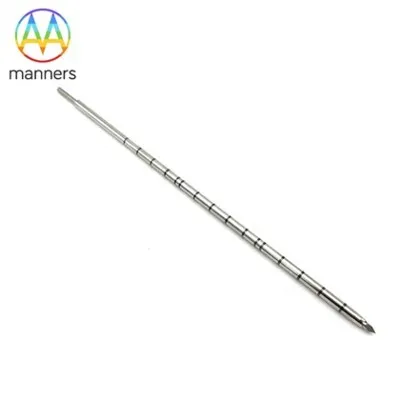
Quality Control Perspective: The Impact Of Different Bone Marrow Biopsy Needle Types On Specimen Integrity And Diagnostic Accuracy
Jun 19, 2026
In the era of precision medicine, a high-quality bone marrow specimen is the cornerstone of an accurate diagnosis. However, multiple factors affect specimen quality, the most critical of which is the type of biopsy needle used. An inappropriate choice can lead to fragmentation, crushing artifacts, hemodilution, or insufficient sampling-resulting in false negatives or misdiagnosis. This article discusses how different bone marrow biopsy needle types influence diagnostic accuracy from a quality control standpoint.
I. Core Biopsy Needle Types: The Key Determinant of Tissue Core Integrity
The objective of a core biopsy is to obtain an intact, undistorted strip of bone marrow tissue for evaluating cellularity, fibrosis, patterns of tumor infiltration, etc. Different core biopsy needle designs have a profound impact on this outcome.
Tru-Cut Type (Manual Cutting):
Advantages:Theoretically yields the longest tissue core (up to 2–3 cm) and the cutting process is relatively gentle, causing minimal morphological distortion.
Disadvantages:Requires a high level of technical proficiency. If the inner stylet fails to fully engage the tissue or the outer cannula is advanced unevenly, the core is easily "pinched" or "flattened." Furthermore, manual cutting may be inadequate in cases of severe myelofibrosis, leading to failed sampling.
Spring-loaded Powered Biopsy Needles (Automatic Cutting):
Advantages:The high-speed, standardized "fire-and-cut" mechanism virtually eliminates operator variability. Regardless of marrow consistency, it consistently obtains well-formed, uniformly sized cores (typically 1–2 cm). Studies show that powered needles can increase core biopsy success rates from approximately 70% (manual) to over 95%.
Disadvantages:High-velocity cutting may generate minor thermal effects or mechanical shear force, potentially causing slight damage to fragile cells (e.g., lymphoma cells). Additionally, the core length obtained is usually shorter than that ideally achieved with a skilled manual technique.
Vacuum-Assisted Biopsy Needles:
A newer design that applies negative pressure within the needle to actively draw tissue into the lumen prior to cutting. This effectively addresses difficulties in sampling loose or fibrotic marrow that fails to anchor in conventional needles, making it especially useful in "dry tap" cases. However, excessive vacuum may cause tissue collapse or cellular fragmentation.
II. Aspiration Needle Type: The First Gatekeeper of Bone Marrow Fluid Quality
Bone marrow aspiration is used for cell counting, differential counts, flow cytometry, and karyotype analysis. The choice of aspiration needle directly affects whether the sample is diluted by peripheral blood.
Side-Port vs. End-Port Needles:
End-Port (Tip) Needle:Traditional design; tends to aspirate blood from sinusoidal spaces, causing significant hemodilution and reducing the representativeness of cytological examination.
Side-Port Needle:Features a lateral opening near the tip; aspiration primarily draws intrasinusoidal marrow elements, greatly reducing peripheral blood contamination. For leukemia patients requiring precise blast percentage assessment, side-port needles are the preferred option.
Needle Gauge:
- Fine Needles (22G):Minimal trauma, but higher aspiration resistance, prone to clogging, and yields limited volume-often insufficient for comprehensive molecular testing.
- Large-Bore Needles (18G):Smooth aspiration with adequate volume of high-quality marrow fluid, particularly suitable for research requiring large cell numbers for genetic sequencing. However, the bleeding risk is correspondingly higher.
III. Closing the Loop: Specimen Handling and the Diagnostic Chain
Selecting the appropriate biopsy needle type is only the first step. Proper downstream processing is equally crucial.
- Core Biopsy Specimens: Upon removal, the specimen should be immediately placed in 10% neutral buffered formalin to prevent desiccation. Over-fixation must be avoided to preserve antigenicity. Decalcification must be carefully controlled; excessive decalcification degrades DNA/RNA and compromises downstream FISH or NGS analysis.
- Aspiration Specimens: Smears should be prepared immediately, along with aliquots in anticoagulated tubes (EDTA or heparin). Smears must be of even thickness to avoid artifactual cell distortion. Anticoagulated samples should be gently inverted to prevent clotting or hemolysis.
IV. Quality Control Metrics: How to Evaluate Biopsy Needle Performance?
Healthcare institutions should establish internal QC systems to periodically assess the performance of different biopsy needles:
- Core Biopsy Success Rate: The proportion of passes yielding a diagnostically adequate tissue core.
- Core Length and Integrity: Mean length, fragmentation rate, and a crush artifact scoring system.
- Marrow Fluid Dilution Index: Assessed by counting marrow particles versus peripheral blood cells on smears.
- Complication Rate: Including bleeding, infection, and patient-reported pain scores.
- Procedure Time: Total time from preparation to specimen retrieval.
Conclusion
The type of bone marrow biopsy needle is the primary controllable variable affecting specimen quality. Moving beyond merely "obtaining a sample" to ensuring we "obtain a qualitysample" requires close collaboration between clinicians and pathologists. By scientifically selecting needle types based on disease characteristics and testing requirements-and rigorously adhering to standardized operating procedures-every precious bone marrow specimen can be maximized for its diagnostic value.