Precision Engineering — The Materials Science And Design Of Bone Marrow Biopsy Needles
Jun 19, 2026
https://www.chamfondbiotech.com/4-types-of-bone-marrow-biopsy-needles/
The bone marrow biopsy needle, a device that may appear deceptively simple, embodies the sophisticated convergence of materials science and precision engineering. It is far more than a mere hollow tube; it is a meticulously designed instrument intended to retrieve the "code of life" from deep within the human body-the bone marrow tissue.
First and foremost, the foundation of its performance lies in its material composition. As referenced, medical-grade stainless steel and titanium alloys represent the mainstream selection. Stainless steel remains the classic choice due to its exceptional strength, toughness, and relative cost-effectiveness. It can withstand the immense axial force required to penetrate the hard cortical bone while maintaining tip sharpness, ensuring successful entry into the medullary cavity on the first attempt. Titanium alloy takes this a step further. Not only does it offer a superior strength-to-weight ratio, making the needle lighter and reducing operator fatigue, but it also boasts outstanding biocompatibility. Titanium alloys are virtually inert within human tissue, minimizing the risk of allergic reactions, and provide excellent visibility under X-ray, CT, or MRI imaging, facilitating precise localization. Furthermore, some high-end needles feature specialized coatings, such as silicone coating, to reduce friction during insertion, allowing for a smoother procedure and minimizing patient discomfort.
Secondly, the geometric design of the needle shaft is equally critical. The varying lengths (8 cm to 15 cm) and gauges mentioned in the data are tailored to accommodate different ages, body types, and puncture sites. For instance, pediatric patients or slender adults may require shorter needles, whereas obese patients or posterior iliac crest biopsies necessitate longer shafts. Gauge selection depends on the sampling objective: finer 18G–22G needles are typically utilized for bone marrow aspiration to collect liquid hematopoietic cells, while larger 11G–15G needles are engineered specifically for core biopsy. Their wider lumen is designed to house and protect the precious cylindrical tissue sample, preventing structural deformation or crushing.
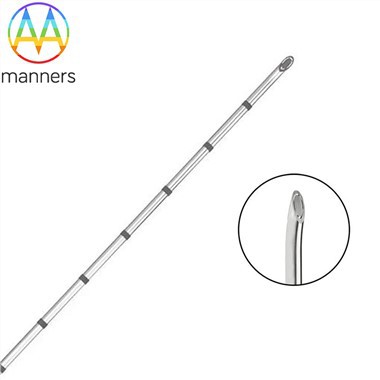
Finally, the grinding process of the needle tip is the decisive factor in the success of the procedure. An ideal needle tip must balance two characteristics: "sharpness" and "stability." Sharpness ensures efficient penetration through the cortical bone, reducing trauma associated with repeated attempts, while stability prevents bending or deviation when encountering dense bone structures. Modern manufacturing achieves this equilibrium through complex geometries, such as multi-bevel or asymmetrical cutting techniques. Coupled with a tightly fitting stylet that forms a smooth, unified profile, the needle ensures that no tissue is prematurely snagged or disturbed before reaching the target depth. In essence, every qualified bone marrow biopsy needle represents a perfect synergy of materials science, mechanics, and precision machining-a testament to how modern industry underpins clinical diagnostics with every successful sample retrieved.