Precision Clinical Alignment Through Multi-Specification Sizing: Professional Manufacturers Customize Breast Biopsy Needles For All Procedural Needs
Apr 20, 2026
Precision Clinical Alignment Through Multi-Specification Sizing: Professional Manufacturers Customize Breast Biopsy Needles for All Procedural Needs
Introduction: Navigating the Complexities of Mammary Anatomy
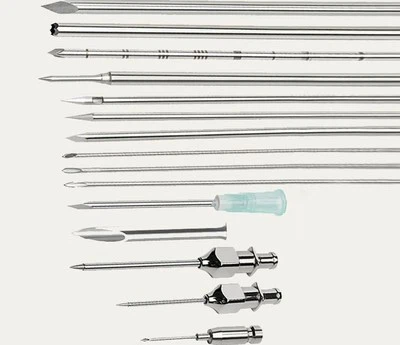
The human breast presents a complex anatomical landscape characterized by varying thicknesses of adipose and glandular tissue, significant differences in lesion depth, and a wide array of non-standardized diagnostic and therapeutic approaches. In this intricate environment, even a minor deviation in the selection of biopsy needle length or gauge (outer diameter) can precipitate serious operational issues. These include puncturing too deep and damaging thoracic tissues, using a needle that is too narrow to yield sufficient sample volume, or causing excessive bleeding due to an oversized bore. Professional manufacturers specializing in breast biopsy needles, who possess deep expertise in medical puncture consumables, align their production precisely with domestic clinical biopsy standards. They engage in the gradient-based mass production of standardized, compliant models across multiple lengths and gauges. By accurately matching the diverse clinical needs of different age groups, lesion types, and surgical methods, they prevent non-standard instruments from entering the clinical setting, thereby ensuring that every breast biopsy is safe, efficient, and features controllable wound dimensions.
Section 1: Fine-Partitioned Length Production for Full Lesion Coverage
Manufacturers scientifically categorize needle lengths into three core intervals: short, standard, and extra-long. This ensures full-dimensional adaptation to the varying anatomical depths encountered in breast tissue.
Short-Version Needles: Designed specifically for young women with shallow mammary glands or for the rapid sampling of superficial palpable lumps. These instruments offer exceptional operational convenience, minimal trauma, and rapid postoperative recovery.
Standard-Length Needles: These models are suitable for the majority of routine outpatient breast cancer screenings. With high versatility and adaptability, they constitute the foundational, regularly stocked models for any department.
Extended-Length Specialized Needles: Targeted at obese patients, individuals with thick glandular tissue, or those requiring specialized puncture of deep-seated occult lesions near the thoracic wall. These needles allow for precise targeting without the need for secondary angle adjustments, avoiding repeated punctures that could exacerbate tissue damage and making them ideal for complex, difficult cases.
Section 2: Standardized Gauge Grading to Balance Core Needs
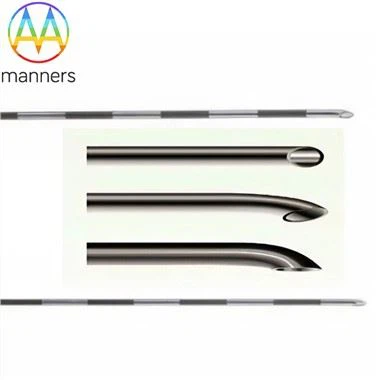
To balance the dual core requirements of obtaining an adequate sample volume while maintaining minimal trauma, manufacturers strictly adhere to universal medical gauge standards, producing a full series of compliant models from 10G to 20G. It is important to note that in the gauge system, a larger numerical value indicates a finer diameter, while a smaller number signifies a larger bore.
Large-Bore, Low-Gauge (10G, 12G): Featuring high rigidity and a large sampling lumen, these needles can capture substantial, intact tissue cores in a single pass. They are perfectly suited for the precise pathological characterization of suspected high-risk malignant lesions, effectively preventing the need for repeat biopsies due to insufficient samples.
Medium-Standard (14G, 16G): Known as the "golden gauge" for general use, these diameters balance sampling efficiency with the minimally invasive experience. They are ideal for routine outpatient sampling of benign nodules and common calcifications, offering high cost-effectiveness and broad clinical applicability.
Fine-Bore, High-Gauge (18G, 20G): These ultra-fine needles are designed for comfortable, minimally invasive screening. The puncture wound is nearly scarless, and blood loss is negligible. They are particularly suitable for annual public health screenings and comfortable biopsy procedures for patients with sensitive constitutions.
Section 3: Unified Precision Quality Control for Systemic Compatibility
Relying on high-precision CNC equipment for uniform turning and forming, manufacturers ensure that needle lengths are consistent, gauges are uniform, and tip sharpness is standardized within the same model, completely eliminating dimensional deviations or eccentricity defects. This precision allows the needles to seamlessly integrate with existing hospital biopsy guns, image-guided positioning equipment, and sterile auxiliary instruments via universal interfaces, requiring no additional modifications.
Furthermore, manufacturers provide complete sizing reference charts and offer one-on-one technical support to assist hospitals in batch customization based on their specific needs. This approach prevents the waste of idle resources due to mismatched sizing and aligns perfectly with the procurement processes of public hospital centralized bidding and the decentralized purchasing needs of primary care institutions, delivering a worry-free, compliant, and clinically practical solution.