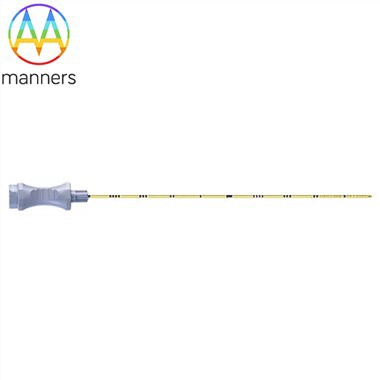
How The 18G Fine Needle (Type E) Is Reshaping The Landscape Of Cervical Cancer Radiotherapy
Jun 15, 2026
Cervical cancer remains one of the most prevalent malignant tumors affecting women worldwide, and brachytherapy is an indispensable component of its curative management. Looking back at history, the modality of cervical cancer radiotherapy is undergoing a profound transformation-evolving from traditional tandems and ovoids to modern interstitial implantation techniques represented by the 18G fine needle (Type E).
I. Limitations of Traditional Methods
Traditional Intracavitary Radiotherapy (ICRT) primarily relied on uterine tandems and vaginal applicators, producing a characteristic "pear-shaped" dose distribution. While effective in covering the cervix and uterine body, this approach often resulted in insufficient dosage for tumors extending into the parametria or pelvic sidewalls. To compensate for this deficiency, external beam radiation doses had to be escalated in the past, which inevitably increased the irradiated volume of adjacent organs like the bladder and rectum, leading to frequent long-term complications such as radiation enteritis and cystitis.
II. Breakthroughs Introduced by the 18G Fine Needle (Type E)
The introduction of 18G Type E interstitial needle implantation has completely changed this landscape. It allows radiation oncologists to directly place the radiation source into the deepest infiltrative margins of the tumor, a technique known as "interstitial implantation."
- Dose Painting Capability: Based on the 3D tumor morphology displayed on MRI or CT, physicians can flexibly arrange multiple 18G Type E needles. Like a surgeon's scalpel, these fine needles "sculpt" the high-dose region into an irregular volume that highly conforms to the tumor shape, achieving true "conformal" therapy.
- Protection of Normal Organs: By positioning the radiation source closer to the tumor and away from the bladder and rectum, physicians can utilize "inverse planning optimization" to adjust the dwell time of individual needles. This strategically concentrates the high dose within the tumor while causing a sharp drop in the dose received by neighboring Organs At Risk (OARs). Studies indicate that using 18G needle-based implantation can reduce the rectal D2cc (dose to the hottest 2cc volume) by over 30%.
III. Clinical Advantages of the Type E Design
The "Type E" design is particularly critical in this application. Its slender, elongated shaft (typically 15–20 cm) is long enough to penetrate thick parametrial tissues to reach the pelvic sidewall. The specialized tip design ensures the needle does not bend excessively when traversing the myometrium and sacrouterine ligaments, maintaining a straight trajectory. Furthermore, stabilization devices accompanying some Type E needles keep the needles securely in place during the hours-long treatment, preventing positional deviations caused by patient movement.
IV. Standardization and Dissemination
Currently, cervical cancer implantation techniques based on the 18G fine needle (Type E) have been incorporated into multiple international guidelines. With the refinement of training systems and the proliferation of dedicated applicator kits, this technology is cascading down from major cancer centers to grassroots hospitals. It not only improves the cure rate for advanced cervical cancer patients but, more importantly, significantly enhances their quality of life, allowing more women to preserve normal physiological function while defeating cancer.